 English





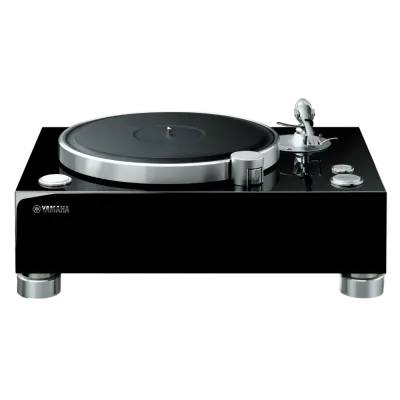
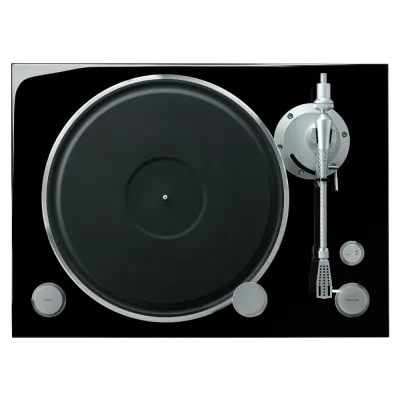
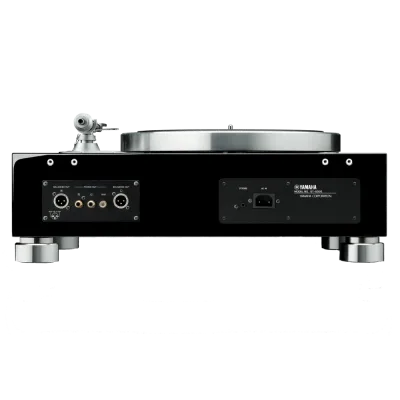

Turntable Yamaha GT-5000 Pianoblack
Description
Belt-drive turntable with a fully balanced signal path from the record to the loudspeakers
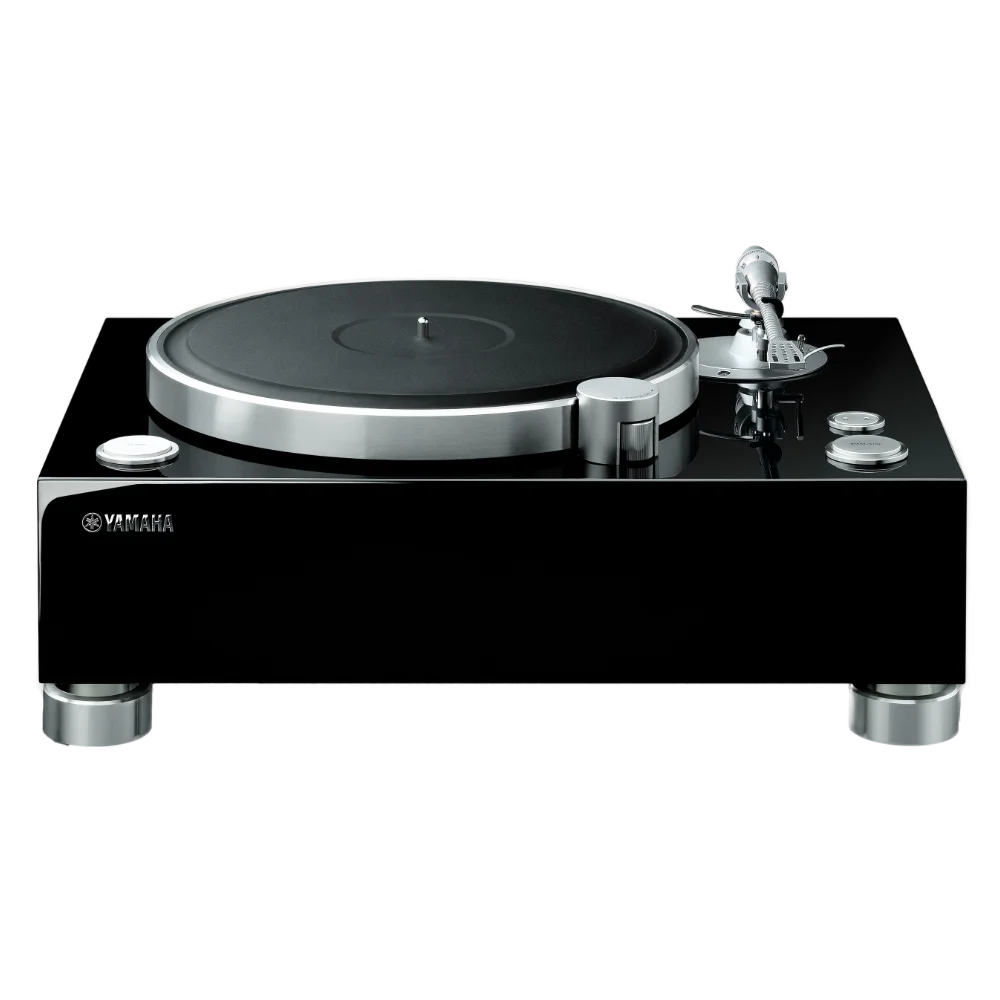
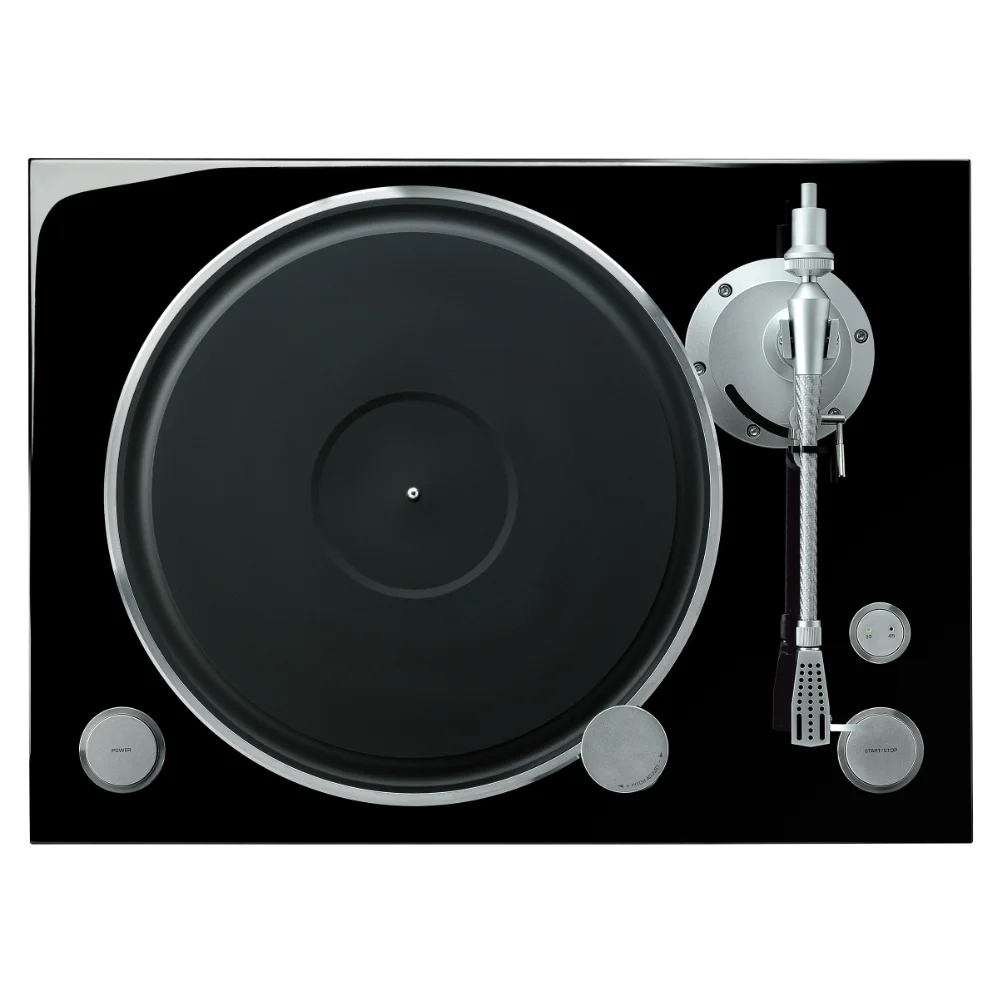
The Yamaha GT-5000 is a flagship analogue turntable continuing the original GT (Gigantic and Tremendous) line, which was distinguished by a massive wooden plinth and a heavy platter that suppressed vibrations. The design rests on three pillars: a short straight static-balance tonearm, a balanced XLR output and a modified belt drive without speed feedback control. Weighing 26.5 kg and measuring 546 × 221 × 411 mm, the unit is conceived as a source for demanding hi-fi systems.
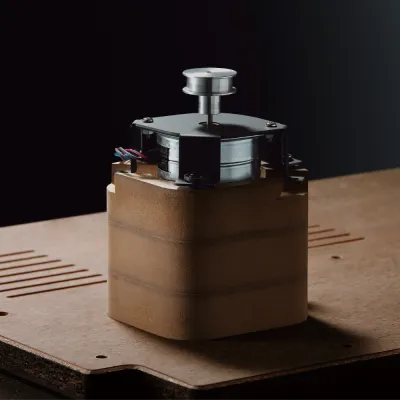
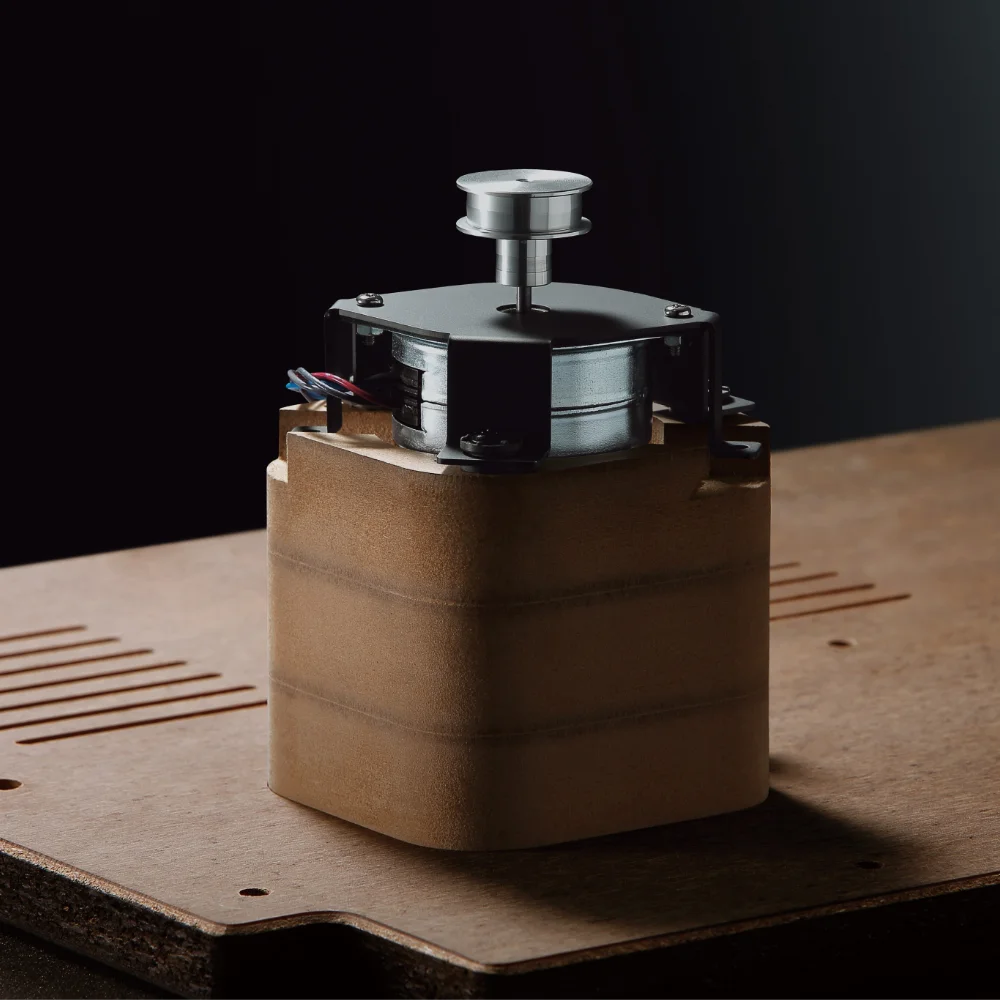
The drive is provided by a 24-pole two-phase synchronous AC motor, which generates a precise sine waveform controlled by a crystal oscillator. Belt transmission minimises the influence of motor cogging and makes it possible to dispense with feedback speed control, which the original GT concept replaced with internal mass. Running stability is further supported by a 5 kg machined aluminium platter with a diameter of 35 cm and an inner brass section 14.3 cm in diameter. Speed deviation is quoted at ±0.1 %, wow & flutter below 0.04 %, with fine adjustment possible in 0.1 % steps over a ±1.5 % range.
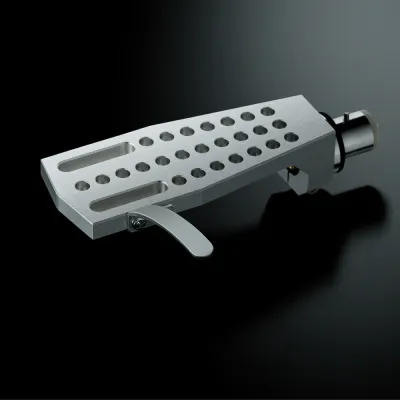
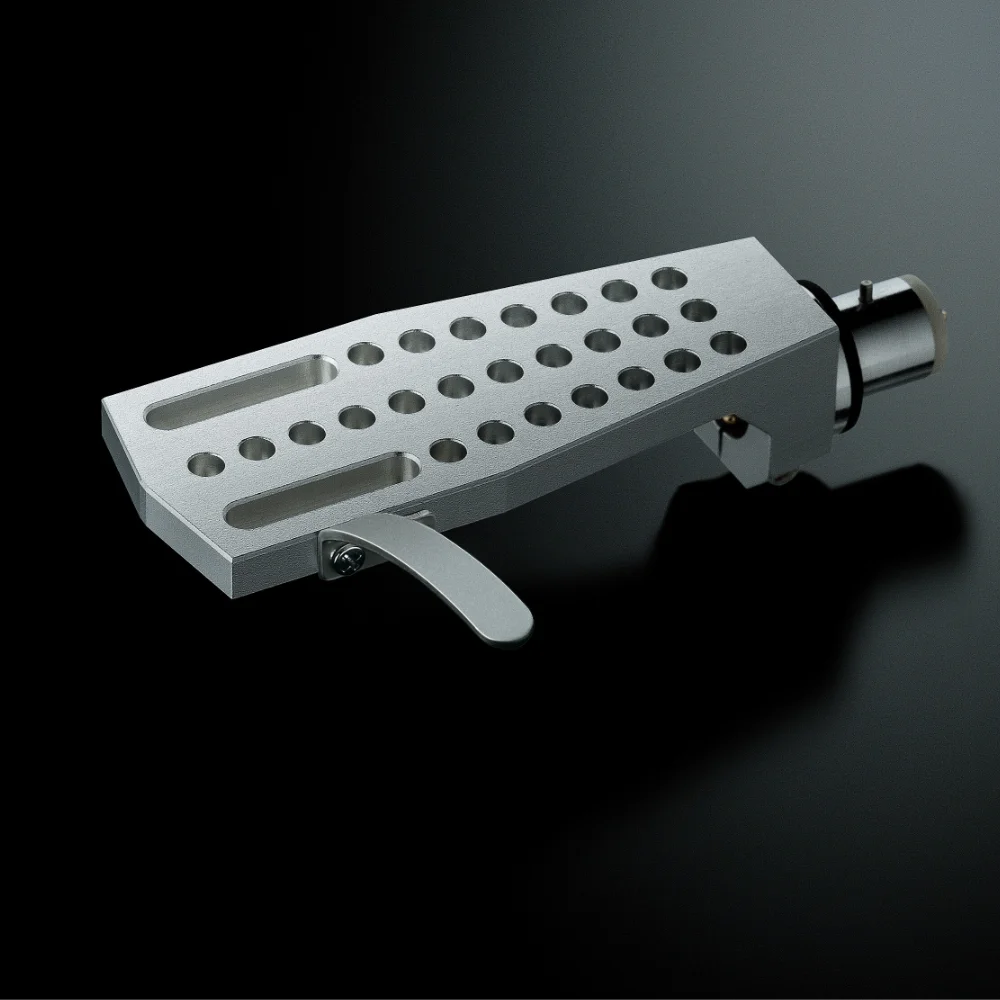
The short straight tonearm with an effective length of 223 mm and an overhang of −17 mm offers greater rigidity and a more favourable mass-to-mechanics ratio, which improves groove tracking. The simple, rigid construction also eliminates the need for an anti-skating weight. The tonearm accepts cartridges weighing 13.5 to 36 g including the headshell (from 25 g with the additional counterweight), while the supplied headshell weighs 14 g. The absence of extra mechanical elements in the stylus path contributes to the legibility of micro-detail and precise instrument localisation within the stereo image.
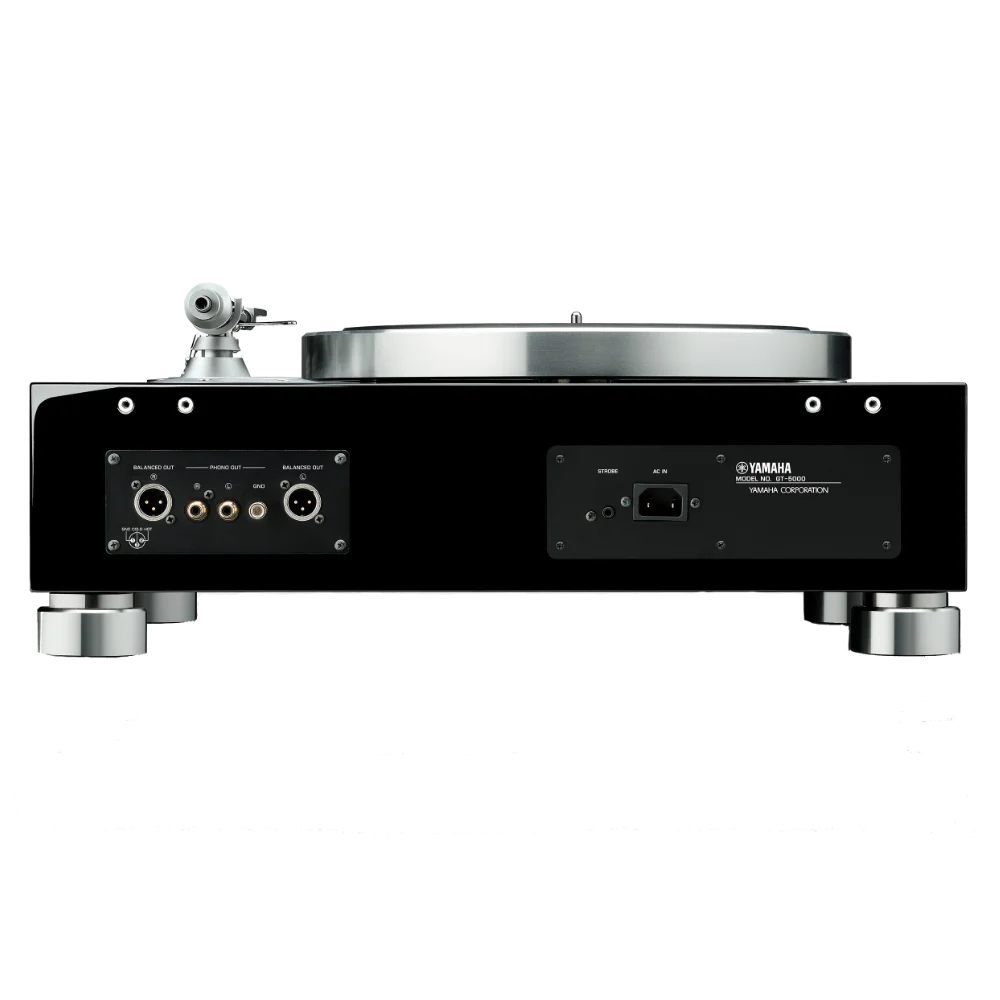
The output section offers balanced XLR and unbalanced RCA outputs, so that in combination with the C-5000 preamplifier and the M-5000 power amplifier a fully balanced signal path can be built from the cartridge all the way to the loudspeakers — a solution that reduces interference induced into the low-level signal. Mechanical isolation is completed by massive feet developed specifically for this model, and the glossy piano black finish matches the rest of the flagship series, including the NS-5000 speakers. Also included is a strobe output on a 3.5 mm jack and the option of an extended five-year warranty after product registration.
Key features
- Balanced output: XLR as well as RCA for a fully balanced system
- Drive: Modified belt drive without feedback control
- Motor: 24-pole two-phase synchronous AC motor with crystal control
- Platter: 5 kg aluminium platter with brass inner section
- Tonearm: Short straight tonearm without anti-skating
Specification
| Power consumption | 15 W |
|---|---|
| Outputs | Analogue Audio: 2 (1 x balanced XLR, 1 x unbalanced RCA), Strobe: 1 (3.5 mm mini jack) |
| Net weight | 26.5kg |
| Tonearm Effective Length | 223 mm |
| Wow and Flutter | less than 0.04 per cent |
| Speed | 33-1/3 rpm, 45 rpm |
| Motor | AC synchronous motor |
| Rotation Speed Variation | ±0.1% |
| Platter | [Outer] Machined aluminium (diameter 35 cm), [Inner] Brass (diameter 14.3 cm), |
| Overhang | -17 mm |
| Dimensions (W × H × D) | 546 × 411 × 221 mm |
 Yamaha
 is one of the few hi-fi manufacturers that also builds concert grand pianos and wind instruments. When developing an amplifier or a speaker system, therefore, it does not have to guess what a real instrument should sound like, as it has one to hand and can compare the sound to it. This forms the basis of a principle the brand has adhered to since the 1970s, known as ‘Natural Sound’: sound without embellishment and without any inherent colouration. In 1974, this principle was established by the NS-1000 loudspeakers with beryllium drivers, and ever since it has guided everything Yamaha produces for home listening, from turntables and amplifiers right through to AV receivers and wireless systems. Anyone looking for a sound that neither enhances nor embellishes a recording in any way will find exactly that with Yamaha.
Manufacturer information (GPSR)
Manufacturer
Yamaha Corporation
10-1 Nakazawa-cho, Chuo-ku, Hamamatsu, Shizuoka 430-8650 Japonsko
Responsible person in the EU
Yamaha Music Europe GmbH
Siemensstrasse 22–34, 25462 Rellingen Germany
Accessories