 English





The ROLLS ROYCE of signal sources
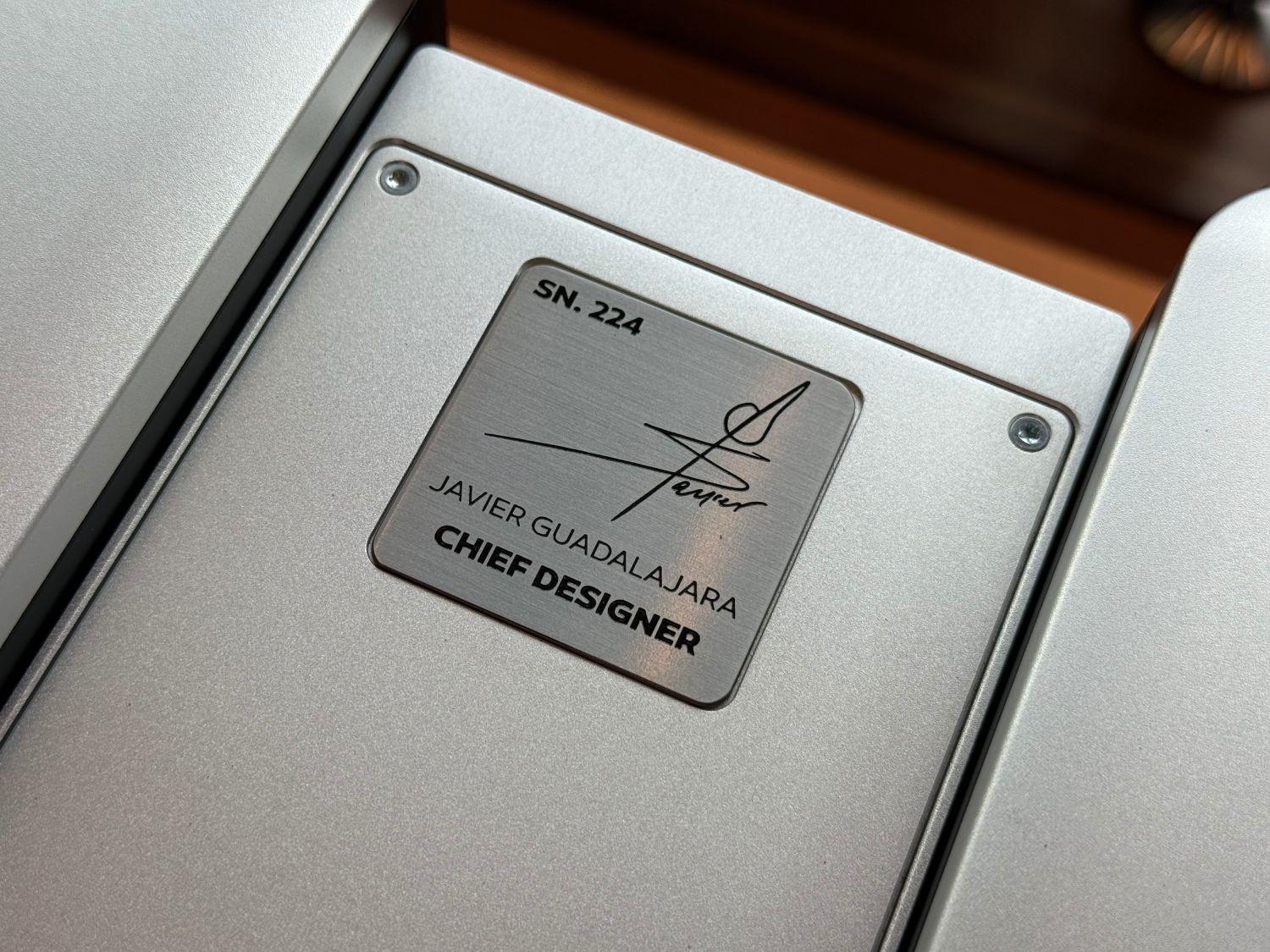
The name of the Madrid-based company WADAX is shining ever brighter in the world of luxury high-end. But it is no young star – father Angel and son Javier Guadalajara set out on their journey more than 20 years ago (and long before that they worked with high-end as dealers). Their path, however, has been anything but hurried – in 2004 they began work on an intriguing chip, musIC, brought it to life six years later and launched their first complete product (somewhat paradoxically, an analogue phono preamplifier) in 2011. The important part arrived in 2017 – the Atlantis digital signal source. And since 2020 they have been building the Atlantis Reference series.
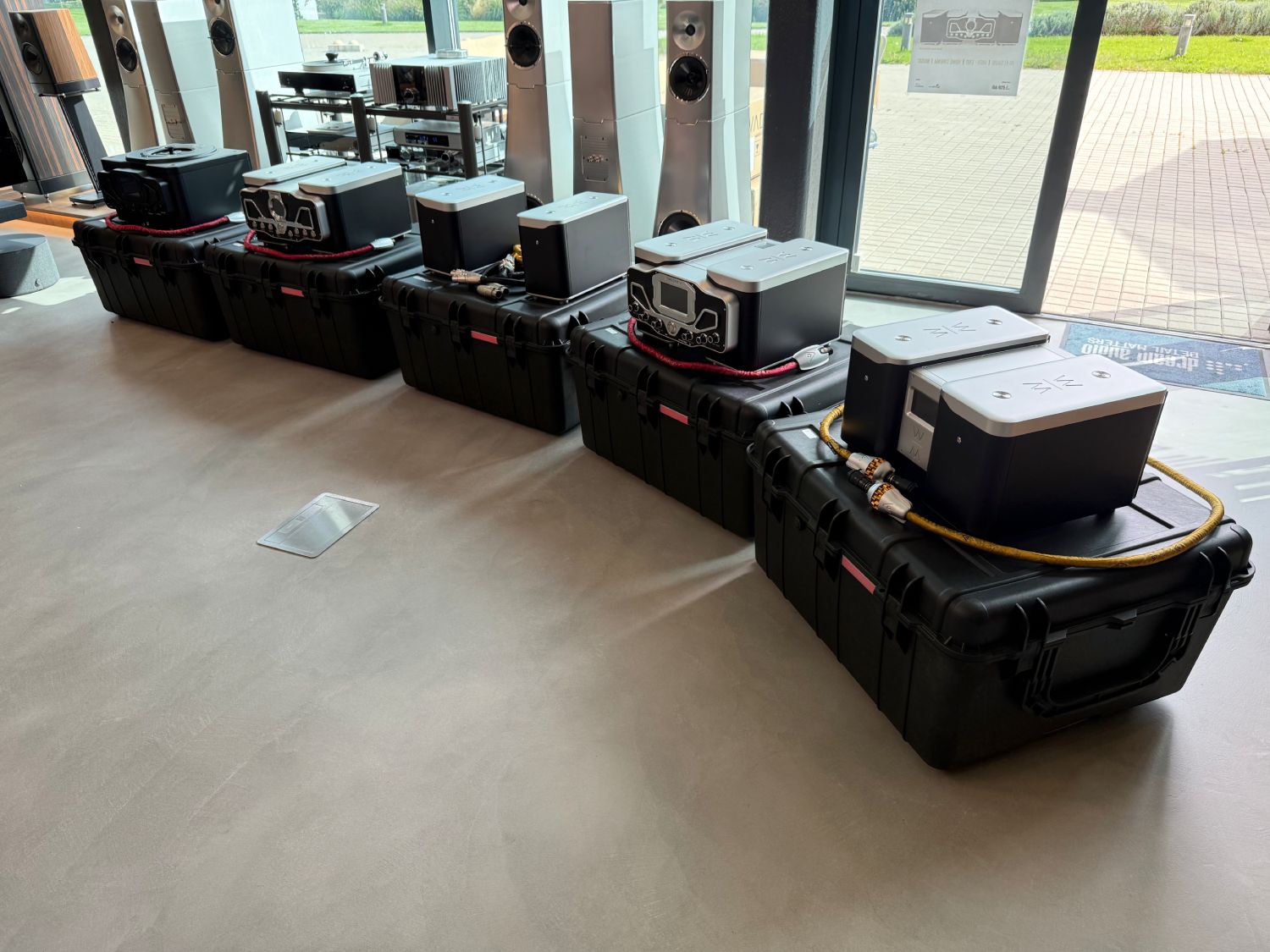
In it you will find exceptionally ambitious components for playing back digital recordings. It consists of a server, an SACD transport and finally a D/A converter; everything is supported by external power supplies as well as utterly extraordinary ("crazy" might also be a fitting word) cables to connect it all.
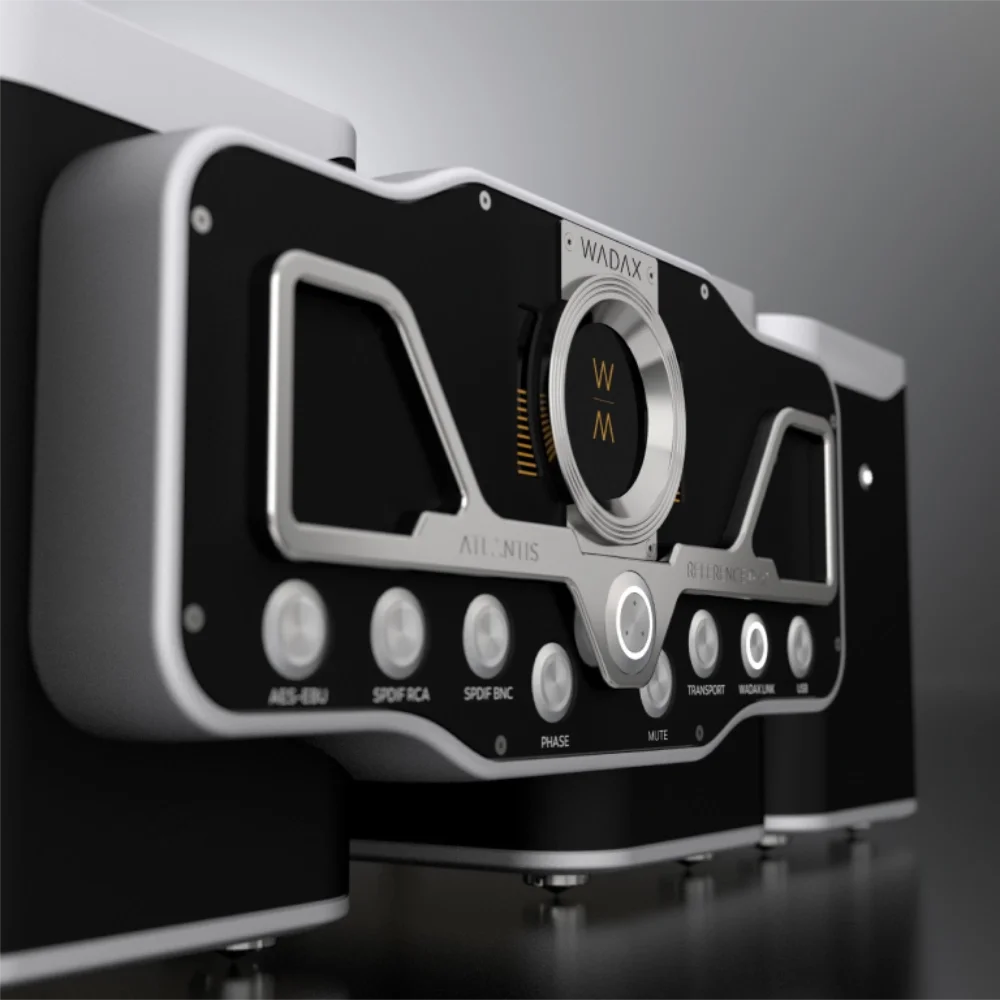
When you see all these components lined up side by side, you clearly sense that you are in a category where nothing matters any more, nothing limits anyone and everything is allowed. The design is completely, utterly and entirely its own.
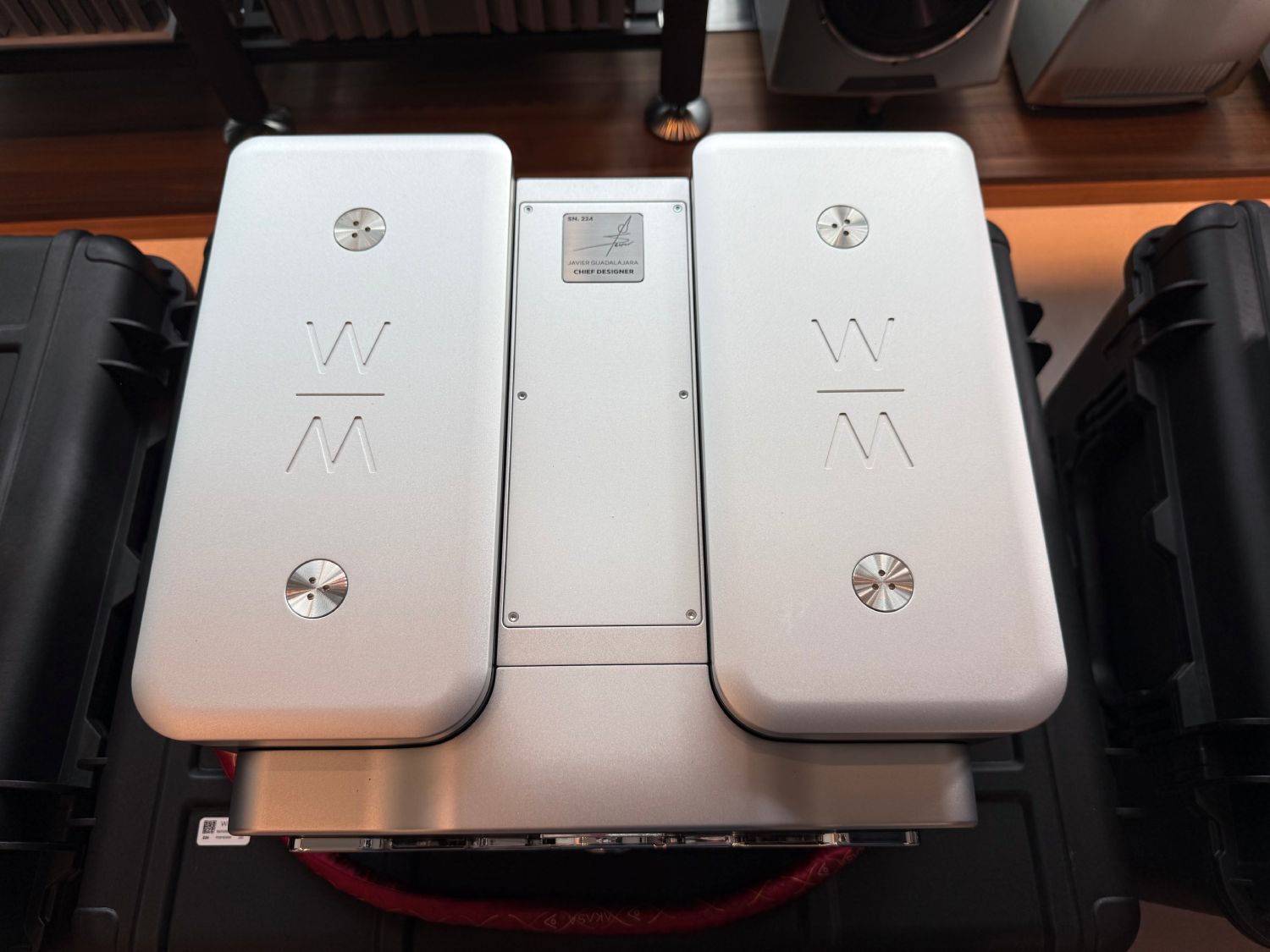
Of course, each part of the chain is a huge affair, made up of two load-bearing blocks on the sides joined by a central bridge. The version with silver accents is striking, but we have also seen an all-black variant that looks as if it had dropped straight out of Star Wars.
The material workmanship needs no words; it is hard to find anything better – this is first-class work. Whether it fits within the bounds of your taste is a purely personal matter. The fact is that these are exceptionally distinctive components and, despite their unusualness, they come across in person as nobly luxurious.
WADAX Atlantis Reference Server
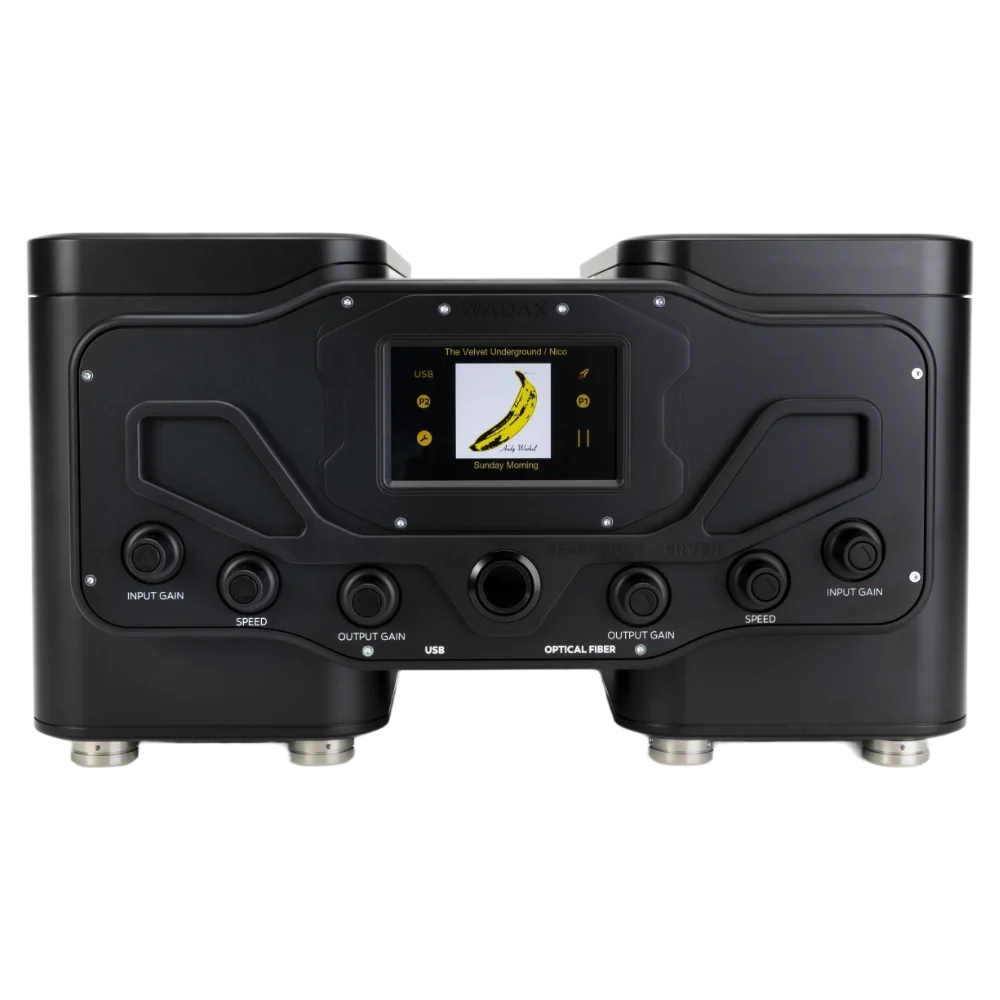
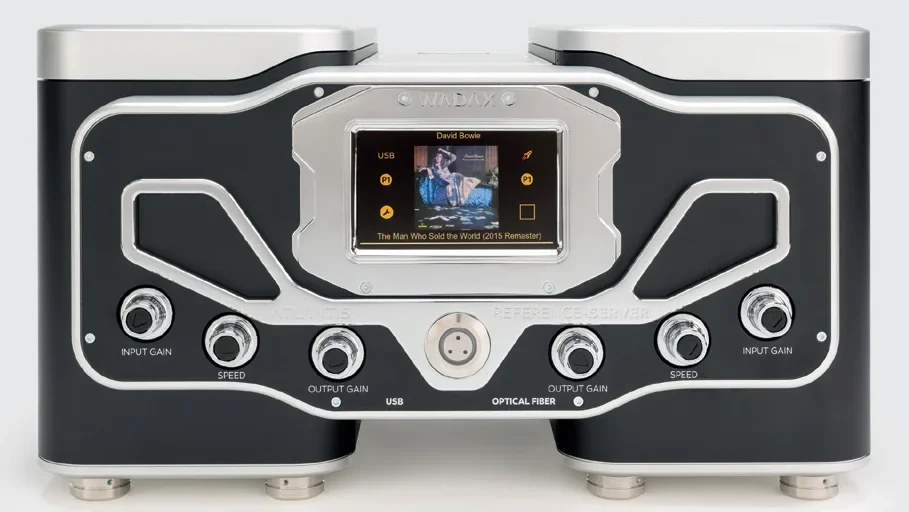
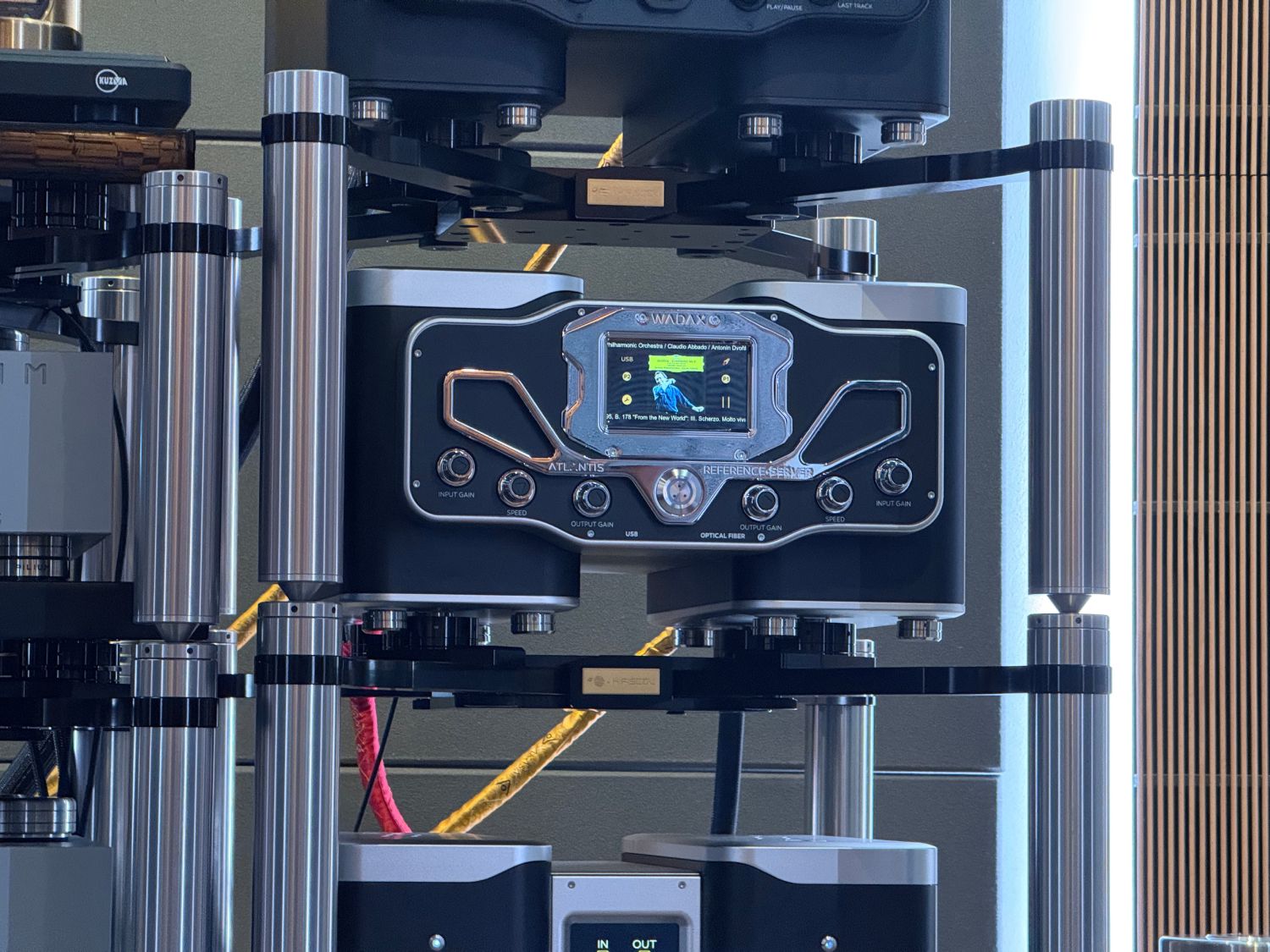
According to WADAX, you should entrust your music collection to the Atlantis Reference Server. As far as we are concerned, it is probably the most meticulously engineered Roon Core of our time. The number of measures, design elements and solutions you will find here is absurd. Not absolute – simply absurd.
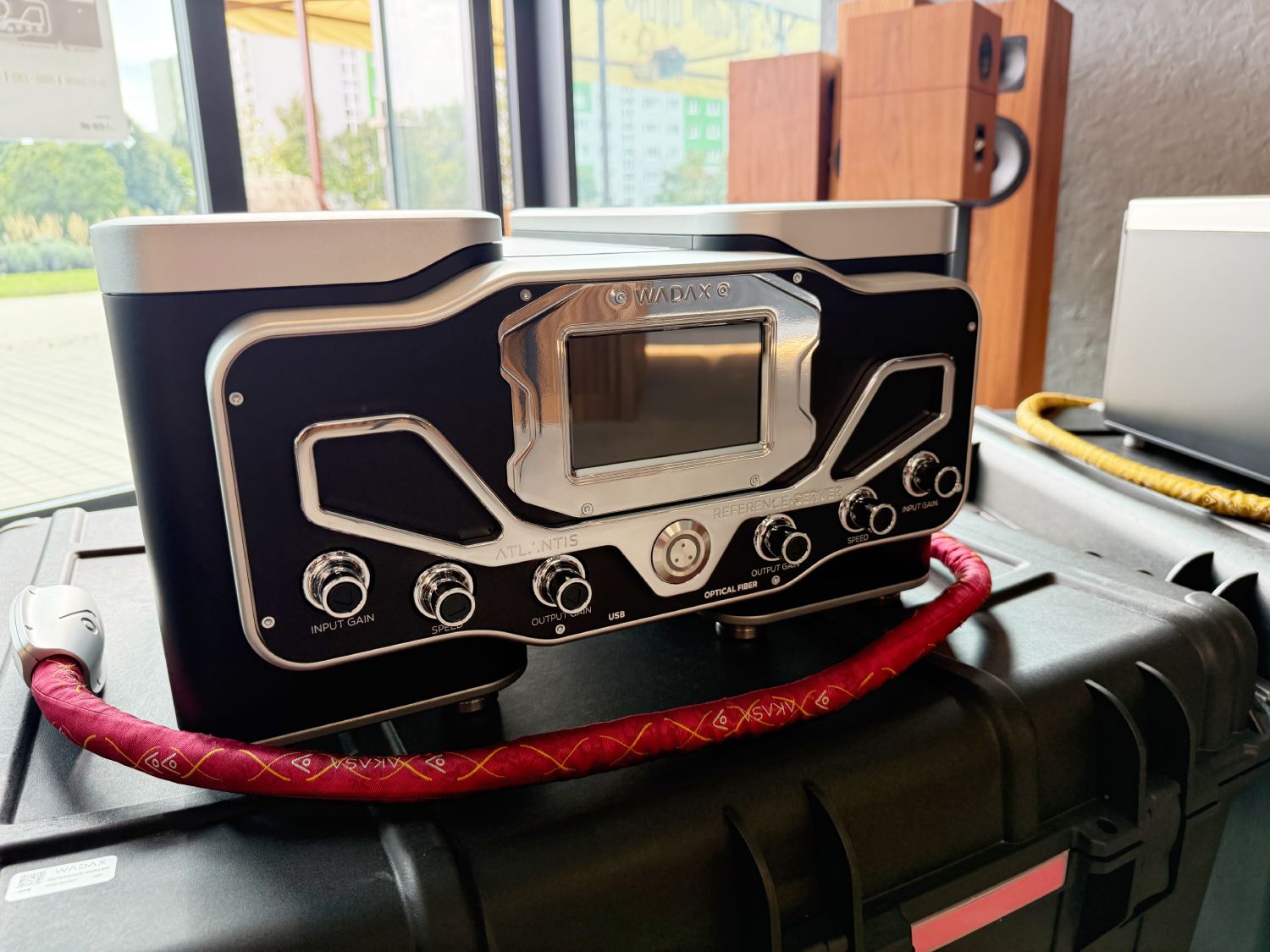
Relative to the size of the component, from the front you see only a fairly modest display surrounded by six controls, not counting the central power button. Besides being able to choose input gain and output gain for each transmission channel, you also set the "speed", which compensates for the "shape" of the signal (in practice, according to WADAX, the form of the rising edges of square-wave pulses) and changes the sonic result (that one by ear).
The mechanical side is subordinated to maximalist isolation. Against vibrations… Against external electromagnetic radiation… Against the inevitable internal electrosmog from the circuits. This is what the various cages, thick walls, complementary materials and many other measures are for. The reason is that WADAX says digital signals are extremely fragile and their integrity is easily disturbed by microphonics, as well as by ambient RFI/EMI, or for example by an unsuitable connector or imperfect transmission protocols. That is why a single chassis actually contains several almost completely separated sections (building one unit requires 50 blocks milled from a total of 150 kg of aluminium and then sorted according to individually measured vibration characteristics – as we said, the care borders on the absurd), including separate grounding and so on.
WADAX devotes a great deal of care to the power supply (and recommends the external Atlantis Reference PSU anyway). It starts with three separate transformers, continues with five-stage regulation and in total counts more than 200 discrete components purely for the power supply.
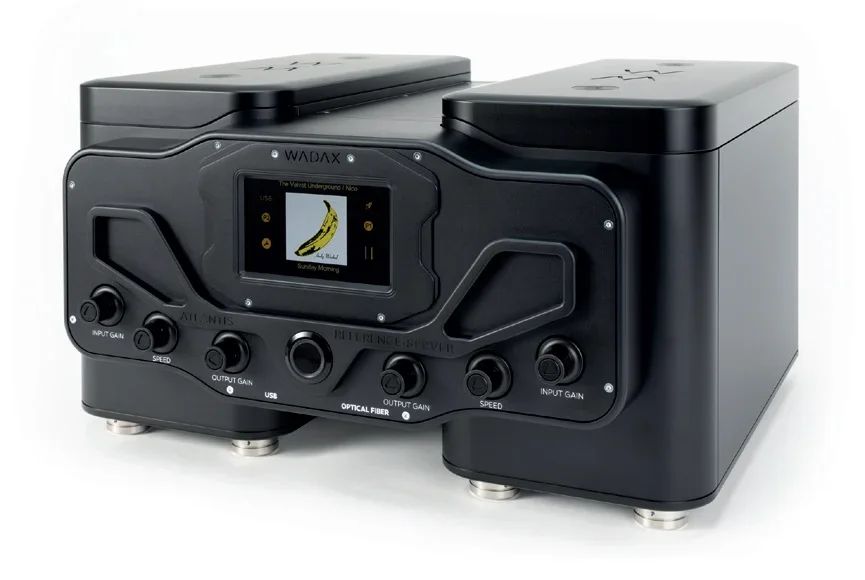
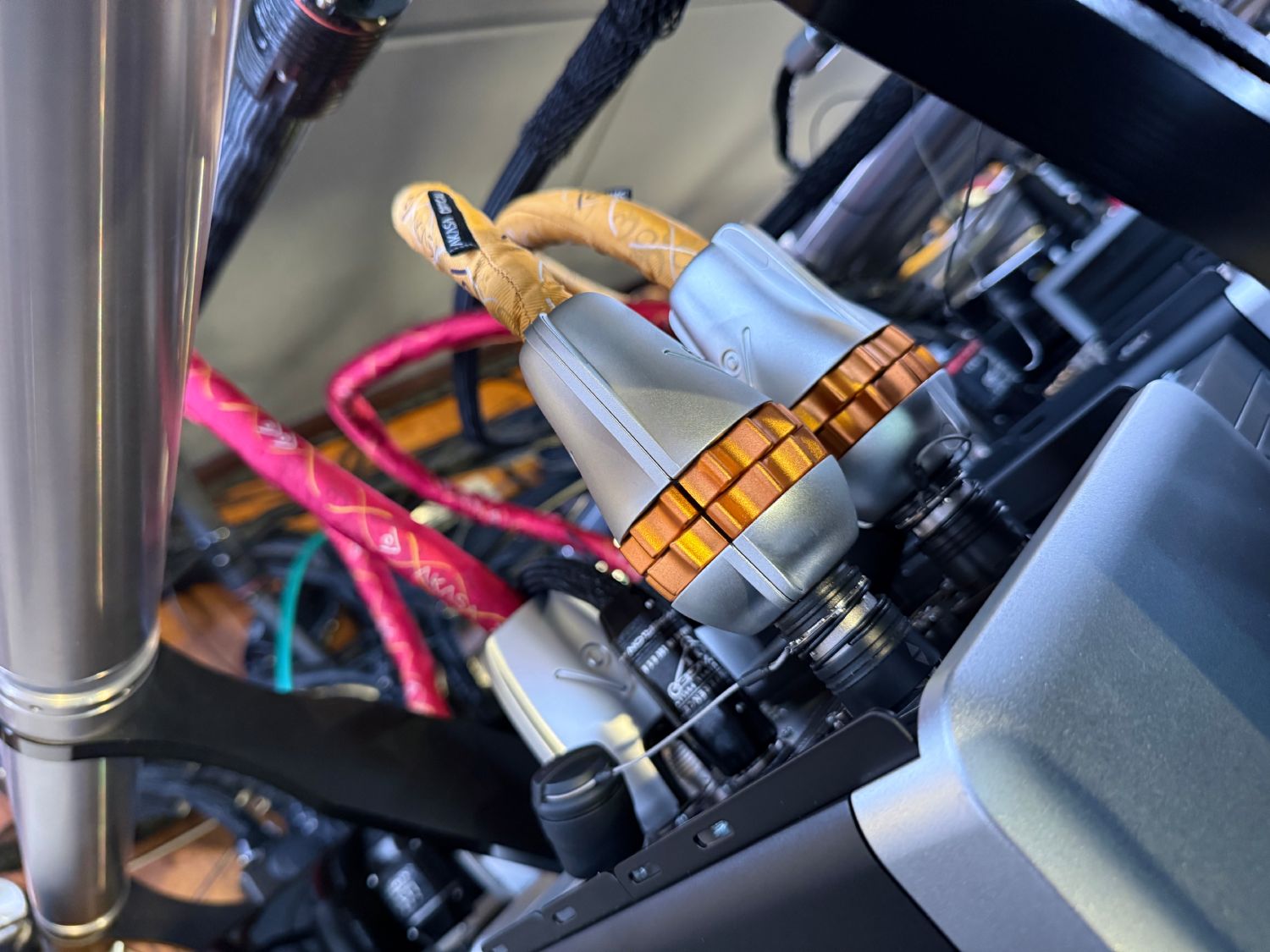
Another oversized solution can be found in the area of isolation from the computer network. As standard, WADAX approaches this with a strong preference for the USB output – the connector on the rear even has its own height-adjustable bracket to support the cable plug for perfect contact. WADAX made its own connector, i.e. the physical layer of the transmission. At the output, the Digital Waveform Control solution is at work. Among other things, it builds on the fact that – as WADAX puts it – digital signal transmission takes the form of analogue square waves, and therefore – again according to the manufacturer – we can hear, for example, differences between USB cables. Supposedly, the buffers on both sides evaluate data quantitatively, not qualitatively, and unlike transfers in the ordinary computer world, an imperfect square wave does matter for music. The Digital Waveform Control function builds on the MusIC Chip 2 (an evolution of the company's first idea, thanks to which WADAX actually came into being). It is a feed-forward type of error correction, compensating for timing, amplitude and phase errors. Fine-tuning is done with the three previously mentioned controls per channel, which let you adjust the character to taste (or to the properties of the cable / signal). Either way, it is an original take on an adaptive USB interface. But if you want even more, you can use the AKASA interface – an optical signal transmission that WADAX developed from A to Z. Optical fibre custom-designed by Japanese specialists, proprietary connectors from Neutrik. And modules with circuit boards straight from WADAX.
The whole server runs on Roon Core, which the manufacturer considers the optimal music library manager. The 43 kg behemoth is 48 cm wide, 27 cm high and 47.2 cm deep.
WADAX Atlantis Reference Transport
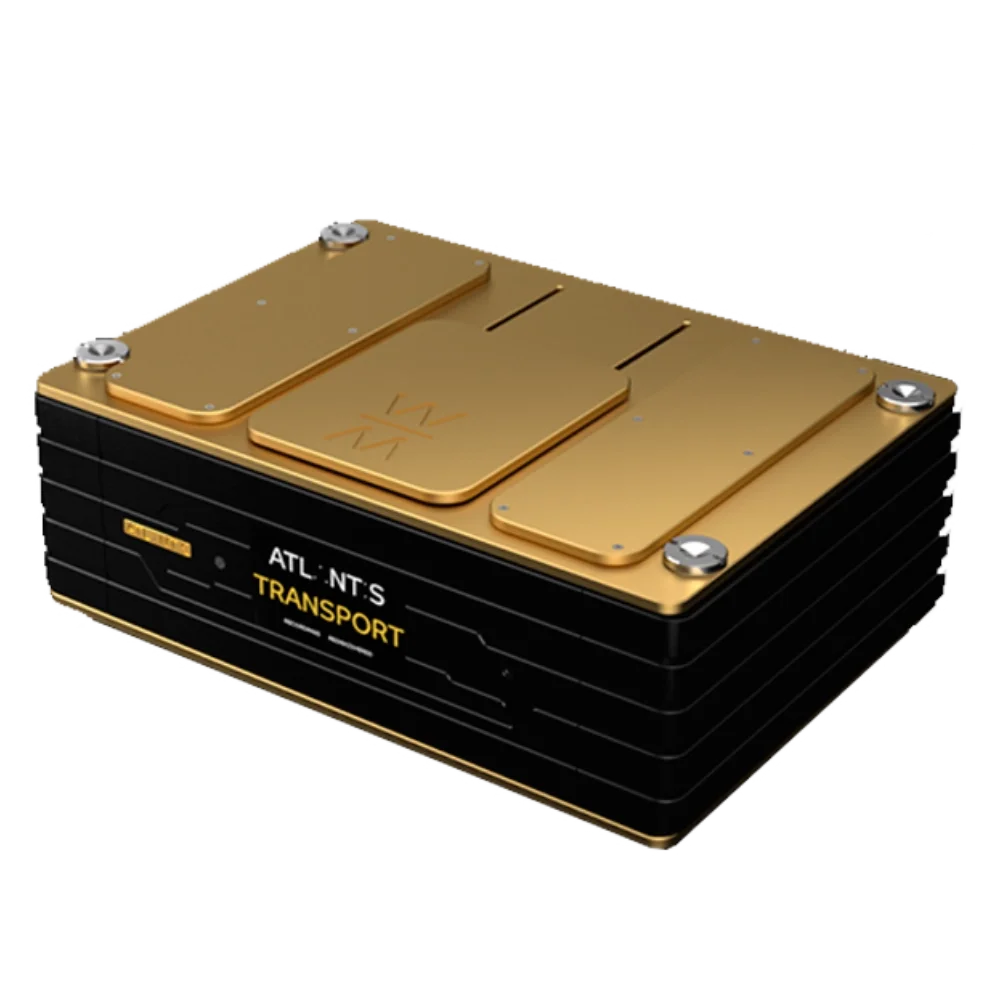
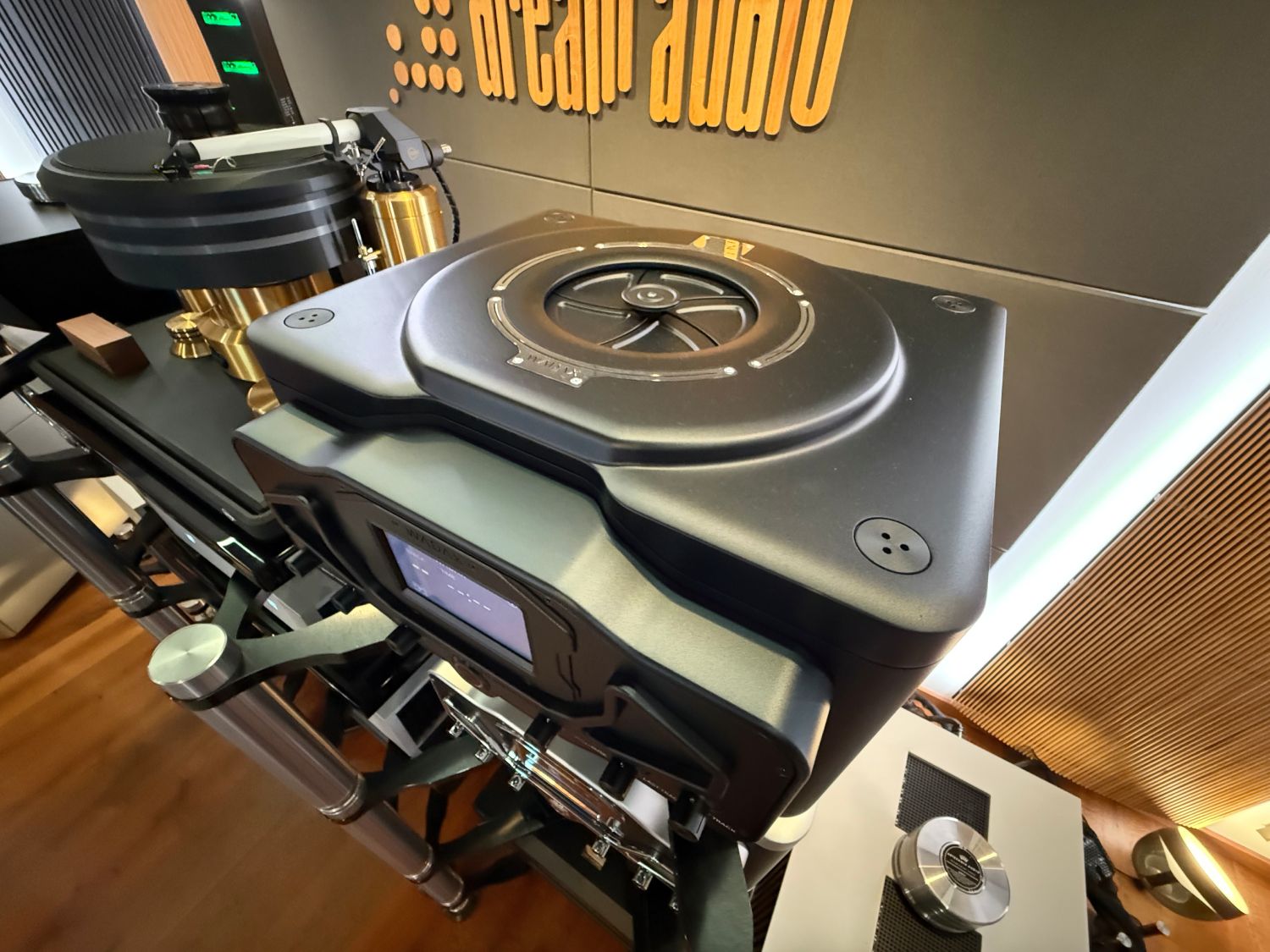
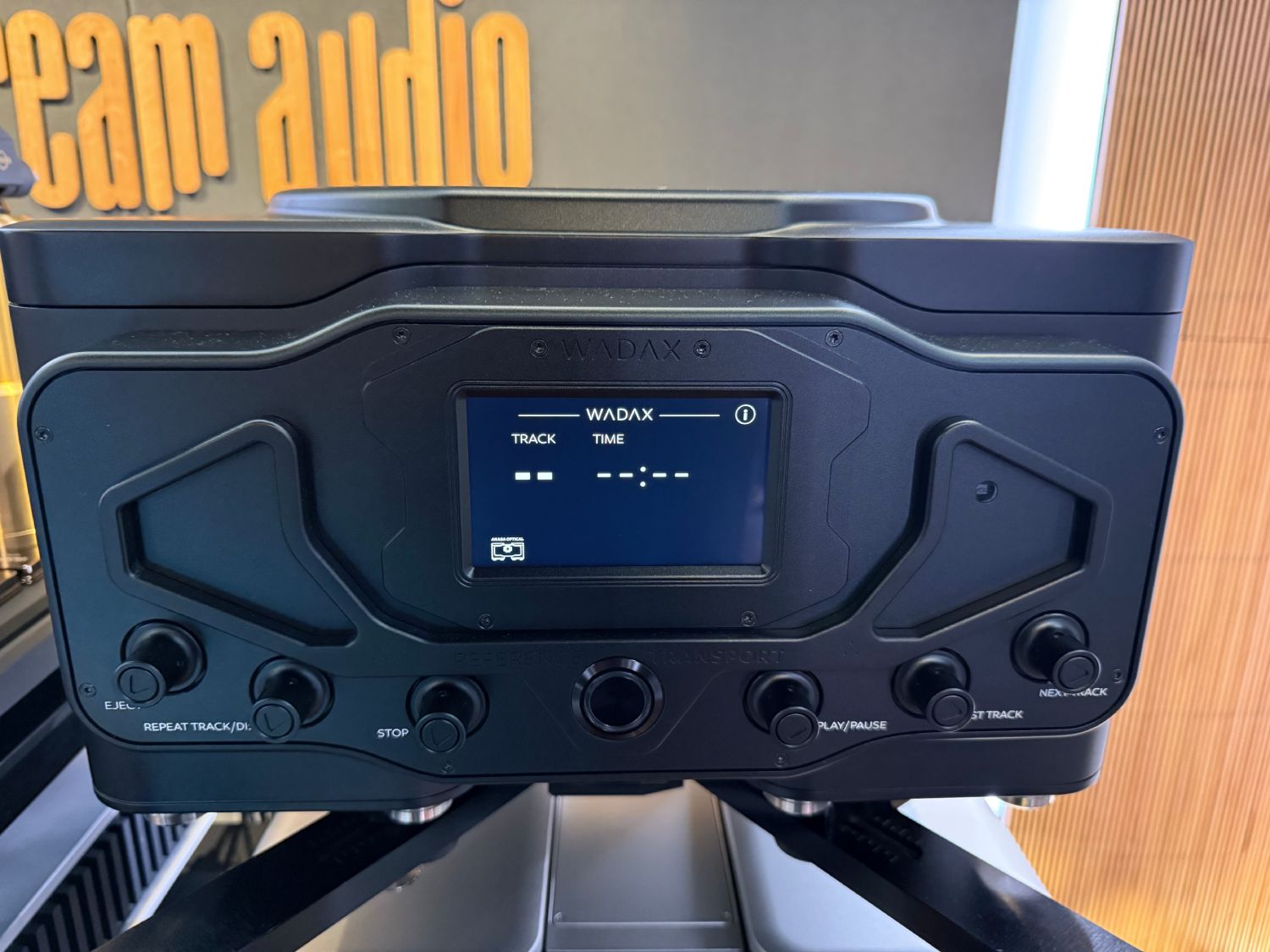
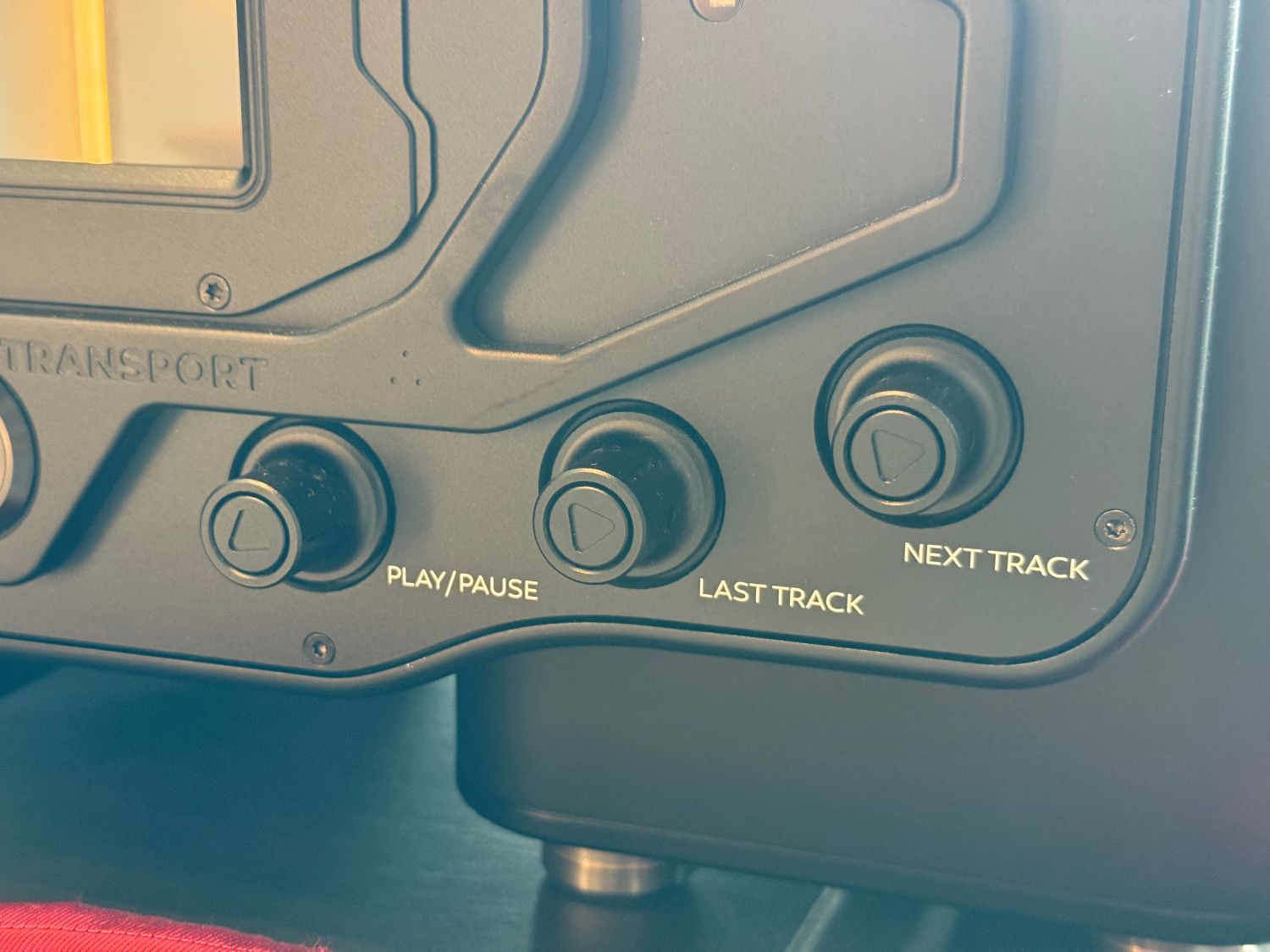
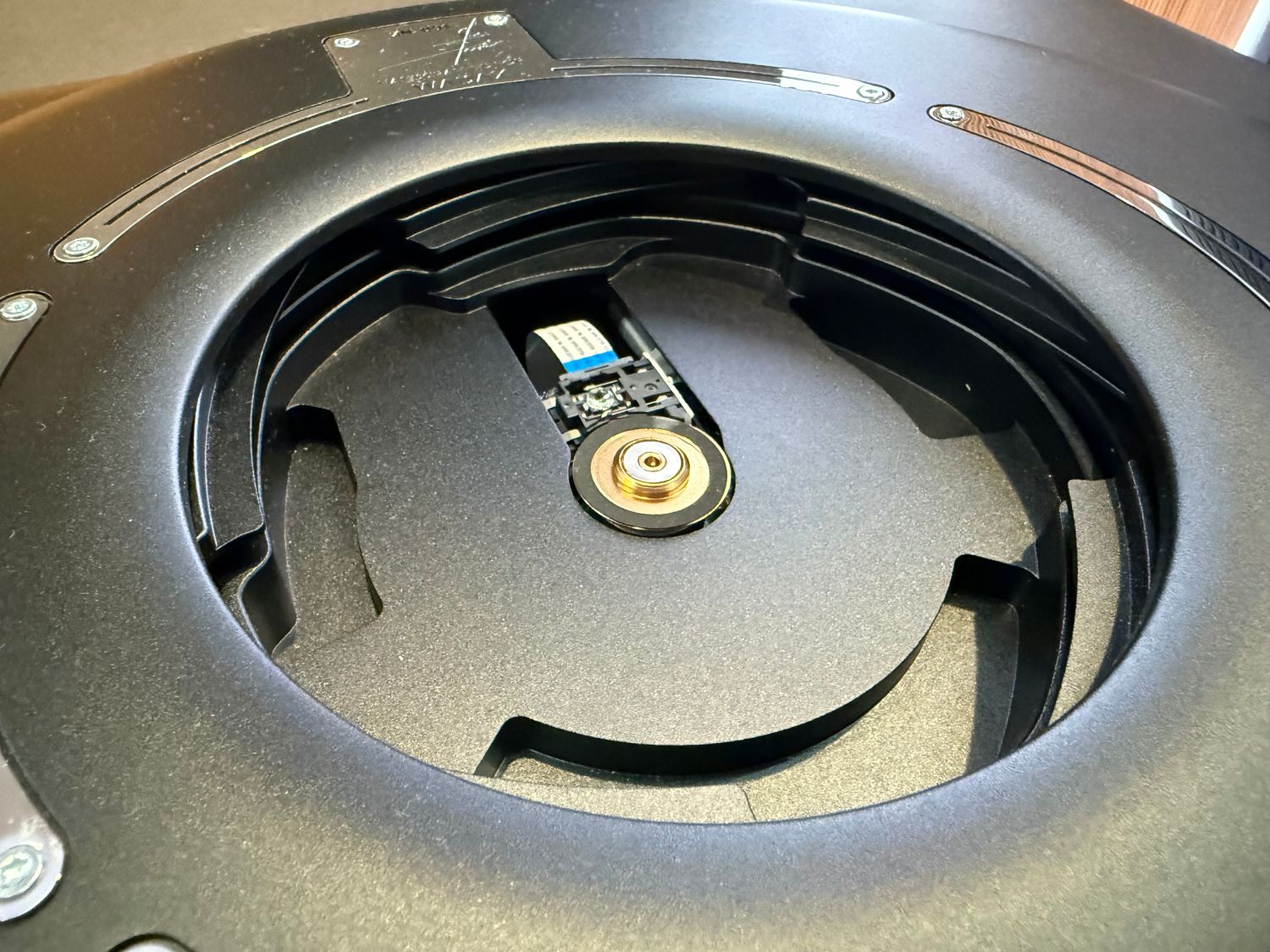
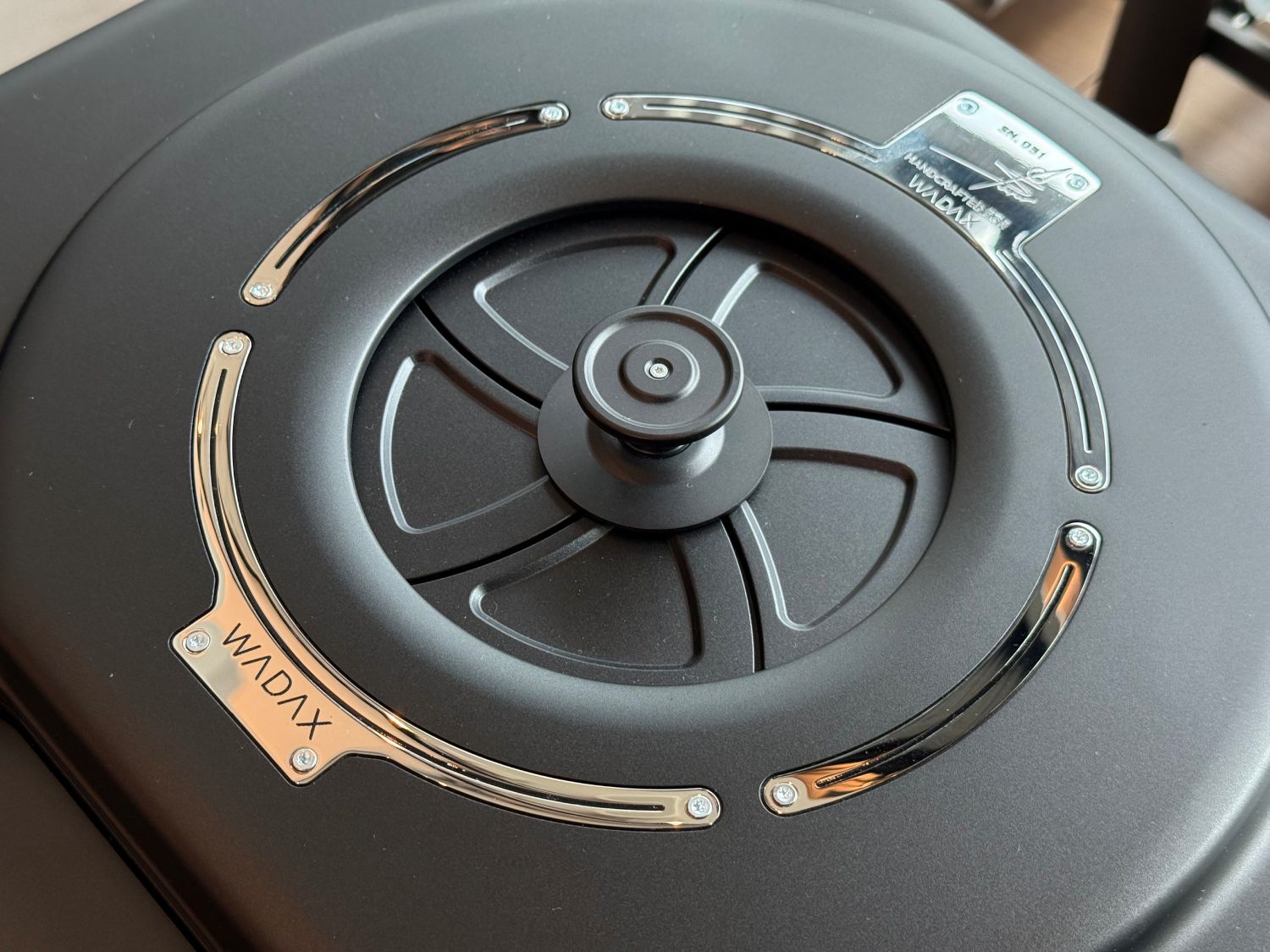
If you don't just have a virtual record collection but also a stock of round silver discs with music, the Atlantis Reference Transport will come in handy, conceived with the same morbid degree of madness as the server described above. Design-wise these are fairly similar boxes, with the same features and comparable dimensions; at the front there is even a display and six buttons for controlling playback. Plus, of course, the central switch. The disc is loaded from the top and the mechanism is among the most impressive we have ever seen. It starts with the way it opens, as a metal rosette sinks into the body of the transport with a slow, graceful movement. If you've seen the film Alien, it is exactly the same effect as the hatches closing while they hunted the title creature. Spectacular, beautiful – at least the first time, you will certainly stand and watch it happen more than once. Even in such a detail, the mechanical quality and luxury are beautifully evident, like the closing of a Rolls-Royce door. The disc is held in place by a tall "puck".
As if that weren't enough, this inconspicuous part is also tunable. By mechanical adjustment – says WADAX – you can influence the reading of discs and digital data; the manufacturer again talks specifically about rising edges, but also about overshooting or, conversely, undershooting the final steady value – in short, we are back to various artefacts of the square-wave signal. How it does this is not specified, but as with the Atlantis Reference Server, the initial shape of the retrieved signal is supposed to influence the analogue result.
Everything, however, starts with the power supply and ultimate mechanical isolation. Although here too, for absolute perfection, you are supposed to reach for the external Atlantis Reference PSU, even if you don't, you get as a basis a pair of custom 400 VA toroids, multiple regulation and huge shielding profiles and anti-vibration solutions. A considerable part of the Atlantis Reference Transport's weight is down to the mechanism itself. The loading mechanism weighs 25 kg and consists of 33 parts and 9 different materials. WADAX calls it THOR PRO, and it is reportedly the result of three years of computer "finite element" analysis. However, which optical pickup the company uses for reading, you won't find out – in any case it supports both SACD and CD discs.
Naturally, the signal output is again available in the form of the proprietary AKASA cable with optical conductor and connector, for which the company, in cooperation with Neutrik, devised 25 anti-vibration and isolation elements. But AES/EBU and coax are also among the options. Plus three XLRs serve as the Reference Link for control, along with an Ethernet interface – twice, in fact: once for internet connectivity and once for the company's own control system. Of course, WADAX uses its Digital Waveform Control technology here too. In other words, here too the signal remains bit-perfect in the usual sense of the word, but the company cares not only about the blocks of information but also about the shape of the waveform that carries them. The roughly 60 kg giant with 620 structural parts in its chassis is again 48 cm wide, 28.5 cm high and 46.4 cm deep.
WADAX Atlantis Reference DAC
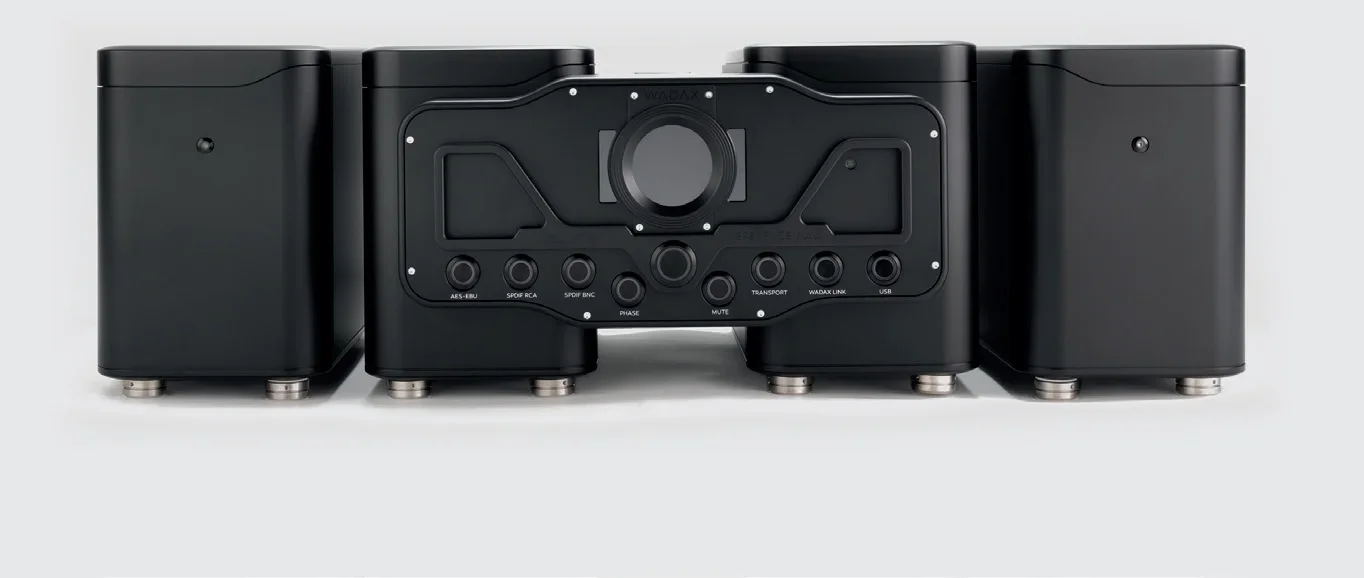
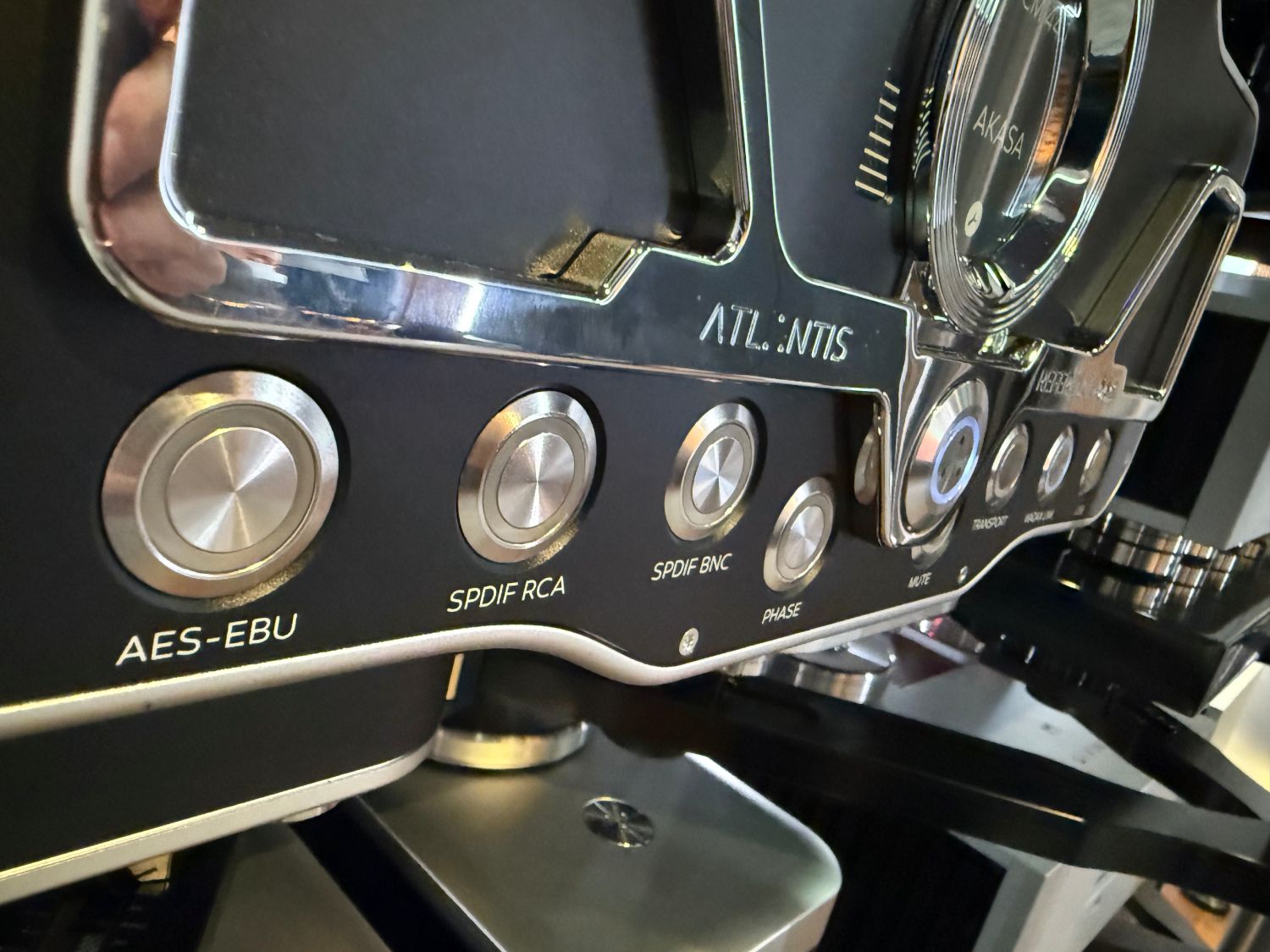
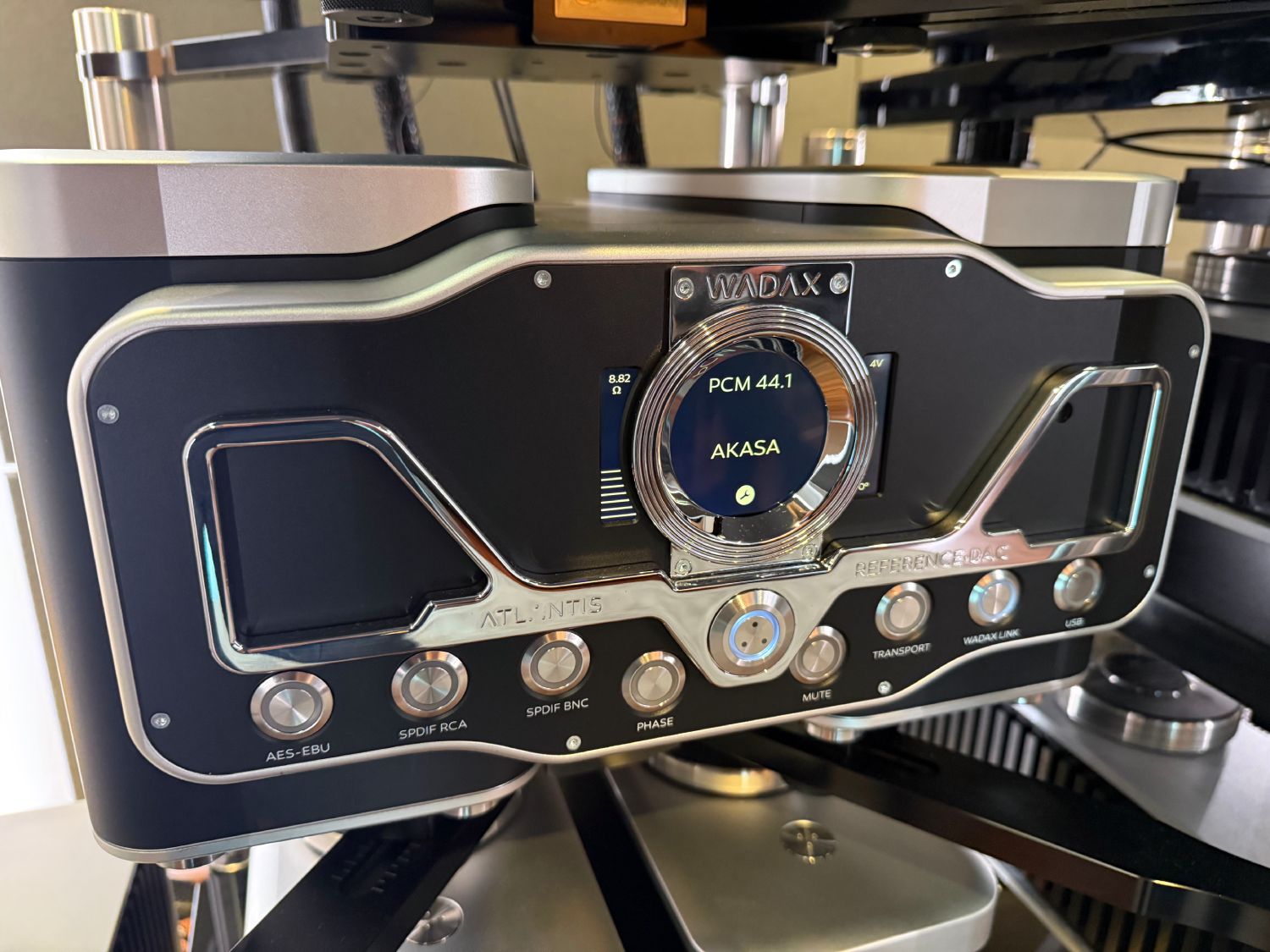
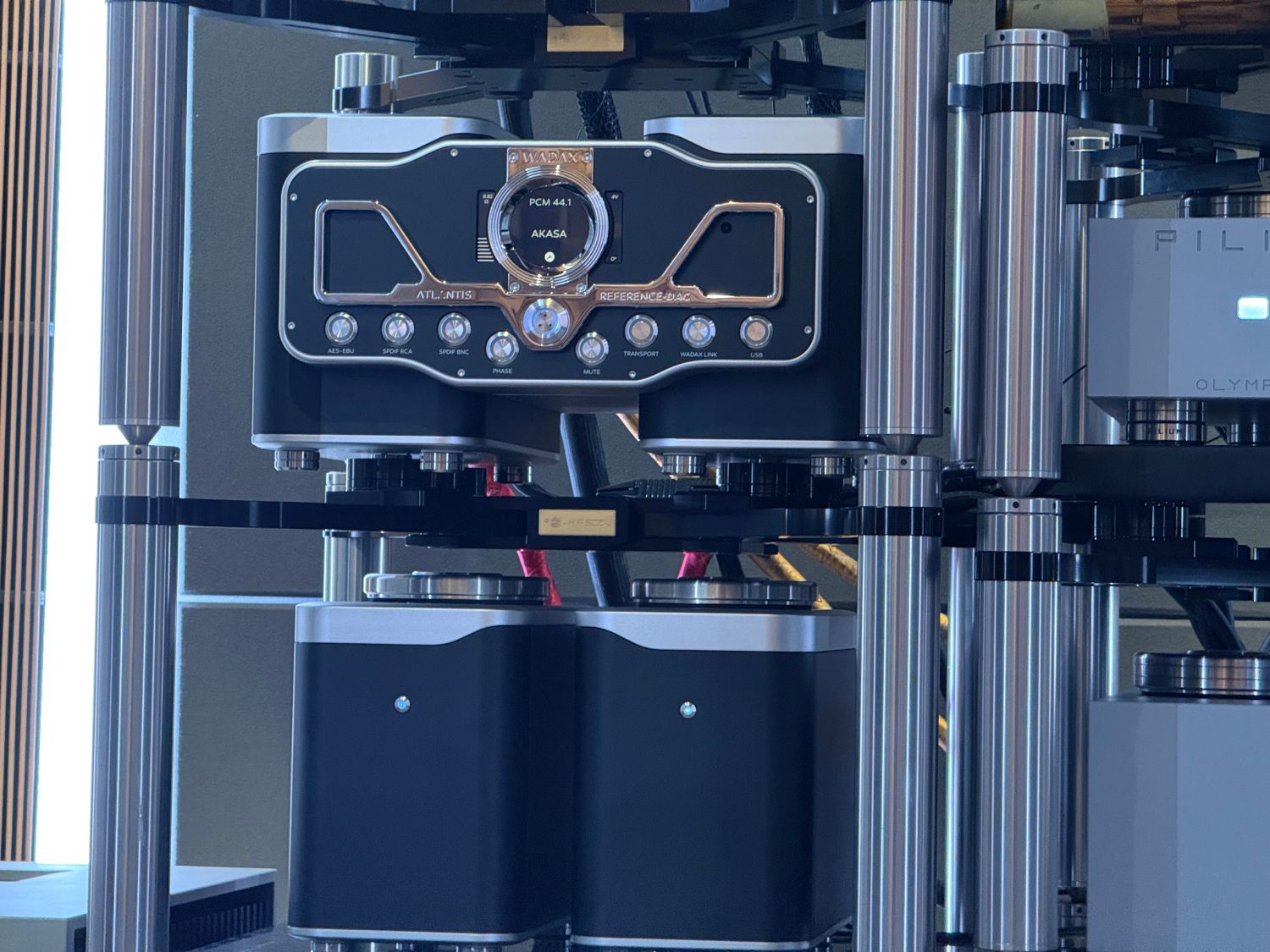
All the source data then ends up in the Atlantis Reference DAC, the sovereign element of the entire WADAX chain – the style of its companions described above is preserved, as are the basic principles. Here the central screen shows only the source and resolution, while the knobs switch between individual inputs; two are for mute and phase inversion. Aesthetically, you can also place a mono power supply block, included in the delivery, at each side. The Atlantis Reference DAC thus gains yet another dimension – not only physically but also in terms of visual impact. Incidentally, each unit starts out as 320 kg of material, comprising five different alloys, which are then machined and assembled over a process of about 100 hours.
In fact, the Atlantis Reference DAC has five almost independent blocks – two completely separate power modules, each channel separately, and between them a connecting space for future expansion modules. Only the control is shared; the rest is carefully separated into right and left blocks. Equally meticulous is the internal layout, consisting of 23 printed circuit boards in separate shielding cages, which also allow for a modular upgrade in the future. If any part of the system no longer meets current standards, it can be replaced – and only that one targeted piece, not the whole.
The positive madness of the Guadalajara family shows in all other parts of the design too. The entire Atlantis Reference DAC relies on some five and a half thousand (!) discrete components. Physical and electrical channel separation means true dual mono in a balanced configuration. And of course the company's feed-forward MusIC Chip solution cannot be missing here either, this time in its third generation with 128-bit resolution. Inside there are also 10 custom-designed transformers serving various purposes, and the company boasts that residual noise in the 1–100,000 Hz band does not exceed 0.5 µV. This is also thanks to 30 local regulators and five-stage regulation of the DC supply. For clocking, the company uses its own Zepto Reference technology with a total timing error (jitter) below 12 femtoseconds.
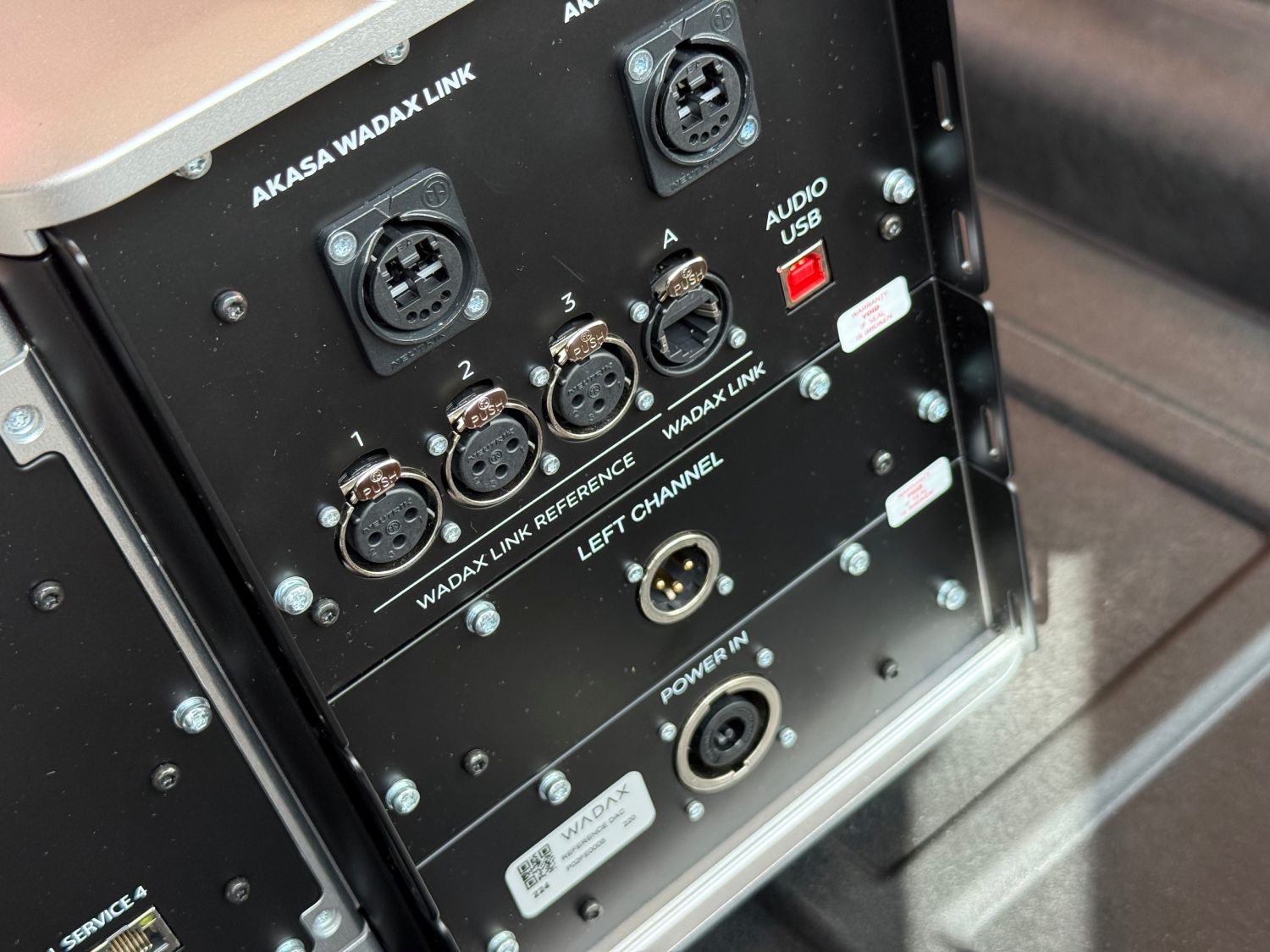
The inputs include USB (up to 32 bit/384 kHz and DSD256), two coax, two BNC, two AES/EBU (all 24 bit/192 kHz), plus the Native Wadax Reference Link, consisting of a combination of three AES/EBU and one RJ45, and of course the Akasa optical input. Not entirely common is the option to select the output voltage on the XLR connectors in three steps – 1 / 2 / 4 V – but above all the adjustment of output impedance in steps of 0.4 / 7.4 / 7.5 / 8.2 / 8.3 / 8.7 / 8.82 / 9.84 / 10 / 28.57 / 30 / 46.15 / 50 / 66.67 / 75 / 600 Ohm. In the end, the company does not say which D/A converter chip it uses here, nor in what implementation. Only between the lines will you read that it relies on a chip rather than on some proprietary discrete architecture.
The main chassis is again 48 cm wide, 46.6 cm deep and 26.5 cm high. It shares the height, as well as the depth, with the individual power supply towers, which are 18.2 cm wide. How much the whole thing weighs you won't find out, but the aforementioned 320 kg before machining hints at something.
WADAX Atlantis Reference PSU
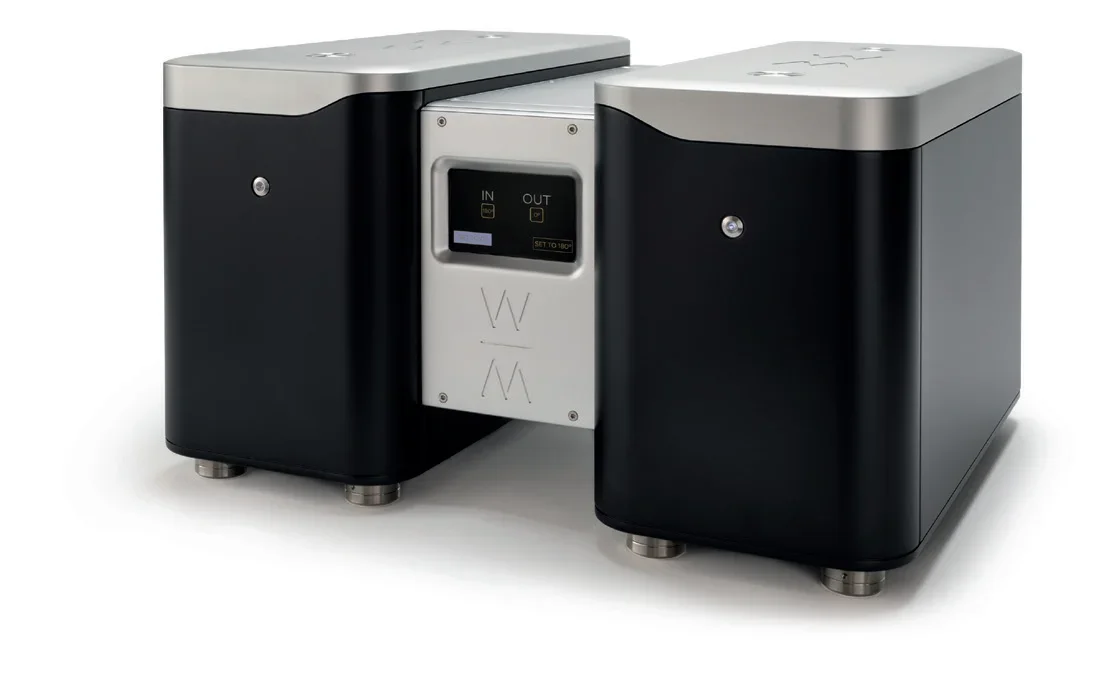
Each of the components described should ideally – because if you are looking here, you are looking for the best – be accompanied by a separate external power supply sharing the design language of the individual components. With the Atlantis Reference DAC you don't need to worry about it, but elsewhere you do. In the Atlantis Reference PSU, one tower houses the input, the other the output, and the middle module, in addition to the physical connection, also provides an interface for updates.
Most importantly – according to WADAX – this power supply offers a practically perfectly noise-free DC output. In the 0.01–20,000 Hz band, the noise level at full load does not exceed 100 nV. Thanks to the front touchscreen, you can also work with the power supply to some extent – you can see the phase at the input and output and invert it independently on both. The weight of 45 kg is due not only to the width of 48 cm, depth of 43.5 cm and height of 26.5 cm, but also to some fifteen hundred internal components ensuring filtering, stabilisation and overall optimisation of the power supply.
WADAX AKASA
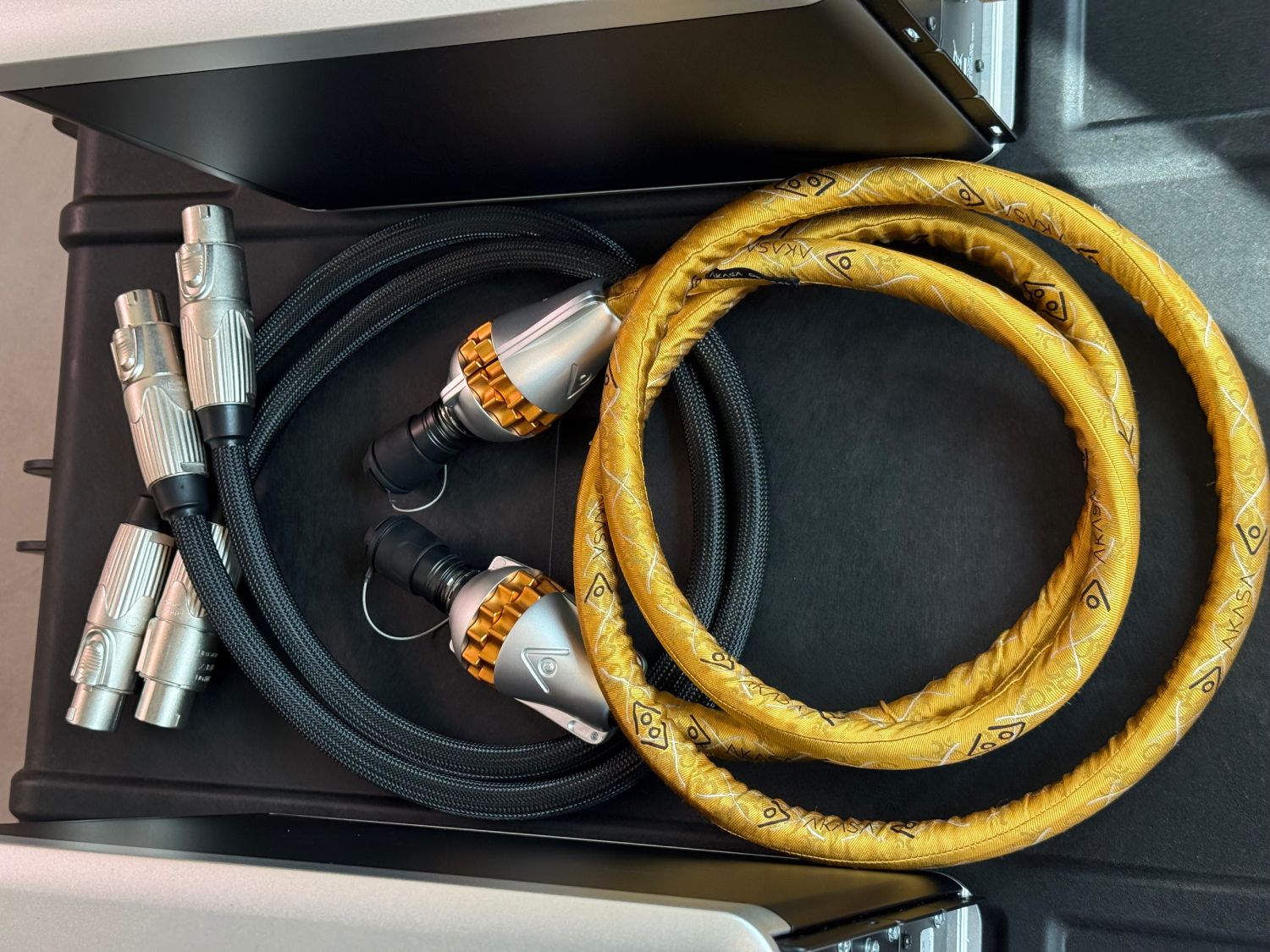
Just briefly here – although you can use fairly standard cabling, the manufacturer naturally recommends opting for premium cables. AKASA models are available as power cables (red) and as signal / optical cables (gold). The latter come in a minimum length of 2.2 metres, because WADAX says that it is at a distance of 2 metres or more that connected components lose the possibility of influencing each other.
The power version is made from a gold and silver alloy with long crystals to minimise impurities and discontinuities in the material. The twist geometry of the strands was also reportedly carefully calculated, as was, of course, a suitable cross-section with regard to mechanical durability and the (im)possibility of inducing external interference. Here too, as with the optical cables, you will find a mechanically extremely complex connector with the well-known Neutrik plug.
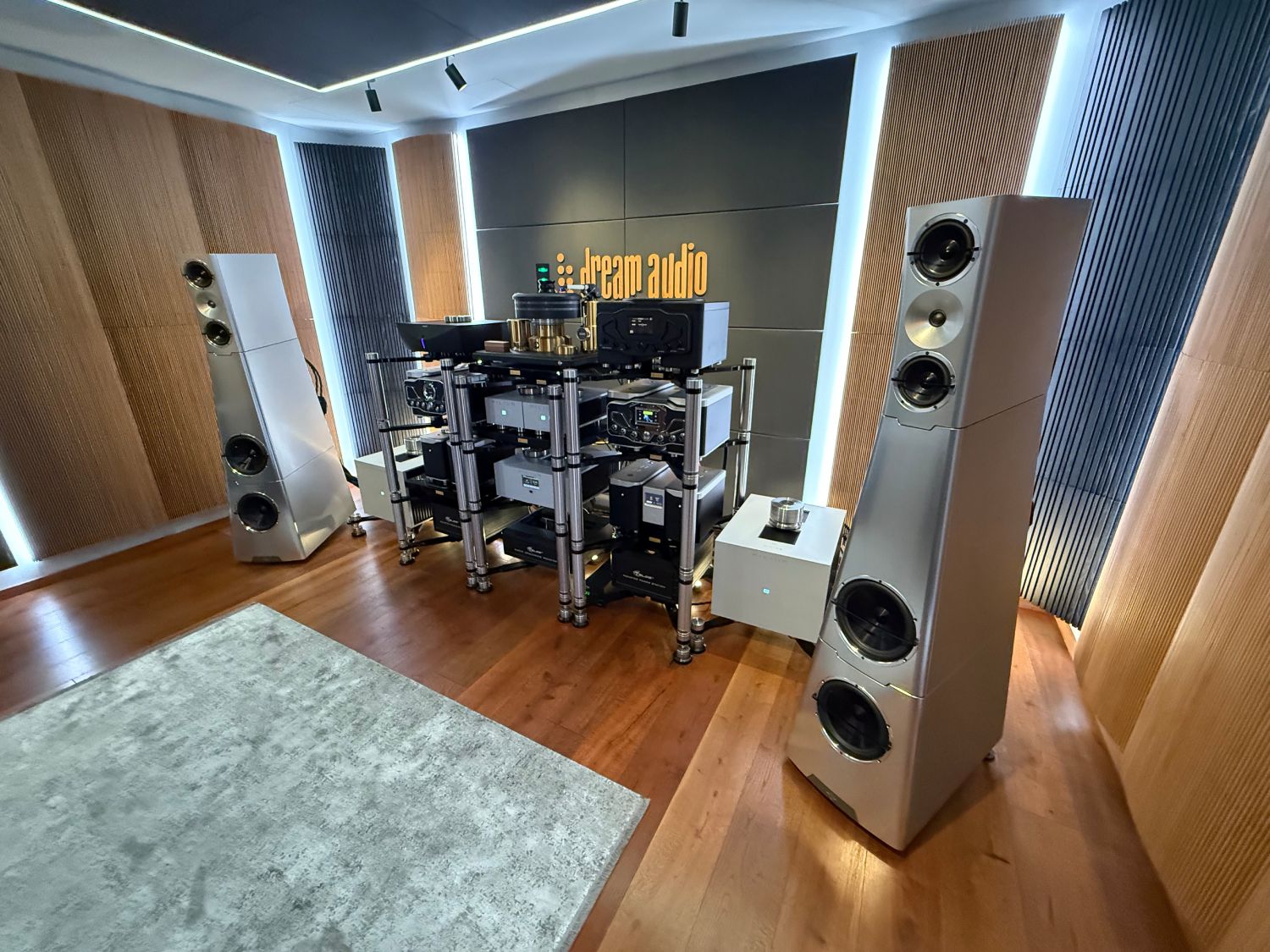
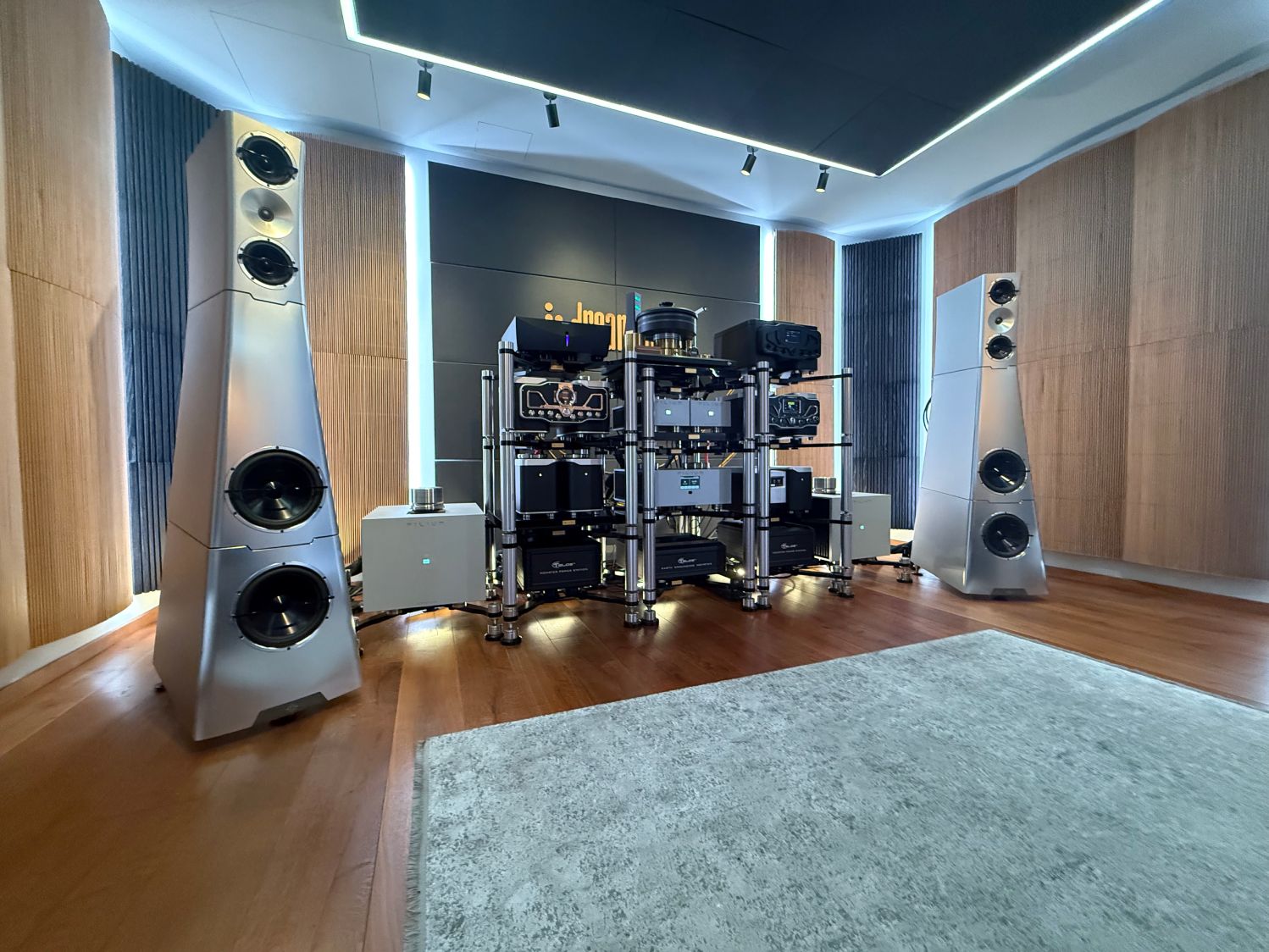
The listening took place in the importer's showroom with several setups. Constants were YG Acoustics Sonja 3.3, a range of Stage III Concepts cabling, Paul Pang switches and the comprehensive Telos Monster Power Station power solution. On one occasion, all of this was amplified by a Ypsilon system in Aelius II / Hyperion bi-amping, controlled via the PST 100 MK2. Alternating with it was the Pilium Olympus / Kratos combination from the Master Divine series. In this chain we heard, for example, the Taiko Audio Olympus or the WADAX Studio Player and other solutions.
The unobtrusively pulsing yet strong and distinctive foundation of "Paper Trails" by New York electronic duo Darkside ("Psychic" | 2013 | Matador | OLE10355) unfolded into a beauty that is almost hard to describe. It is the same soft, caressing and gorgeous-sounding Studio Player style, but multiplied and considerably more luxurious still. The character of the Atlantis Reference system, with its enchanting musicality, came through in every variation of the setup and in each configuration brought out catchiness and sweetness to an extraordinary degree. It is completely supple, yet absolutely assured; unpretentious on the one hand and impressive, huge and completely relaxed in its flow on the other. The articulated darkness of the low end is in no way exaggerated proportionally – there is no other way to put it than that everything is here. If we had to sum it up, the most striking thing is the "analogue feeling", unique in its expression and truly, truly immersive, making you want to savour note after note like a sip of the finest wine. Talking about qualities makes no sense here – it is definitively top-class, precise and perfectly clear presentation; what matters much more is the character: truthful, yet seasoned with that continuous, living and breathing sweetness.
"Trois Poèmes" performed by French soprano Véronique Gens ("Nuits" | 2020 | Alpha | ALPHA589) sounded truly alive. It is actually hard to describe, but there was that combination of gigantic proportions (it's hard to say whether we have ever heard a more expansive presentation, although of course the rest of the chain contributes to that, not just WADAX), euphony and the feeling that here you really are looking into an indisputable reality. Where the Atlantis Reference excels most is in balancing technical precision with the complete removal of any sense of technology. And this produces a sense of fascinating naturalness and liveliness in the sense that "the musicians have arrived", to use the well-known phrase of Czech audio authority František Kraut. If you want, you can dissect the recording, look for subtle nuances of reflected reverberation in the background (they are there), short breaths (they can be heard) – but everything sounds with perfect continuity and endless grace. The midrange feels miles away from perfectly measuring, analytical and formally neutral players thanks to its refined elegance, which remains constant across all changes in the rest of the chain.
In the highest notes of "My Favorite Things" by South Korean singer Youn Sun Nah ("Same Girl" | 2010 | ACT Music | ACT 9024-2), we were literally spellbound by the wealth of shades and their naturalness – that unforced yet utterly credible form, a metal you can almost taste on your tongue. The Atlantis Reference mixes in its own signature here, yet the result sounds fantastically real, whatever the reason. It is rather as if the whole set of source components worked not as a converter of digital form to analogue, but as a transformer of a technical recording into tangible reality. Despite every imaginable degree of detail, WADAX manages to eliminate any residual harshness in a precise recording. There's no need to worry about reverberation, detail or anything else – it is top-notch, because it cannot be otherwise; at this price level, WADAX would not stand a chance otherwise. Moreover, here too you perceive the euphonious beauty of absolute continuity, smoothness and delicate yet very "present" elegance.
The dynamic pulse of Duke Ellington's band with Ella Fitzgerald singing in the classic big-band "Caravan" ("Verve Jazz Masters 4" | 1994 | UMG | 00602455164940) had truly massive power with the WADAX ecosystem connected. Not aggressive, not pushy, not showily dramatic. But monumentally large, flowing, beautifully unaffected. One could almost say that the Atlantis Reference plays with surprising modesty – there is nothing more here than a realistic picture of the orchestra, unembellished, with nothing added. And at the same time without limits. When the brass lean in, they pierce you with the force of gamma rays and the density of shifting tectonic plates, yet it all happens with disarming ease. And when the section reaching down into the lower octaves blows, it uncompromisingly fills the entire listening room without the experience ever slipping into mere sound – what remains is always living music, immediate and alive.
We have already mentioned that the Atlantis Reference has a sound so big it could almost have its own gravitational field. Yet in "If You Could Read My Mind" by Gordon Lightfoot, for example ("If You Could Read My Mind" | 2009 | recorded 1970 | Warner | 075992745161), despite all that impression, it does not come across as artificial – rather as if at a concert. Here too the feeling is utterly luxurious – the music envelops you softly, never imposes itself, and yet spreads into every corner. If we may put it this way, the Atlantis Reference system is the most complex and smoothest-sounding front end we have ever encountered. It has silky grace, yet absolutely all the information is in it. Clean, not austere, concrete yet gentle, effortlessly legible, but still calm and rounded. A guitar is simply a guitar, the voice human and clear. A mundane description simply cannot capture the feeling of listening – again, all one can say is that every detail of the recording is in the right place; it is drawn without limits and yet primarily homogeneous and non-technical, completely "analogue".

And the space? "If I Could Sing Your Blues" by Sara K. ("Play On Words" | 1994 | Chesky | 090368027863), thanks to David Chesky's care, has a beautifully sketched musical stage, with the instruments and the singer set deep and a very distinct ambience. WADAX – and this was the first time we had heard it like this – pushed the boundaries of the stereo image beyond the physical walls of the room. You even get the feeling that a new space has materialised within the room you are sitting in, with its own walls off which sounds reflect and which define it – left to right, front to back and finally even vertically. The result can only be described as completely "normal", because at the right volume you feel you are in the same room as Sara K. and her fellow musicians. And no, it is not down to extreme focus, total transparency or some other technical attribute, but precisely to the fact that these qualities never even cross your mind while listening.
"Ramblin' Gamblin' Man" by Bob Seger and The Silver Bullet Band ("Live Bullet" | 1976 | Capitol | 0060255777458) is a true rock concert, a live essence of the seventies. And as rendered by WADAX, that's exactly what it is – the rock onslaught of a superbly mixed live gig, without a trace of fatigue, yet with forward drive and the prominent penetrating power of a live performance. Nothing is harsh, nothing is left out, and even at high volume that sweet taste of WADAX musicality, the intimate contact with the music, is not lost. The built-up atmosphere is not aggressive at all, yet it is everywhere and it is a superb listen – a fantastic example of how a digital signal can be made truly analogue. An incredibly entertaining experience…
A separate paragraph, however, is deserved by the final listening moment, which came with the insertion of the "Tannoy 85th Stereo Test Record" CD from the fantastic ABC Records. This disc opens with a recording of Bach's most famous "Toccata and Fugue, BWV 565", with its monumental opening peal. The Atlantis Reference Transport lifted the experience one level higher still than the already fantastic Atlantis Reference Server had managed. Although you'd think there was "nowhere further to go", the disc player was able to offer considerably better concreteness, massiveness and physicality – as if you were standing in a bell tower as it strikes the hour, and then moved to a church pew, where the organ pedal, tuned deep below 20 Hz, breathes through you – and you feel every single hertz. The transport (naturally in combination with the Atlantis Reference DAC and the extreme cables) belongs in the royal class. It's hard to recall more than one or two other transports that have given us as many goosebumps as the Atlantis Reference Transport.
Just as intense and beautifully emotional were Randy Owen's "Amazing Grace" and Alison Krauss's somewhat dark "Jacob's Dream". And the punchy drums in "Jazz Variants" by The O-Zone Percussion Group sound assertive and authoritative – everything has its place and time. Playing silver discs is thus an unrivalled, fantastic experience in which you easily lose all sense of time and space.
Of course, at a price of around 15 million Czech crowns for a source component capable of playing all kinds of streams as well as CD / SACD, you somehow expect everything to work. And to work well. All of which the set of Atlantis Reference components and Akasa cables fulfils. Of course it does. They are luxuriously built components that also work perfectly smoothly – but again, that is nothing you wouldn't expect for this abstract sum. The fact is, however, that the listening experience remained consistently amazing, regardless of swapping other parts of the setup. As if the WADAX Atlantis Reference could push the music in full format through anything that follows in the chain.
What sets it apart from other über high-end solutions is above all its emphasis on analogue-like output, on a continuous, colourful, full-blooded form that it spreads not only from wall to wall but even beyond. It creates a truly distinctive, unconstrained and authentic-feeling space into which it draws you while erasing the surrounding world, so that you remain in intimate contact with the music and perceive neither time nor place. The WADAX Atlantis Reference is truly a reference-grade musical signal source. Thoroughly unorthodox in almost every respect. It is, of course, a toy for the chosen few, yet the memory of listening to it is one of those that never fade…
Pros
- phenomenal SACD transport
- maximalist "no expense spared" construction
- the Rolls-Royce of signal sources – quality, performance and luxurious nobility in a uniquely conceived package
- the ultimate sense of colourful naturalness
- monumental dimensions of the soundstage
- "live" flowing energy
- quick and stable response, as well as wide-ranging and easy setting options
- a benchmark of musicality
Cons
- the price is now just a cluster of numbers with an abstract value
Related products