 English





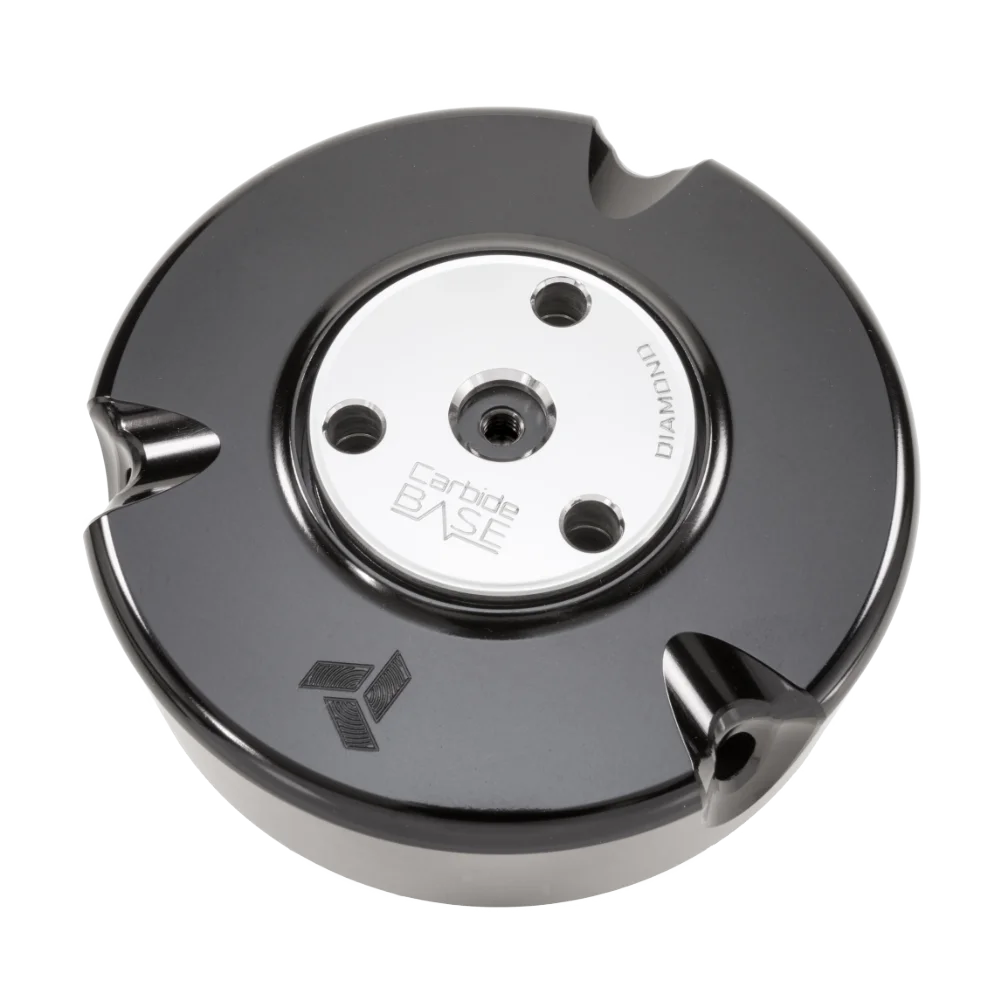
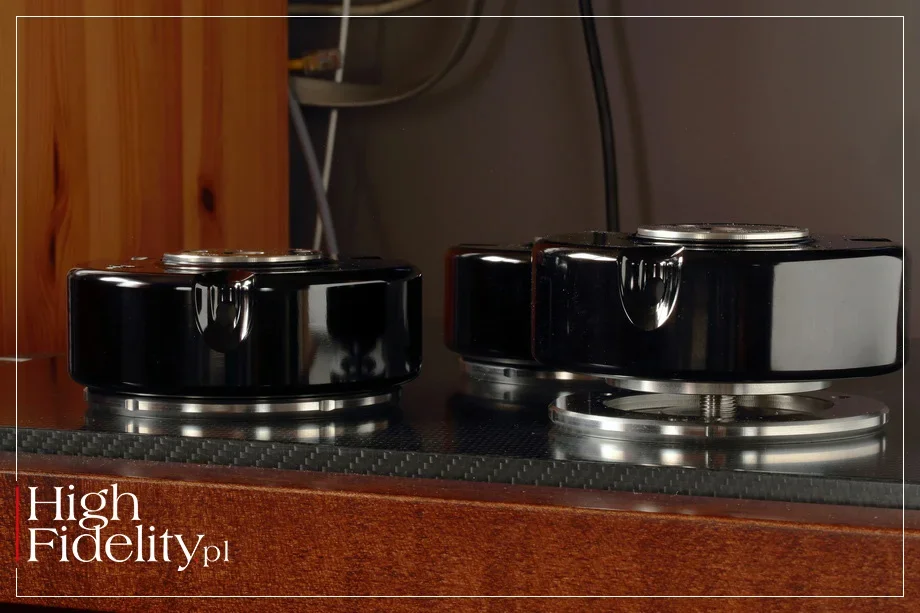
Carbide Audio is based in Llano, north-west of Austin, in the hill country of Texas. Founded in 2019 by Jeffrey Jenkins, this specialist audio company focuses on anti-vibration feet designed to damp vibrations. It makes almost all of their parts itself, using CNC machines, measurements and listening tests. We are testing its top model, the Carbide Base Diamond.
Carbide Audio was founded in 2019 and is based in Texas. According to the materials sent to our editorial office, its owner, Jeffrey Jenkins, draws on his small "but passionate team" and his experience in software engineering and machining to design, simulate, manufacture and test Carbide Audio products in his CNC workshop.
When the company says "products", it means a single product, albeit in three versions: the Carbide Base anti-vibration feet. Sooner or later, more feet will probably join the range, perhaps smaller ones, and in future also anti-vibration racks. That is a natural path of development, previously followed by companies such as Germany's Finite Elemente or Poland's Franc Audio Accessories.
I mention these two companies for a reason. Both rely on rigid connections in which a rolling bearing plays the leading role. This method of vibration damping dissipates energy as heat through micro-movements of the ball in its seat. Another Polish manufacturer, Pro Audio Bono, has its own version of this solution, and similar products are offered by Stacore, Avatar Audio and Divine Acoustics, each with its own design. As it happens, all of them are Polish.
Carbide Audio's products – the company's name contains the material most often chosen for those balls: cemented carbide – also use bearings. But not only bearings, which sets the company apart from probably all other established manufacturers on the market. To decouple the base from the point that supports the audio component even further, their design uses a lossy element.
That, in turn, is a method distinct from rigid connections, represented for example by springs (Tewo Audio SPRING), rubber or specially selected elastic materials (VinylSpot.pl ALL YOU NEED). Which one is right? That cannot be settled once and for all; everything depends on the specific application and on what the system's owner expects.
Carbide Audio
Carbide Audio belongs to the group that starts from measurements but corrects the results with listening tests. Its first and so far only product, the Carbide Base foot, is a vibration isolator based on a patent-pending design. As the manufacturer stresses in the materials sent to us, it is a multi-axis isolator, meaning it provides isolation in all six axes of motion.
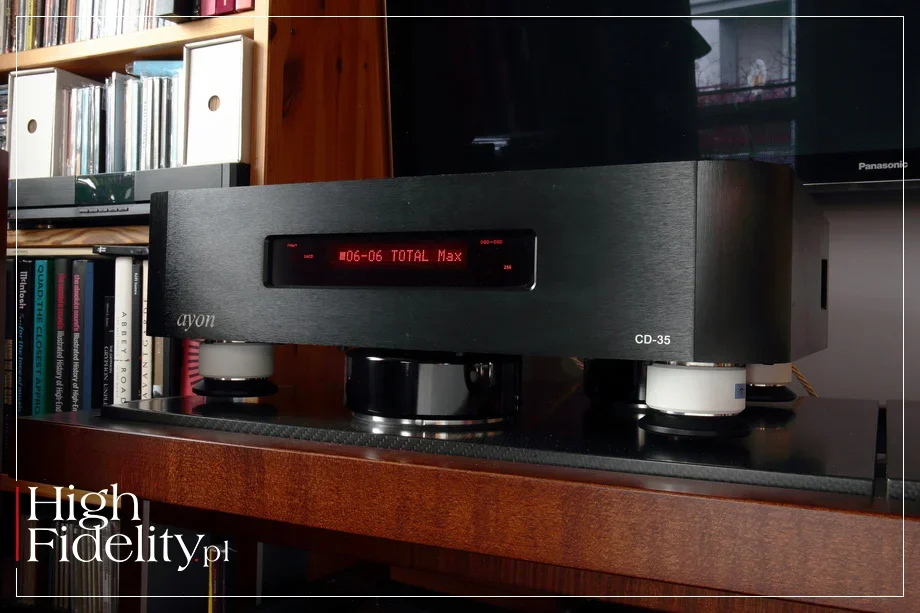
It is the largest product of its kind I have had in my audio system. I know there are equally large feet from other companies, but I have not tested them yet. Even the by no means small Divine Acoustics Galileo feet, on which the Ayon Audio CD-35 HF Edition player stands in the "High Fidelity" reference system, look delicate next to the Carbide Base. The designer of the Carbide Base, Jeffrey Jenkins, once asked by Dawid Grzyb whether the same technology could be offered in a smaller form, replied:
The Carbide Base feet are indeed big. We could have made them smaller, but that would have compromised their performance. As the ViscoRing gets smaller and shorter, the area that can bulge freely outwards under compression starts to shrink, which results in a higher resonant frequency. ViscoRings work best near their maximum load capacity, which is when their decoupling effect is greatest.
As ViscoRings get smaller, that "sweet spot" for their stiffness becomes narrower and narrower. Achieving good isolation across such wide weight ranges simply required a larger size. In addition, incorporating a separate lower stainless-steel section with zirconia ball bearings increased the overall height slightly, but greatly improved horizontal isolation. These tiny balls are roughly as hard as the more common alumina ceramic ball bearings, but they are also more than three times tougher and much less prone to cracking.
Dawid Grzyb, Carbide Audio Carbide Base. TEST, HiFiKnights.com, 8 December 2021, accessed 16.02.2024.
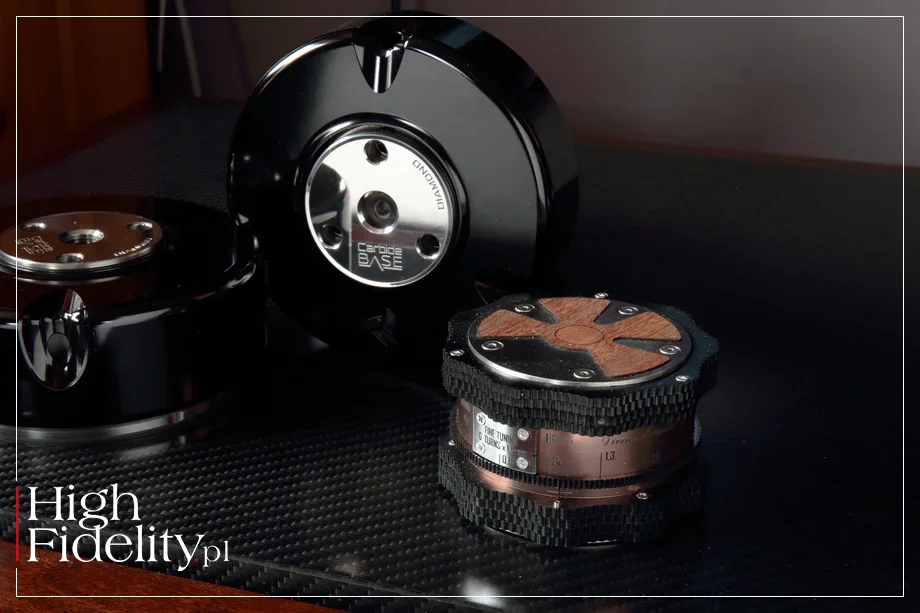
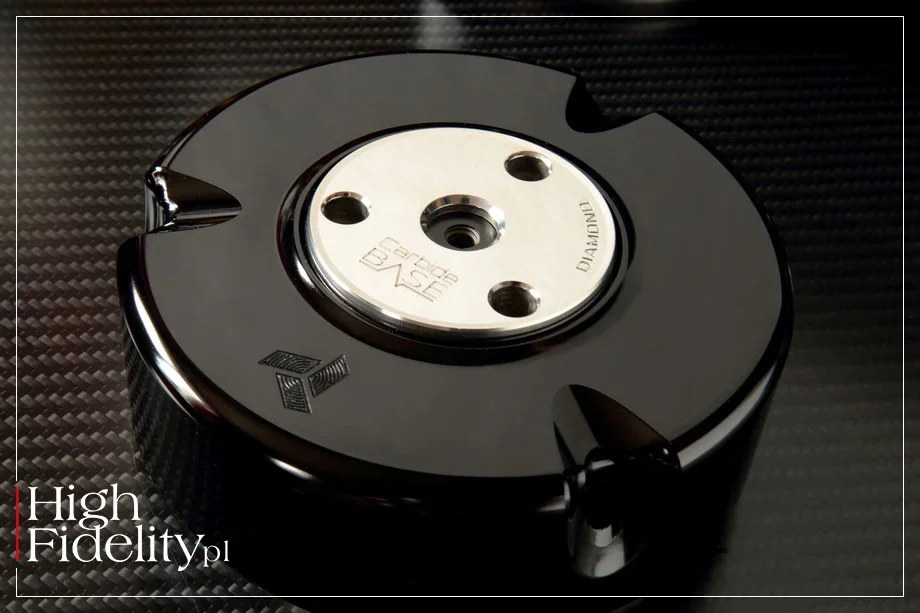
The Carbide Base feet are mechanically very complex products. Perhaps not quite as much as the Divine Acoustics feet mentioned above, but still. They are internally decoupled both by rolling bearings (balls) and by a lossy element, the ViscoRing mentioned above. Because of the lossy material, its compliance has to be matched to the weight of the components or loudspeakers placed on them. To make this easier, the weight range is colour-coded. It starts from the lowest possible mass and ends at 317 kg (3/4 pcs). The colour of the chosen elastomer – green, grey, navy, red or black – is visible through the cut-outs in the main body.
A few simple words…

Jeffrey Jenkins
owner, designer
The Carbide Base feet have a complex mechanical structure and consist of several vibration-isolating layers. The lower stainless-steel section contains ball bearings that roll in hardened-steel races, providing horizontal isolation. Above it, in a machined aluminium housing, sits a large viscoelastic ring called the ViscoRing, which provides vertical isolation.
The ViscoRing is interchangeable and colour-coded according to stiffness, so you can choose the right one for the weight of your equipment. The feet supplied to "High Fidelity" for the test have a grey, "light" ViscoRing installed, which is ideal for small and mid-sized components and loudspeakers. Below are charts showing the supported weights for each ViscoRing when using three or four feet.
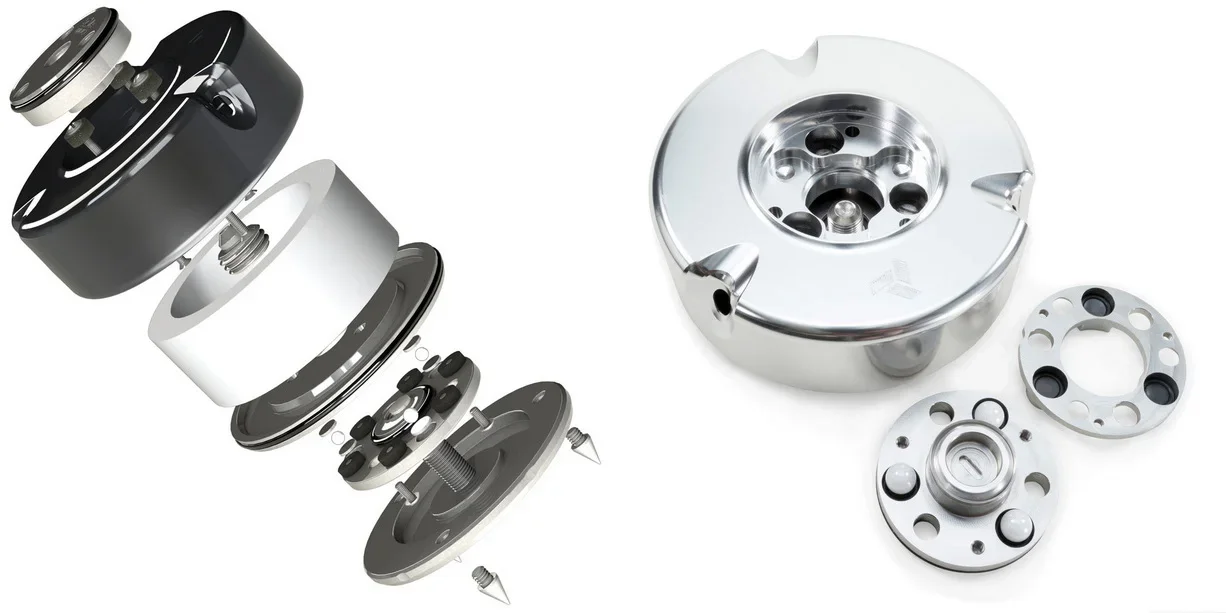
The innovation in our feet centres on the shape of the ViscoRing and the housing it sits in. Unlike earlier viscoelastic isolators, which mostly use thin or constrained layers of this kind of material, the ViscoRing has tall, relatively thin walls. The aim is to achieve a low natural resonant frequency, which in turn provides good isolation from low frequencies.
The basic version of the foot described above costs €360 per piece. The version we sent for the test is the Diamond version, which adds an extra ball-bearing isolator in the upper part of the foot. It uses ceramic ball bearings seated in extremely hard solid-ceramic races with a PVD Diamond coating. The high hardness of the races prevents denting. A bearing surface that is as smooth, slippery and dent-free as possible allows better filtering of very low-amplitude, low-frequency vibrations.
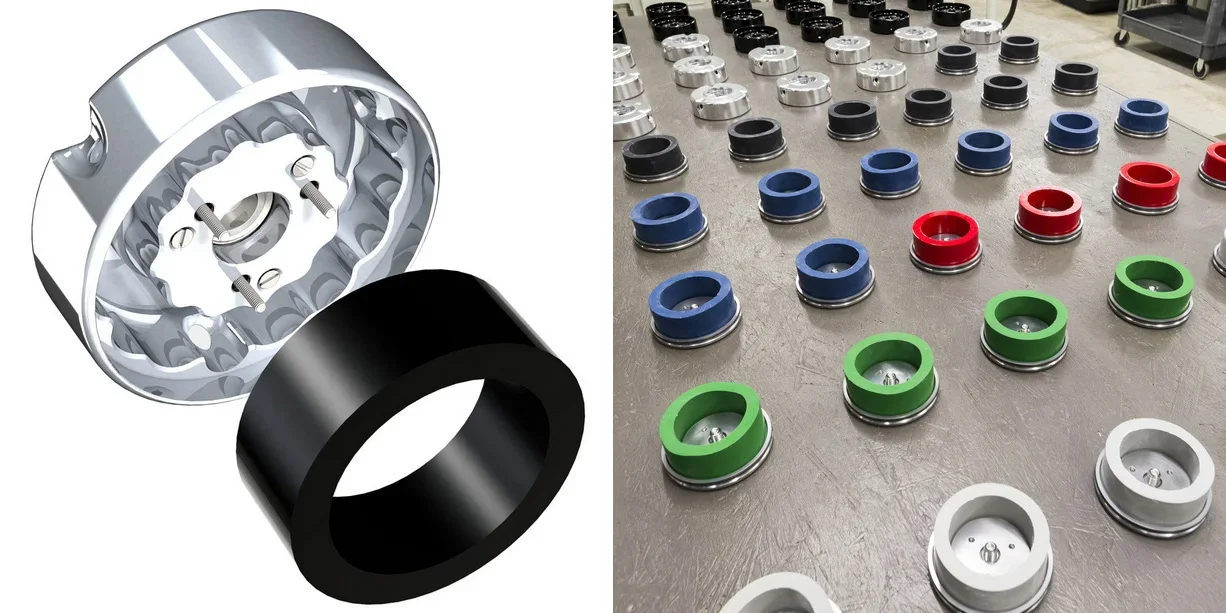
So we already know that although Carbide Audio offers just one product, it comes in several versions, in terms of both load capacity and level of protection. We have already covered the former, and the designer himself touched on the latter above.
Besides the basic configuration, there are two more variants to choose from: Sapphire or Diamond. Both add an extra level of vibration damping to the Base – an upper ball bearing. The Diamond version uses ceramic ball bearings seated – as the designer explained above – in extremely hard solid-ceramic races with a PVD Diamond coating; in the Sapphire version these are somewhat different. The Sapphire version also lacks the TwinDamp material, described below.
Interestingly, these are options that can be added later, turning a Carbide Base into a Carbide Base Sapphire or Carbide Base Diamond. We received the latter for testing. The price difference is not small: the Carbide Base costs 360 euros and the Carbide Base Diamond 720 euros (both prices per piece). Fitting the Diamond insert later costs 400 euros.
As I said, one of the distinguishing features of the Diamond version is the use of TwinDamp material in the Carbide Base. As Mr Jenkins wrote to us in an e-mail, TwinDamp is based on a high-damping, bi-crystalline manganese–copper alloy with more than ten times the damping capacity of pure copper. He goes on:
We then carry out several stages of heat treatment to further improve the properties we are after. It (TwinDamp – ed.) has a damping capacity similar to rubber, but in a rigid form and with a much wider effective bandwidth, extending from 0.01 Hz to 10 MHz. The TwinDamp material is used above the bearing races in the Diamond insert to damp vibrations passing through the foot even more effectively.
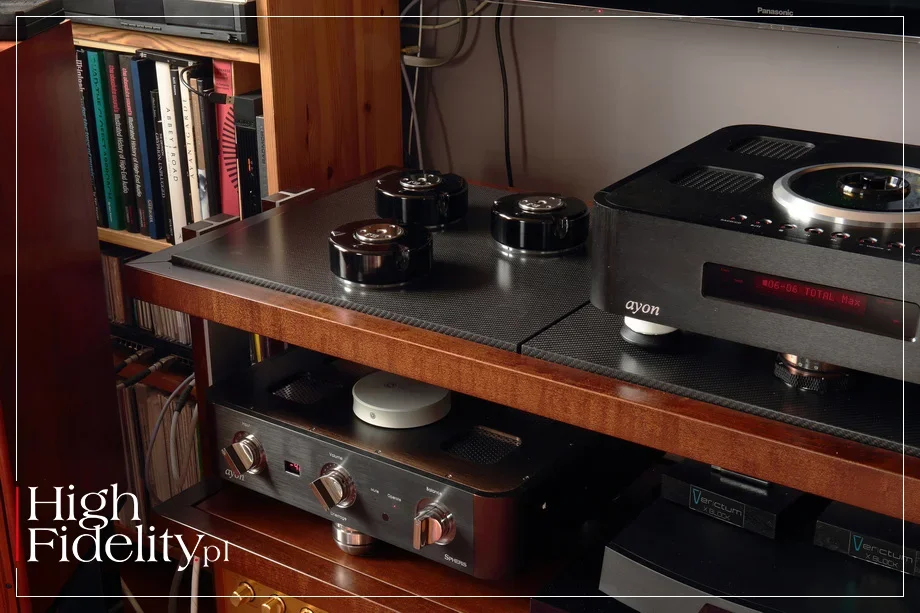
As for using the feet, it is recommended to put them in place first and then lower the component directly onto them. If possible, the feet should touch the underside of the unit directly. If the feet have to be slid under the component one at a time, their position may need adjusting afterwards. The foot is most effective when the upper central parts can move freely and do not touch the side wall of the body, so some adjustment may be needed to make sure they are centred. The lower part of the foot can be unscrewed to make levelling the component easier.
Spikes are also included. If the feet go under loudspeakers and you need to pierce a thick carpet, you screw them in from below. The feet can also be bolted to loudspeakers or equipment – in that case, contact the manufacturer or distributor to order suitable bolts.
Unfortunately, I know nothing about how the feet are packaged, as they arrived for the test in "substitute packaging". The company's communication with the outside world, however, is above average. On the manufacturer's website you will find detailed descriptions of all its technologies, procedures and so on. There are also measurements and a detailed description of the construction, with photos and graphics. A curiosity: among the several languages in which the site is available, you will also find Polish.
Listening
How we listened. The Carbide Audio anti-vibration feet were tested in the "High Fidelity" reference system. I always test anti-vibration feet in my system the same way – under the signal source, sometimes with help from other components. This time I tested them under the Ayon Audio CD-35 HF Edition SACD player.
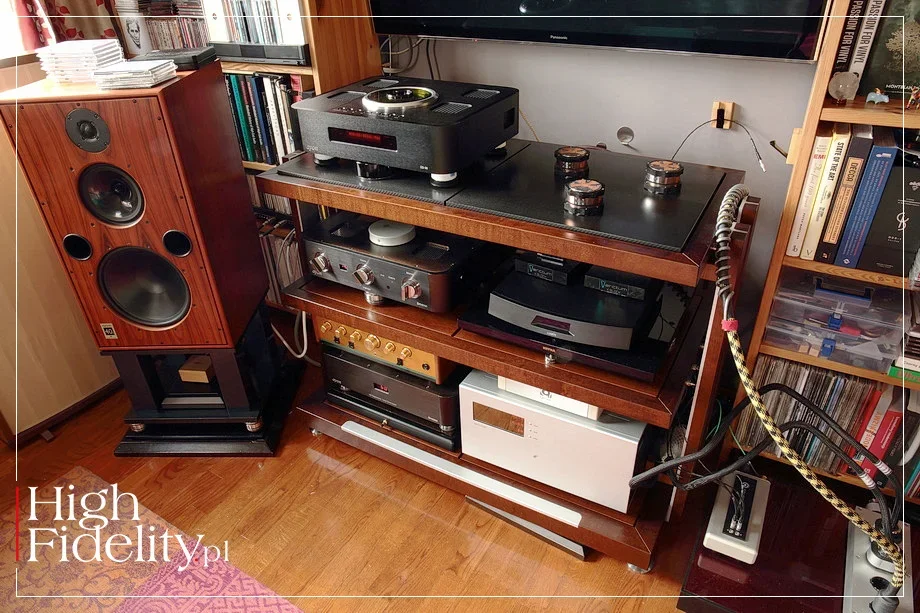
During the test I move the player, so its connections have to be flexible. In this role I use Crystal Cable Absolute Dream interconnects, and the player is powered via a Harmonix X-DC350M2R Improved-Version cable. The comparison consisted of listening to the same passage of a track (1–2 min.) on the reference feet and then moving the player onto the feet under test. The player and the test feet stood on the upper carbon shelves of a Finite Elemente Pagode Edition Mk II rack.
Recordings used in the test | a selection
- STAN GETZ & JOÃO GILBERTO, Getz/Gilberto, Verve/Lasting Impression Music LIM K2HD 036, K2HD Mastering, "24 Gold Direct-from-Master Edition UDM", Master CD-R (1964/2009)
- ANDRZEJ KURYLEWICZ QUINTET, Go Right, Polskie Nagrania "Muza"/Warner Music Poland 4648809, "Polish Jazz | vol. 0", Master CD-R (1963/2016)
- BILL EVANS TRIO, Waltz For Debby, Riverside Records/Craft Recordings/Universal Classics & Jazz UCGO-9057, "Bill Evans Remaster Series", SHM-SACD (1961/2023)
- TOTO, IV, Columbia/Sony Music Labels SICP 10139~40, "Deluxe Edition. 40th Anniversary", SACD/CD (1982/2022)
- JEAN-MICHEL JARRE, Oxygene, Disques Dreyfus/Mobile Fidelity Sound Lab UDCD 613, "Original Master Recording", Gold-CD (1976/1994)
Ah, what a wonderful feeling it is when you sit down in front of your audio system, put on a disc you know and love, and discover that it sounds better than before. It is for moments like these that we live, if I may put it that way; it is for them that we spend money and devote time.
And that is exactly how I felt listening to the very first track from the Ayon Audio player placed on the Carbide Base Diamond. The comparison was with the Franc Audio Accessories feet that the manufacturer fits to the HF versions of its players. They are excellent; I am a fan and for many years used nothing else. They do, however, have their limitations, and next to the feet under test these were exceptionally clear. So I cannot even imagine (of course I can, but it is a figure of speech…) how it would sound if I were comparing them with the ordinary feet that audio companies fit as standard.
What changed, and what struck me in particular, was on the one hand a deepening of the sound and on the other its clearly improved resolution. João Gilberto's voice on Getz/Gilberto, recorded with Stan Getz and released on CD-R ("24 Gold Direct-from-Master Edition UDM") by Lasting Impression Music, was noticeably bigger and weightier, and at the same time clearer.
I heard exactly the same with the vocals of Gilberto's then wife, Astrud, in ˻ 1 ˺ The Girl From Ipanema. As is well known, she recorded her parts spontaneously, only because she had accompanied her husband to the studio for the session. They sound as if they had been pasted onto the rest of the material, because they have a fairly bright, dry timbre, in contrast to the honeyed, silky sound of João's voice and the two main instruments – guitar and saxophone.
The American feet made the male vocal even more honeyed, even denser. But it was precisely with Astrud that the change brought the greatest benefit. Her voice was now better anchored in the "foundation" of the recording and no longer so ethereal. It was still clear that this was something "extra", parts added after the fact. But now it was much easier for me to understand why that decision was made and what it achieved. What it achieved was breaking up a rather monotonous interpretation of the song.
I heard an equally big change listening to the Andrzej Kurylewicz Quintet's Go Right in Jacek Gawłowski's 2016 remaster, burned for me onto CD-R straight from the "master" files. Here, in turn, I heard more strongly the thing that makes the sound with the Carbide Base denser and fuller. Without them the presentation was thinner and leaner. Even though – and this is important – without such a comparison it had seemed full enough to me. But you did not have to sit there on edge to hear the changes I am talking about; they were clear and unambiguous. And most importantly – repeatable.
With the American feet, both the bandleader's muted trumpet and the saxophone of Jan "Ptaszyn" Wróblewski were more massive and more convincing in their timbre. As if a layer of meaning had been added to them, or even two. Interestingly, the piano too, fairly quiet in the title track ˻ 1 ˺ and played in a pointillist rather than legato manner, rang out more clearly and more strongly. Its timbre did not change; it was not brighter, which is another way to gain clarity. But it had "more" of everything; everything was "more".
This is how high resolution shows itself in practice. It is the filling-in of the "picture" with small elements, thanks to which we stop "seeing" pixels and start perceiving it as a continuous, unbroken stream. Here it happens in a very good way, because it comes while preserving the natural softness of the sound. That is why the tape splice at 3:14 in the Kurylewicz track mentioned above was so clearly audible, and why the conversations "underneath" the sound of Bill Evans's trio in ˻ 1 ˺ My Foolish Heart from the Bill Evans Trio's Waltz For Debby – released last year by the Japanese branch of Universal Music on SHM-SACD – were much more distinct.
And the point is not that something got in the way of listening to the music. On the contrary, filling the music out with information was, with the Carbide Base Diamond anti-vibration feet, something entirely positive, something good. Because those conversations and the clatter of cutlery on plates – remember, this is a live club recording – gave a stronger sense of being there at the event and led to a stronger identification with what I was hearing.
And part of this "pulling in" to the world presented by the system with the American feet under the player was a more energetic presentation. Alongside resolution and timbre, this will be the third most important change they bring to the sound. The opening kick drum and percussion hits of ˻ 10 ˺ Africa from Toto IV gained vigour with them. The disc already sounds phenomenally good on the feet the Ayon comes with – and I mean the SACD version released by the Japanese branch of Sony in 2022 in a 7-inch sleeve. But it was the Carbide Base Diamond that made the presentation more fluid, yet also denser and stronger, energising the room more.
Carbide Audio vs Divine Acoustics
I found it extremely interesting to compare the sound of the feet under test with the ones I chose for my own system, the Divine Acoustics Galileo. The feet differ in class – they are, after all, in a completely different price bracket – but the differences are not like night and day. What I know from the Galileo, alongside the effect of the Pro Audio Bono feet on the sound, is the best that can currently be achieved with products of this type at this price.
As I say, the Galileo and the Carbide Base Diamond – both sets brought changes of similar weight and value to the sound. And yet every time I finished listening, I knew that the difference between them does matter. The Polish feet sound somewhat more distinct. They present the 1–4 kHz range more clearly. The feet from the USA are gentler and creamier – one could say more "valve-like", to invoke this stereotype so popular in audiophile parlance. It is a bit like lowering a turntable's tonearm pillar slightly (Carbide Audio) or raising it a little (Divine Acoustics).
Which version is better? I liked both very much. The strength of the American feet is their density and a slightly lower-set mid-bass and transition into the midrange, around 200–300 Hz. This gives the event a larger scale and a fuller picture. But the Galileo extract a touch more fine detail, without turning it into analytical sound. The Carbide Base draw a rounder picture and energise the room more. Their Polish counterparts do something similar by other means, lightening the top of the band a little – not by emphasising it, but by delivering more information.
After longer listening – longer even than the Carbide Base test itself – I came to the conclusion that the feet from the States have something the Polish ones do not, and therefore something no other feet I have listened to so far have. It is a kind of subliminal musicality. I am reluctant to use the term, because it has been cruelly trivialised, although it does have practical value. But in the case of the feet under test it does its job simply perfectly.
Summary
The Carbide Base anti-vibration feet are a superb product. They are the best anti-vibration feet I have ever heard. Their Polish competition is lovely, both from Divine Acoustics and from Pro Audio Bono, to stay with the ones I use every day. But the American ones go one step further in every respect.
They add refinement and depth to the sound, and they do it through superb resolution. They energise the presentation, filling the space in front of us with a strong, even firm sound. With them the soundstage is exceptionally fluid and coherent, all of a piece. And yet the edges of sounds are perfectly legible – only they are not marked out as a separate entity; they are part of the core sound.
That is why we decided they would stay in our system – two sets straight away – under the Ayon Audio Spheris III preamplifier and under its power supply. From there it is a short step to the GOLD FINGERPRINT award.