
 English





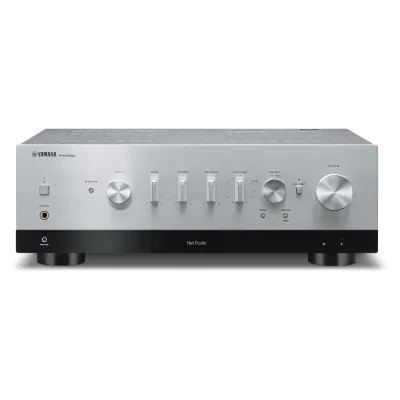
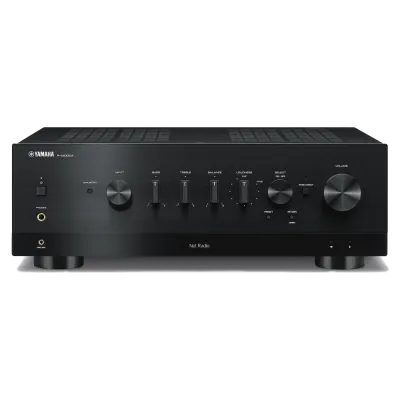
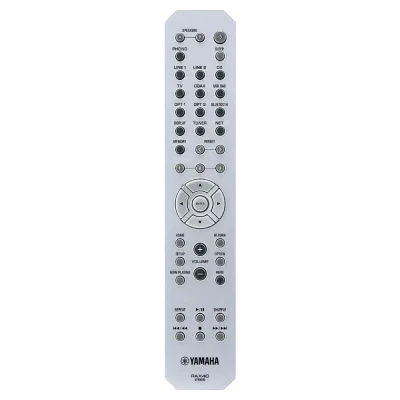
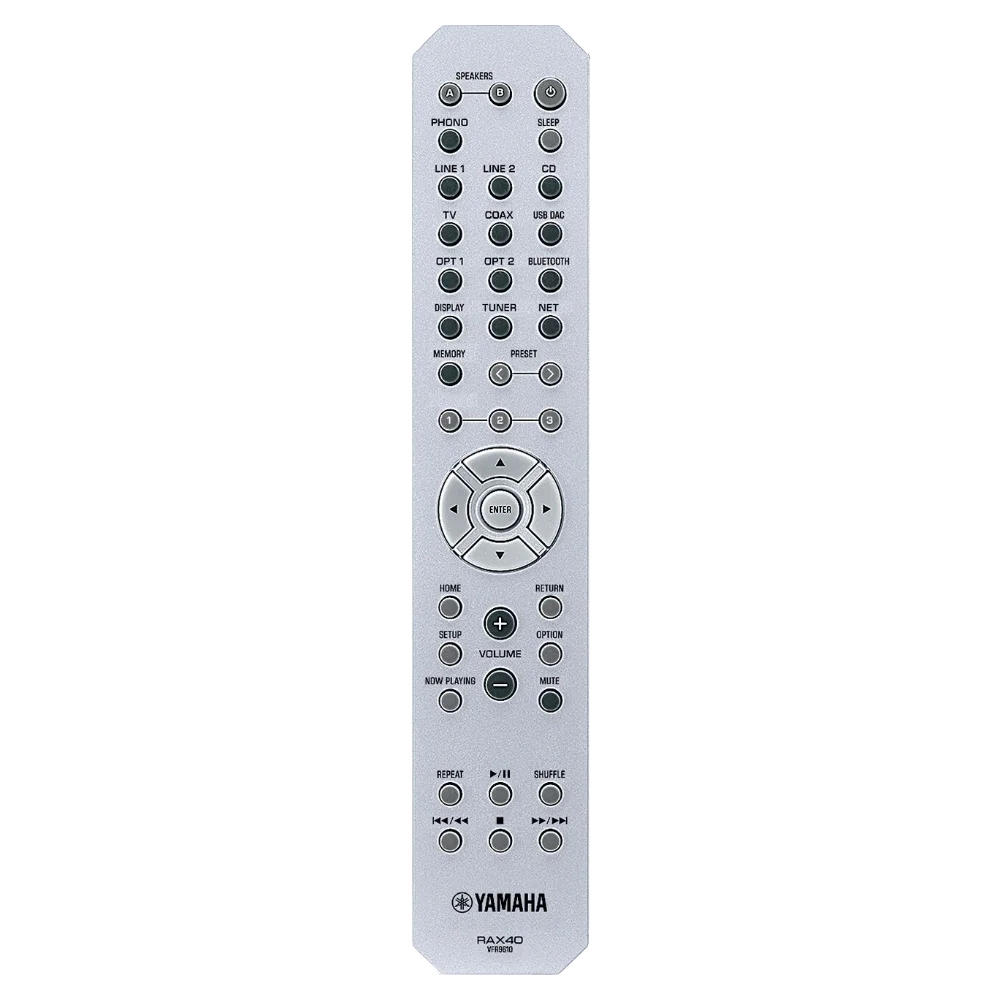
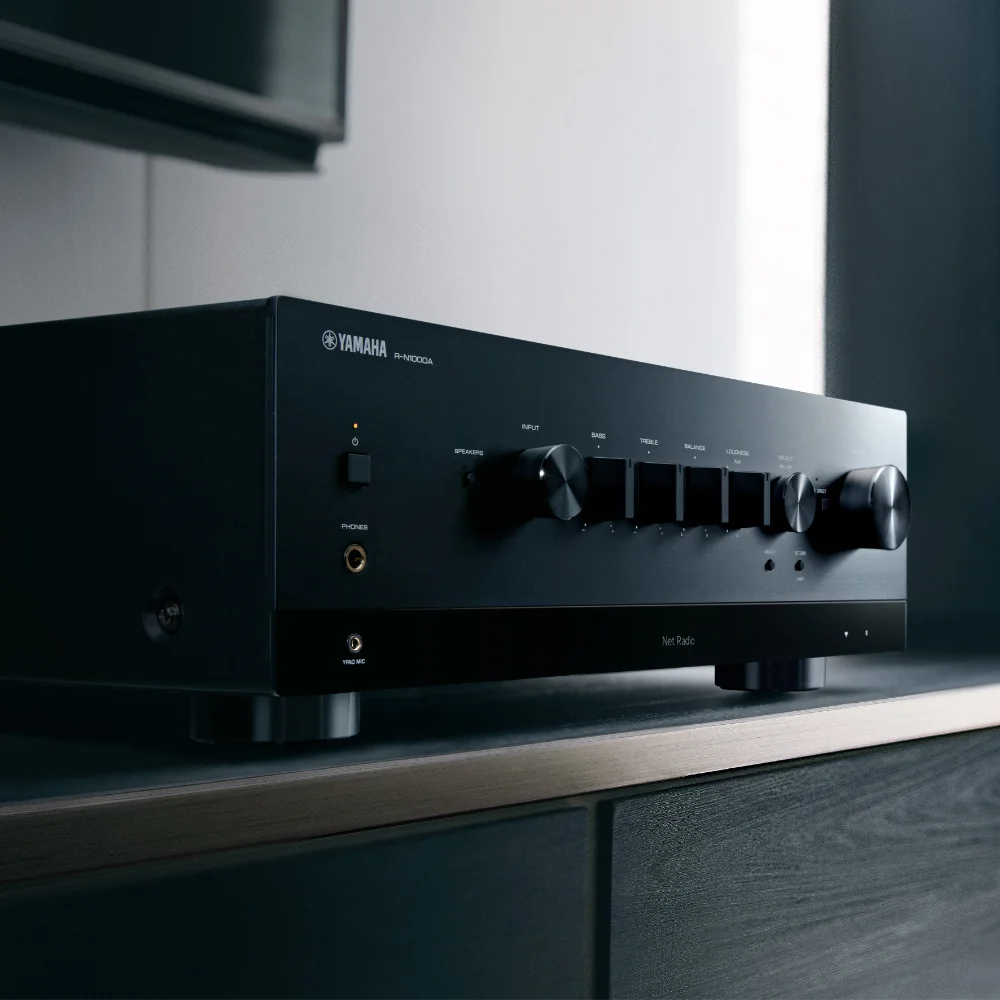

AV Processor/Receiver Yamaha R-N1000A Silver
Description
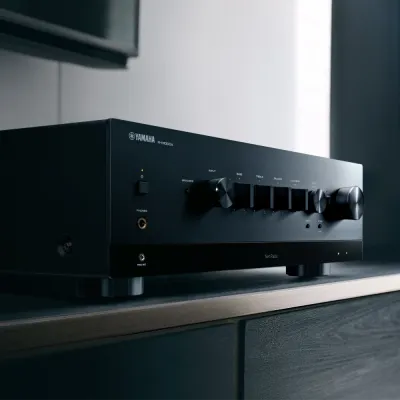
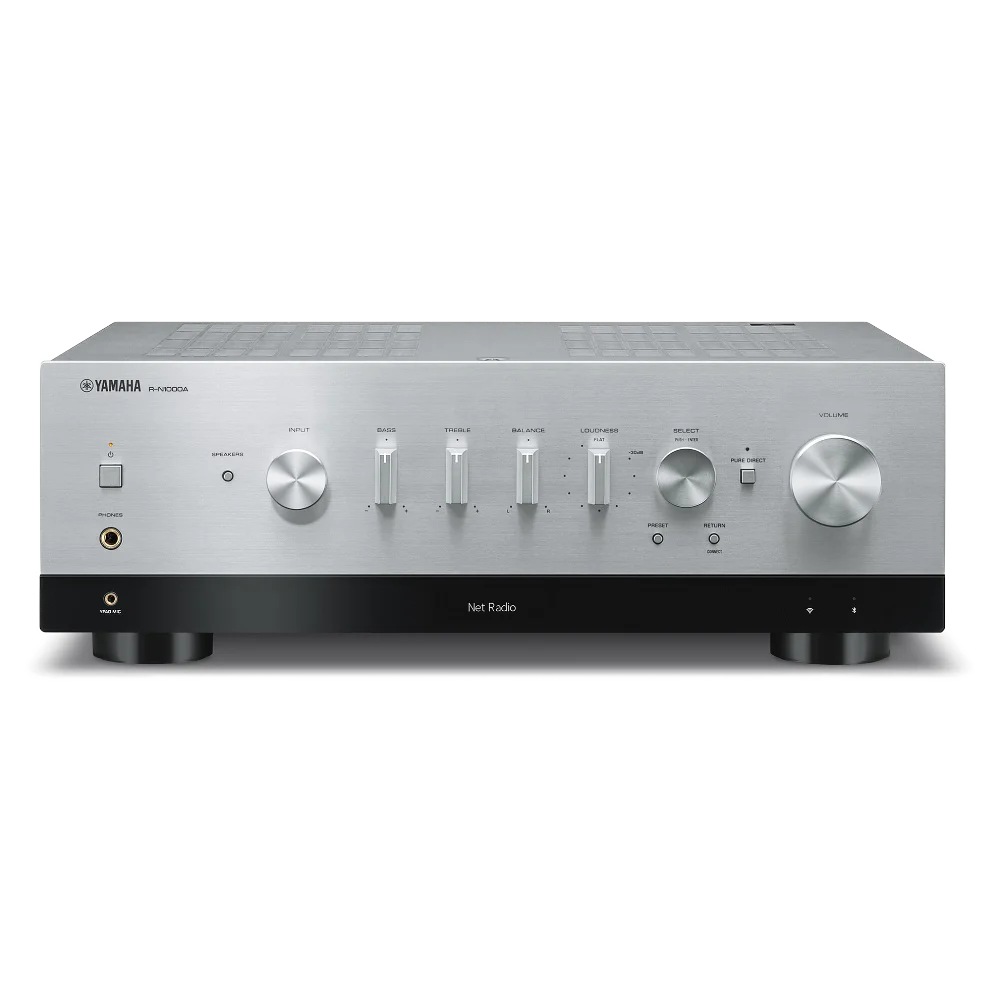
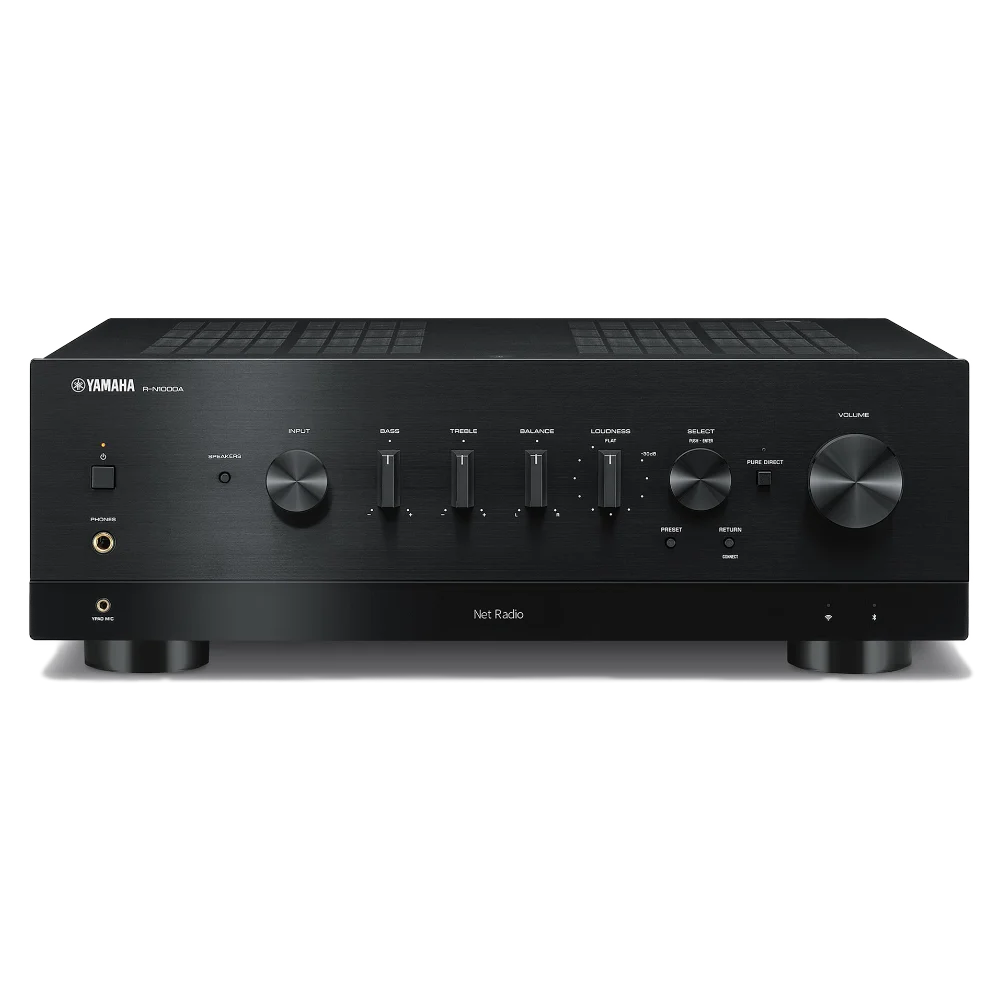
Yamaha R-N1000A network stereo receiver with ToP-ART construction, ESS SABRE DAC and YPAO calibration
The Yamaha R-N1000A is a network stereo receiver that combines a power amplifier, DAC, network player and FM tuner in a single chassis, aiming at full-fledged Hi-Fi reproduction in the living room. The signal path is defined by the ToP-ART (Total Purity Audio Reproduction Technology) design philosophy, with a symmetrical layout of the left and right channels and the shortest possible conductive paths. Adapting the sound to the acoustics of the room is handled by automatic YPAO™ calibration with precision EQ operating at a resolution of up to 192 kHz / 64 bits and the YPAO™ R.S.C. (Reflected Sound Control) function, which corrects early reflections according to wall materials and speaker placement.
The mechanical part is based on a low-vibration rigid chassis with a double bottom and a 1 mm thick steel damping plate, complemented by the Art Base resin frame that absorbs unwanted vibrations. The anti-resonance feet, with thin curved ribs around the perimeter and thick straight ribs in the centre, disperse transmitted vibrational energy while maintaining high rigidity. The power supply and analogue section consist of a custom-made power transformer and block capacitors, audiophile-grade capacitors and single-point grounding. The low-impedance concept uses thick ground conductors and a screwed connection of the power stage output, which reduces losses and increases the signal-to-noise ratio.
Digital conversion is handled by the ESS SABRE ES9080Q 384 kHz / 32-bit converter in cooperation with Yamaha's own network module. The USB DAC input works with asynchronous transfer and a precise crystal oscillator and supports native playback of DSD 11.2 MHz and PCM 384 kHz. The combination of a quiet power supply, low noise level (100 dB signal-to-noise ratio for CD, Pure Direct ON) and a wide frequency range of 10 Hz – 100 kHz results in a legible rendering of the recording's fine nuances and spatial atmosphere, stable localisation of instruments and dynamic contrast at an output of 100 W + 100 W into 8 ohms, or 290 W of dynamic power into 2 ohms.
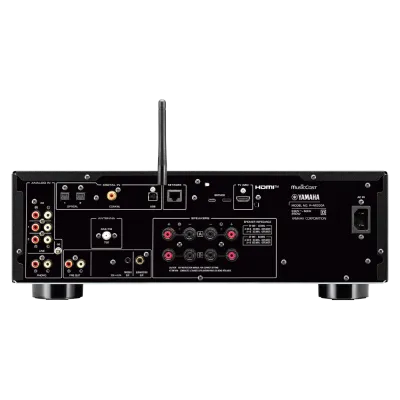
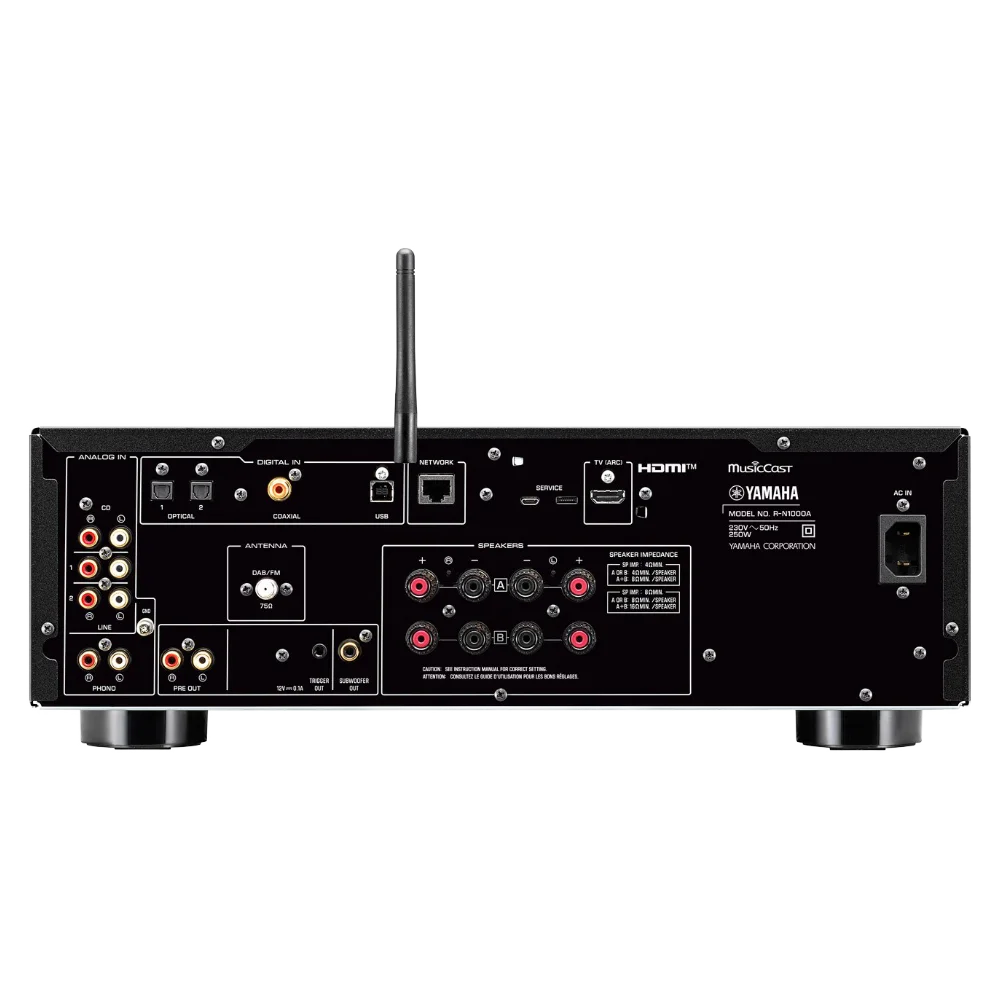
Connectivity covers practically all common sources: HDMI ARC allows connection to a TV with a single cable, a separate Phono turntable input makes your vinyl collection accessible, and there are also optical and coaxial digital inputs, line inputs, Pre out and Subwoofer out, Ethernet, Wi-Fi and Bluetooth. The MusicCast network platform supports streaming services such as Amazon Music HD and Spotify, AirPlay 2 and multiroom linking of several devices through a single app. Both the speaker and input terminals are gold-plated, which limits losses in the contact joints.
Key features
- Construction: ToP-ART, double bottom and Art Base
- Converter: ESS SABRE ES9080Q 384 kHz / 32 bit
- Calibration: YPAO R.S.C. with precision EQ 192 kHz / 64 bit
- USB DAC: DSD 11.2 MHz native and PCM 384 kHz
- Connectivity: HDMI ARC, Phono, MusicCast, AirPlay 2
- Output: 100 W + 100 W into 8 ohms
Specification
| Inputs | Phono, CD, line 1, line 2 / Pre-out, Subwoofer out |
|---|---|
| Power Output | 170W 4Ohm |
| Digital inputs | Optical1, Optical2, Coaxial |
| Bluetooth | Yes |
| S/N RATIO (REF 1W) | 69 dB / 68 dB |
| BASS/TREBLE CONTROLS | Yes |
| SUBWOOFER OUTPUT | Yes |
| HDMI | Yes |
| Dimensions & Weight | 435 × 395 × 151 mm, 12.3 kg |
 Yamaha
 is one of the few hi-fi manufacturers that also builds concert grand pianos and wind instruments. When developing an amplifier or a speaker system, therefore, it does not have to guess what a real instrument should sound like, as it has one to hand and can compare the sound to it. This forms the basis of a principle the brand has adhered to since the 1970s, known as ‘Natural Sound’: sound without embellishment and without any inherent colouration. In 1974, this principle was established by the NS-1000 loudspeakers with beryllium drivers, and ever since it has guided everything Yamaha produces for home listening, from turntables and amplifiers right through to AV receivers and wireless systems. Anyone looking for a sound that neither enhances nor embellishes a recording in any way will find exactly that with Yamaha.
Manufacturer information (GPSR)
Manufacturer
Yamaha Corporation
10-1 Nakazawa-cho, Chuo-ku, Hamamatsu, Shizuoka 430-8650 Japonsko
Responsible person in the EU
Yamaha Music Europe GmbH
Siemensstrasse 22–34, 25462 Rellingen Germany