
 English





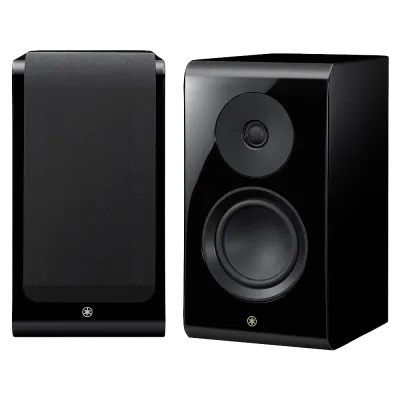
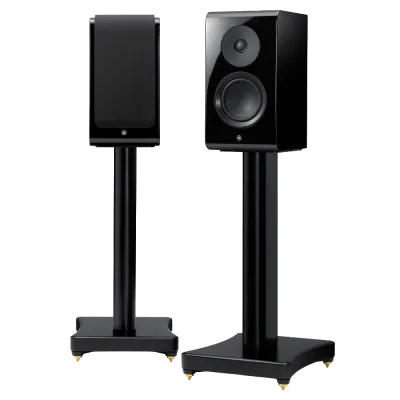
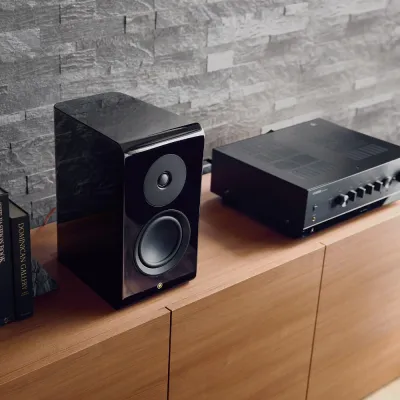
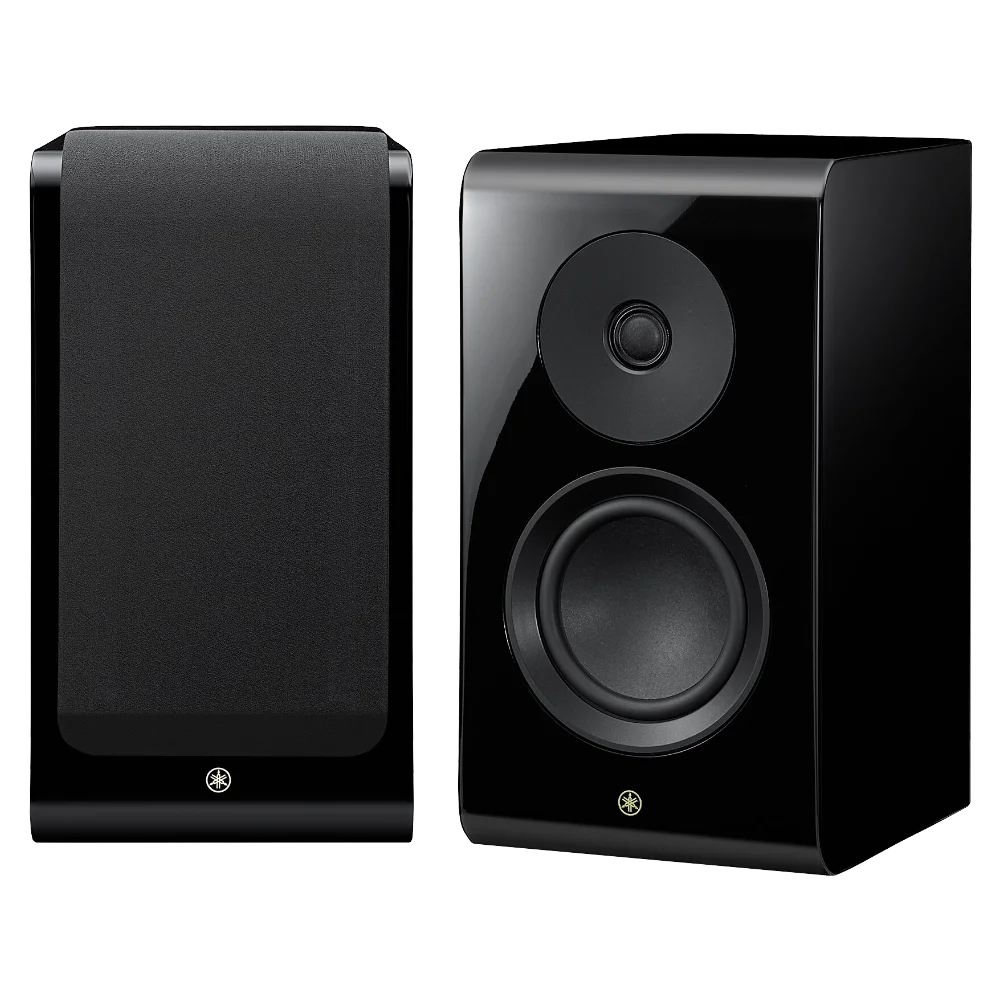
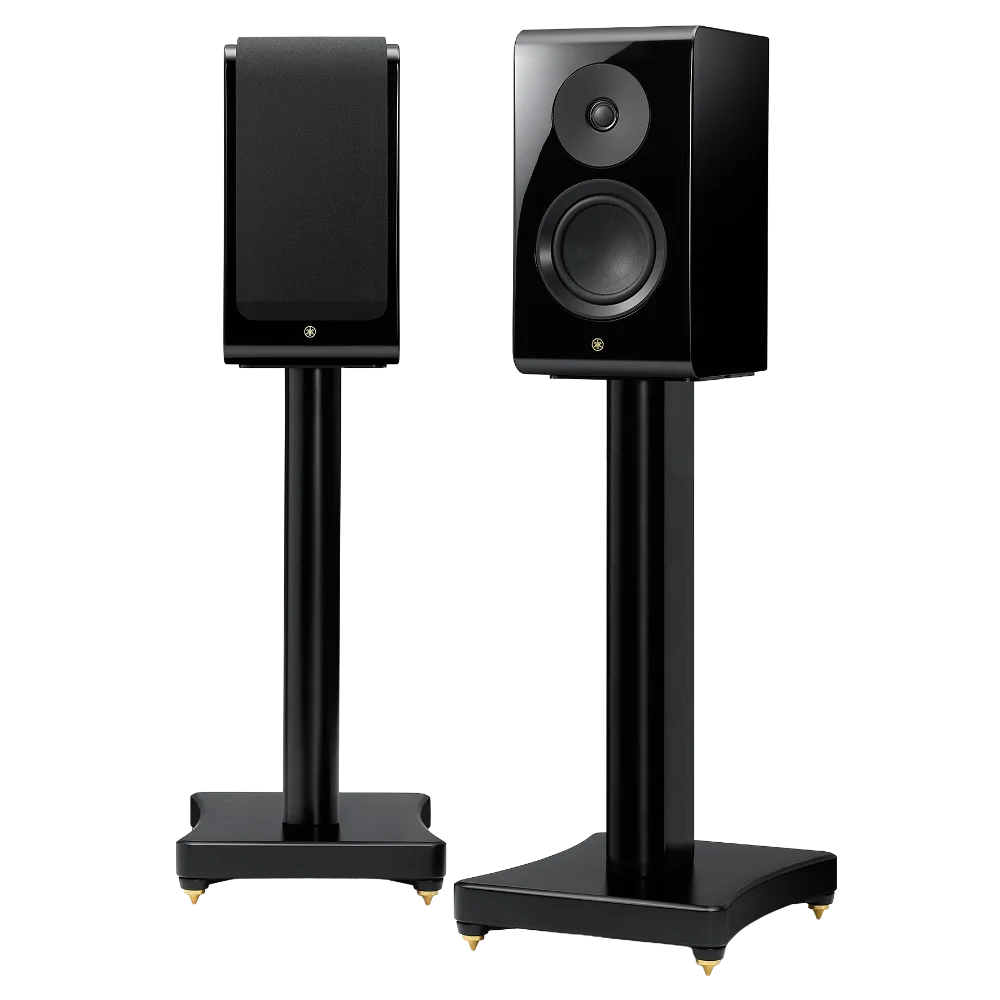
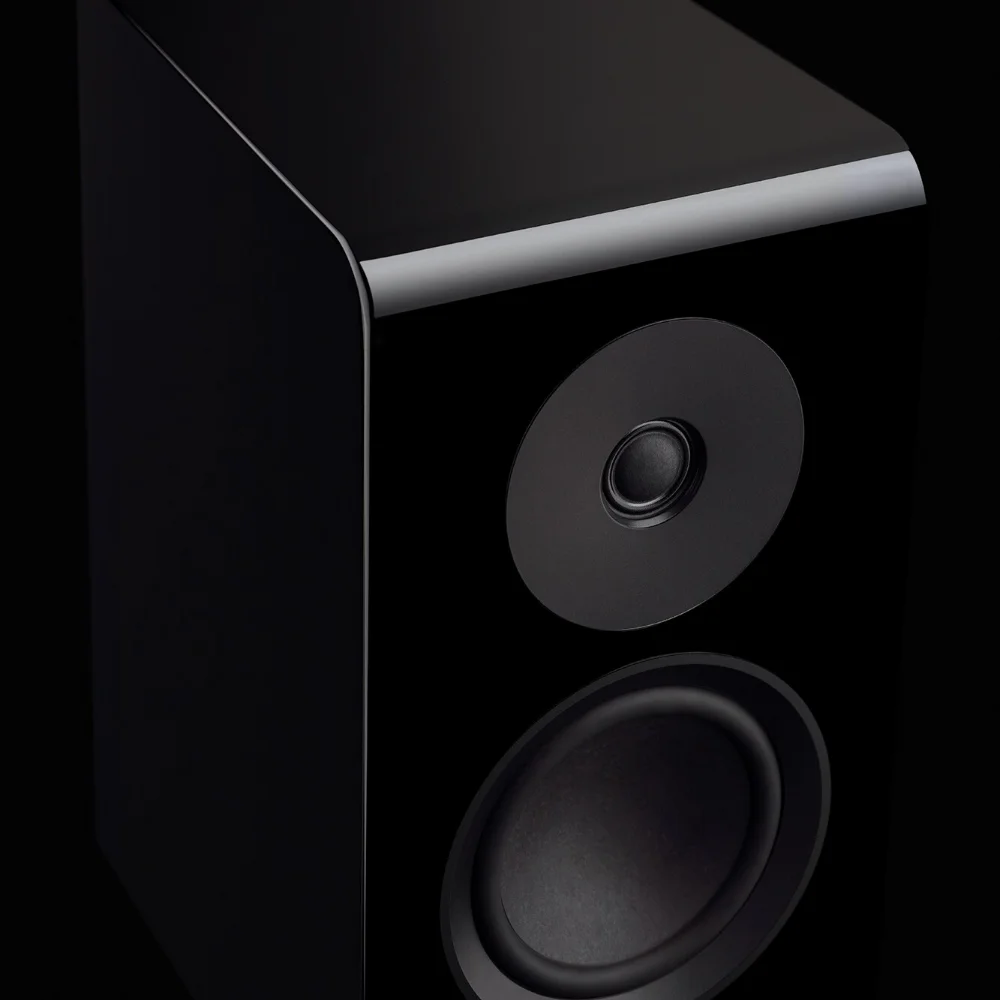
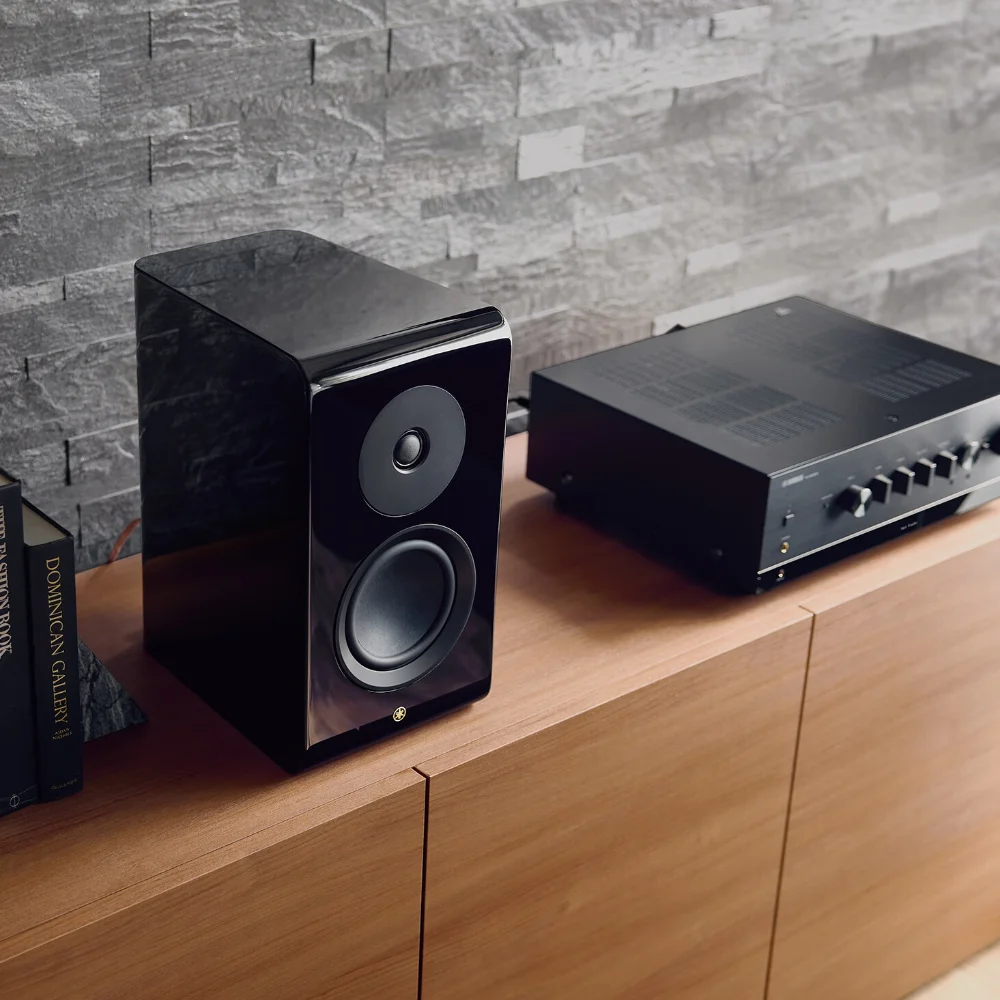

Bookshelf speaker Yamaha NS-600A Pianoblack
Description
Compact two-way speaker with Harmonious Diaphragm™ cones and patented resonance control
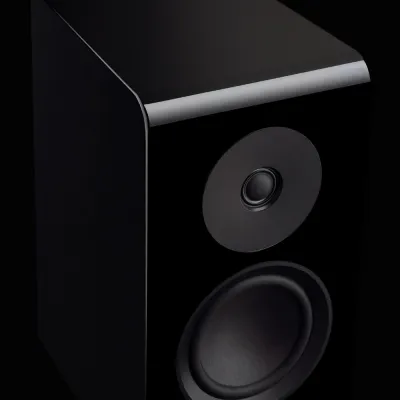
The Yamaha NS-600A is a compact two-way bookshelf speaker with bass-reflex tuning, aiming at a faithful rendition of instrumental timbre and precise localisation of sound images. It is fitted with a 13 cm cone bass-midrange driver and a 3 cm dome tweeter with a crossover frequency of 2.6 kHz. Both drivers use the newly developed Harmonious Diaphragm™, made from a blend of ZYLON® fibre — offering a high speed of sound propagation and suitable internal damping — and spruce wood, which Yamaha also uses for the soundboards of its concert grand pianos. Using the same material in both bands contributes to a consistent tonal character across the entire frequency range.
The cabinet design draws on Yamaha's musical instrument development methodology — laser vibrometer measurements and finite element method (FEM) analysis. The internal cross brace is optimised to suppress unwanted wall vibrations without limiting dynamics. Inside the cabinet works a patented Acoustic Absorber, a resonance tube tuned specifically for the NS-600A, which eliminates standing waves while using significantly less damping material than a conventional solution. Behind the tweeter sit the R.S. (Resonance Suppression) chambers — a pair of shaped tubes that cancel resonances arising behind the diaphragm.
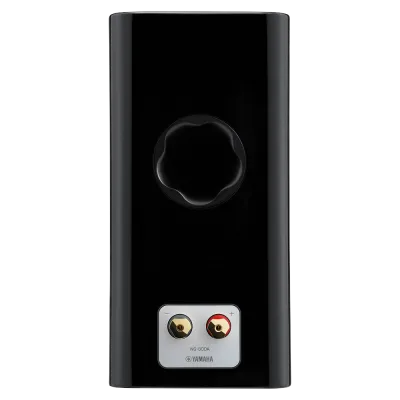
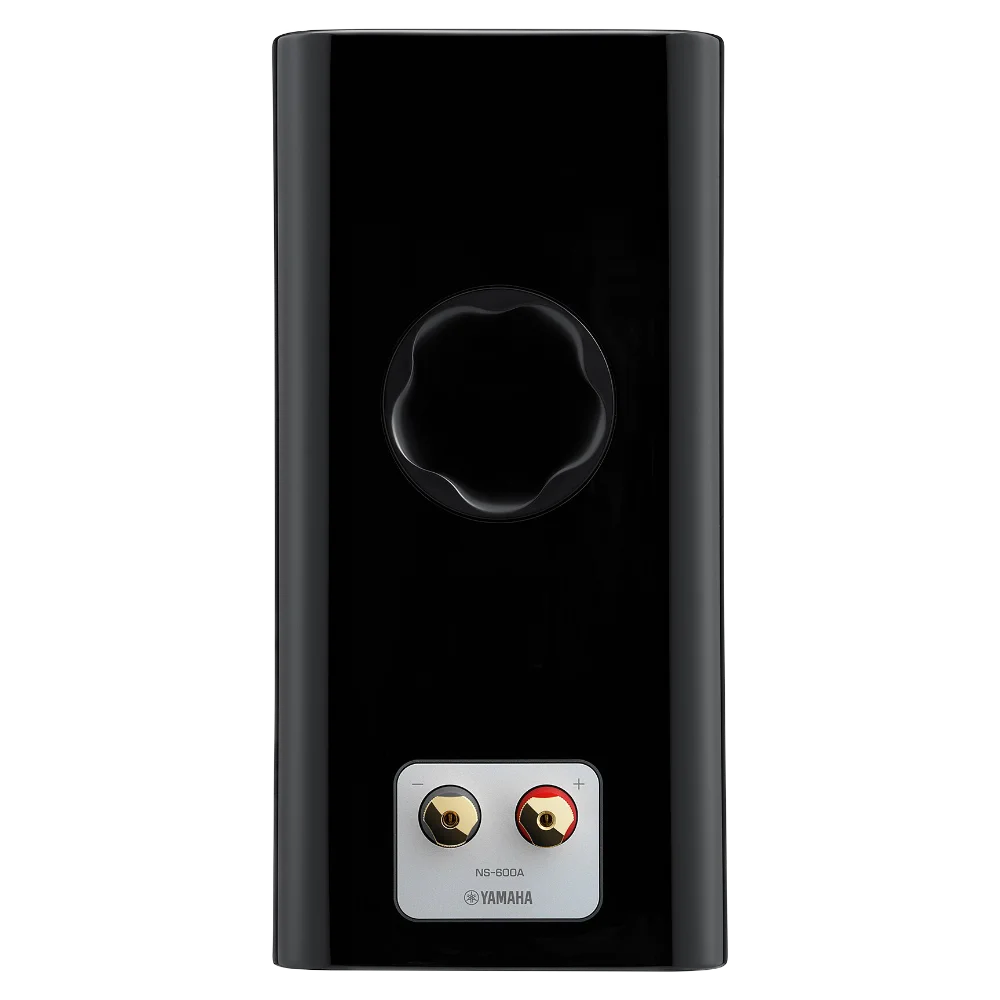
The Twisted Flare Port bass-reflex port alters the distribution of airflow at the port mouth and, thanks to its gentle twist, reduces the turbulent noise that tends to blur the bass in ordinary bass-reflex systems. The result is a controlled, cleanly defined low-frequency response reaching down to 47 Hz. The crossover is populated with quality components, including audiophile Mundorf MCap® SUPREME Classic capacitors and a substantial bass-band coil, which shows in the legibility of detail and the stability of the midrange.
In terms of power handling, this is a speaker with a nominal input power of 40 W and a maximum of 120 W, a sensitivity of 85.5 dB and an impedance of 6 ohms (minimum 3.6 ohms), so it will appreciate an amplifier with a stable current output. The finish uses a piano gloss applied by the same process as on Yamaha concert grand pianos, while connection is handled by solid brass terminals shaped for convenient tightening. The weight of 9.9 kg each and dimensions of 207 × 383 × 329 mm reflect the robust cabinet construction.
Key features
- Harmonious Diaphragm™ cones: A blend of ZYLON® fibre and spruce wood
- R.S. chambers and Acoustic Absorber: Patented suppression of resonances and standing waves
- Twisted Flare Port: Reduced turbulent noise and more accurate bass response
- Crossover with Mundorf MCap® SUPREME: Audiophile capacitors and a substantial bass coil
- Piano gloss and brass terminals: Craftsmanship taken from concert grand piano production
Specification
| Rated output | 40 W |
|---|---|
| Weight | 9.9kg |
| Frequency range | 47 Hz–65 kHz (-10 dB), -100 kHz (-30 dB) |
| Height | 383mm |
| Depth | 329mm |
| Sensitivity | 85.5 dB |
| Crossover frequency | 2.6 kHz |
| Impedance | 6 ohms (minimum 3.6 ohms) |
| Width | 207mm |
 Yamaha
 is one of the few hi-fi manufacturers that also builds concert grand pianos and wind instruments. When developing an amplifier or a speaker system, therefore, it does not have to guess what a real instrument should sound like, as it has one to hand and can compare the sound to it. This forms the basis of a principle the brand has adhered to since the 1970s, known as ‘Natural Sound’: sound without embellishment and without any inherent colouration. In 1974, this principle was established by the NS-1000 loudspeakers with beryllium drivers, and ever since it has guided everything Yamaha produces for home listening, from turntables and amplifiers right through to AV receivers and wireless systems. Anyone looking for a sound that neither enhances nor embellishes a recording in any way will find exactly that with Yamaha.
Manufacturer information (GPSR)
Manufacturer
Yamaha Corporation
10-1 Nakazawa-cho, Chuo-ku, Hamamatsu, Shizuoka 430-8650 Japonsko
Responsible person in the EU
Yamaha Music Europe GmbH
Siemensstrasse 22–34, 25462 Rellingen Germany