
 English





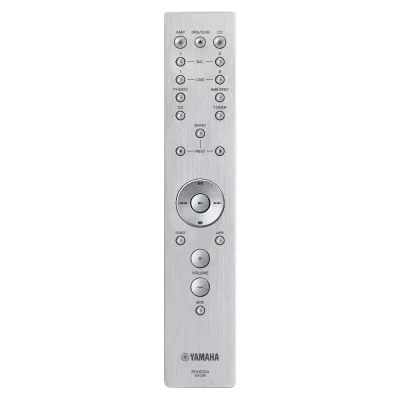

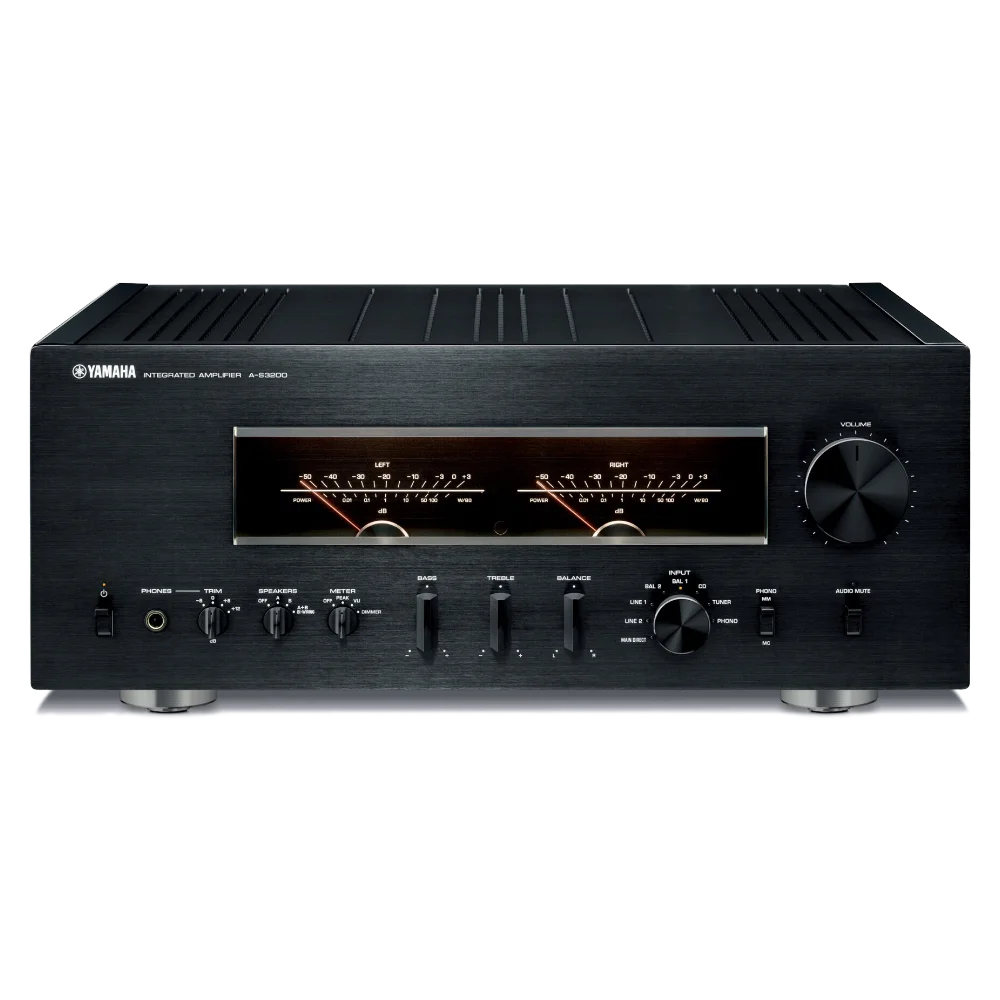
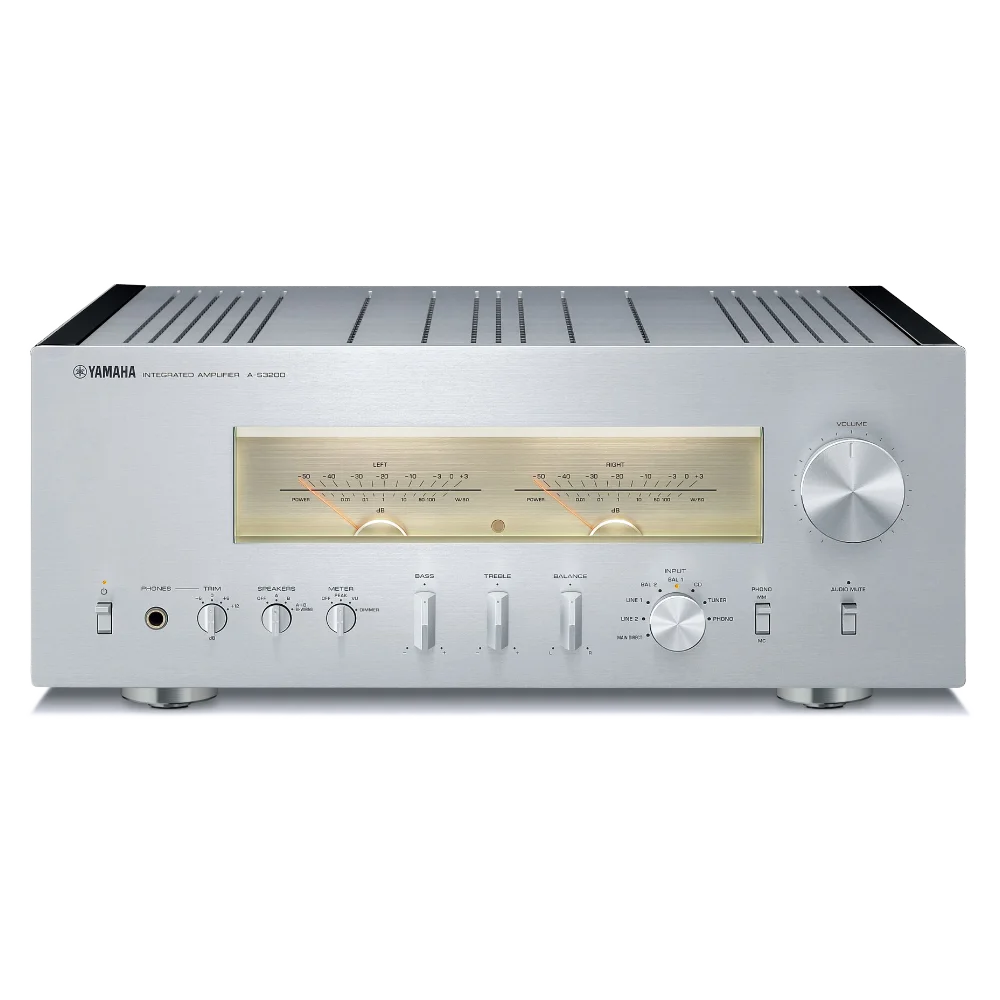
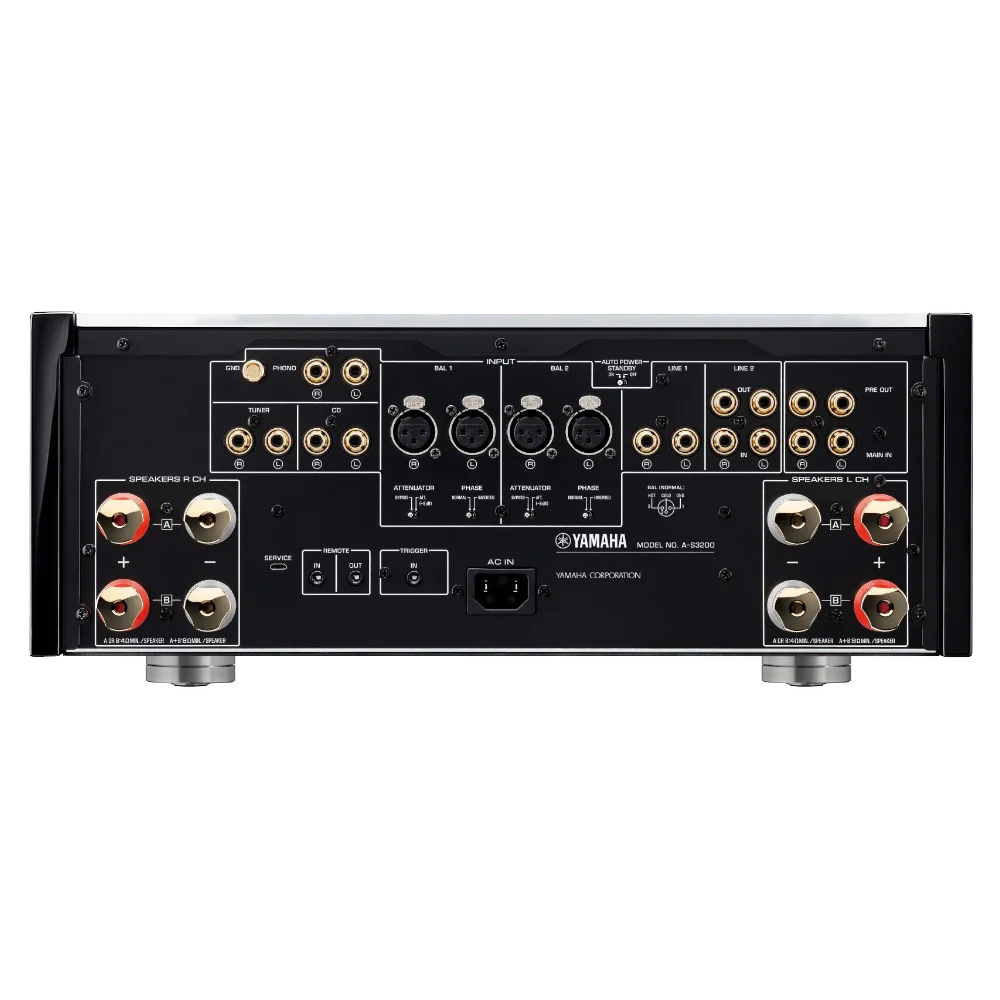


Integrated Amplifier Yamaha A-S3200 Black/Pianoblack
Description
Flagship Yamaha A-S3200 integrated amplifier with a fully balanced signal path and mechanically grounded chassis
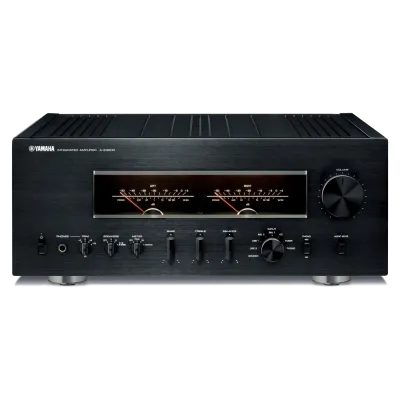
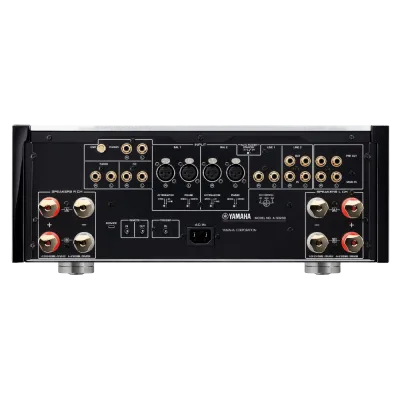
The Yamaha A-S3200 integrated amplifier represents the pinnacle of the brand's model range and is built around the concept of fully balanced circuitry from the input all the way to the speaker terminals. This architecture delivers a signal-to-noise ratio of up to 114 dB on the BAL1/2 balanced inputs and markedly better channel separation. Rated power reaches 100 W + 100 W into 8 ohms at 0.07 % THD, or 150 W + 150 W into 4 ohms, while dynamic power rises to as much as 300 W into 2 ohms. The feature set also includes a dedicated phono preamplifier for both MM and MC cartridges.
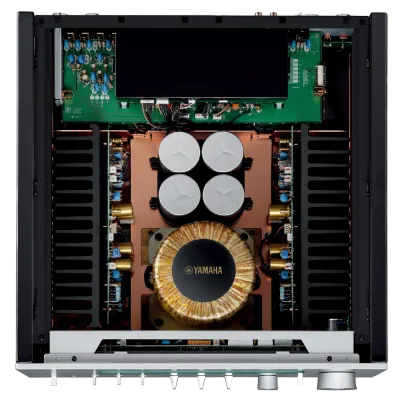
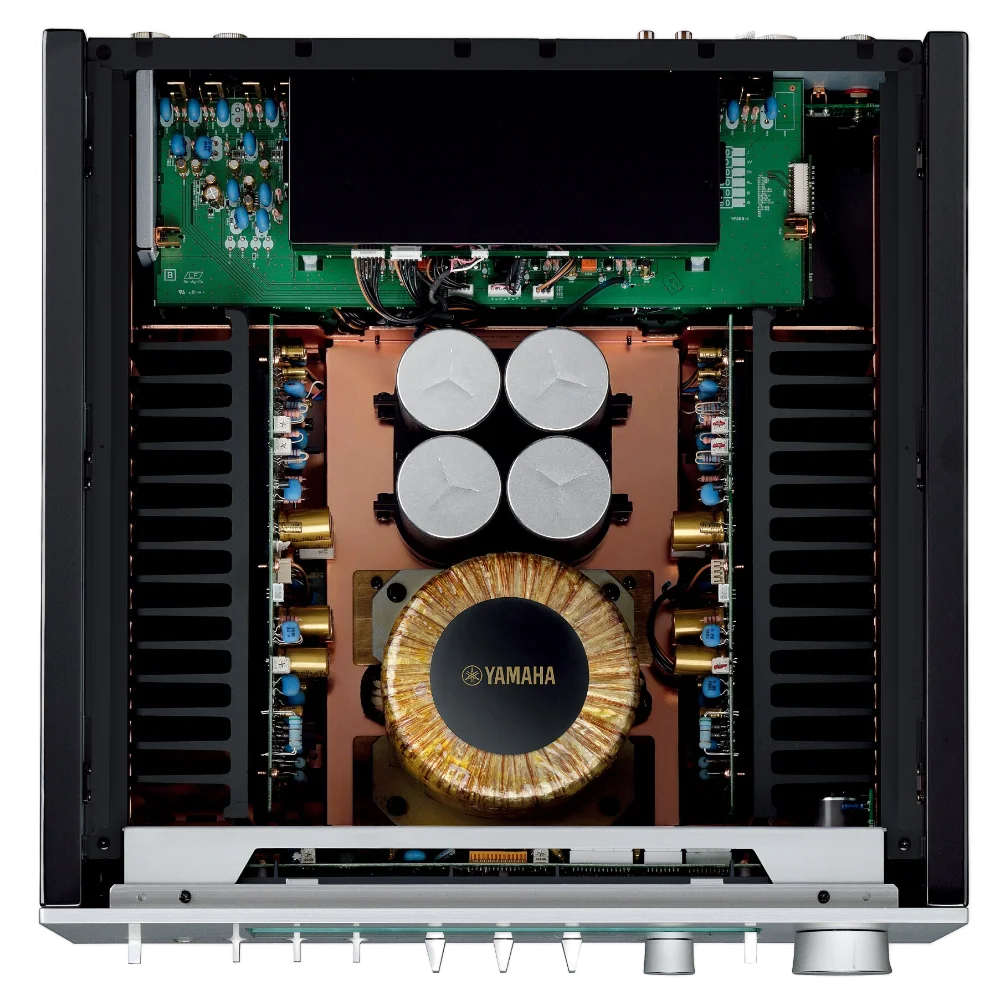
The power supply section is built around a large toroidal transformer rated at 623 VA, whose low magnetic flux leakage minimises interference with sensitive audio circuits, while the copper winding led directly out of the core limits energy losses. Energy reserves are provided by four 22,000 µF block capacitors, connected via brass screws and gold-plated oxygen-free copper terminals. The signal path employs PPS and PP film capacitors for audio, internal PC-Triple C speaker wiring with a 2.7 mm diameter and a low-impedance grounding concept.
The construction follows the Mechanical Ground Concept principle: the power transformer, block capacitors and heatsink are bolted directly to the chassis, the feet have their screws welded to the main frame, and the whole is complemented by Rigid Streamlined Construction that suppresses resonances. The massive brass feet can be used with spikes or with a pad that is gentle on furniture surfaces. The result of the high rigidity and suppressed vibrations is a precisely defined and rhythmically legible bass register, stable imaging of instruments and silence between the notes without any audible noise floor.
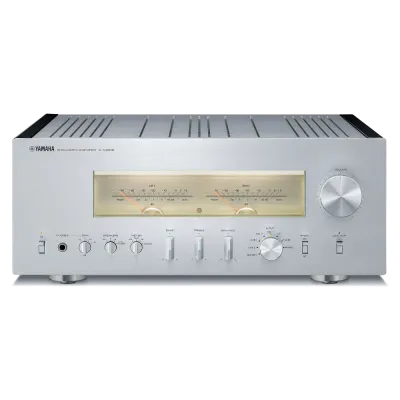
The speaker terminals are machined from pure brass and allow firm tightening by hand without tools. The front panel features large needle level meters with soft LED backlighting behind glass bevelled at an angle and precisely flush-mounted from the rear, leaving no visible gaps or screws. The switches and rotary controls are crafted with an emphasis on tactile feel. The weight of 24.7 kg and dimensions of 435 × 180 × 464 mm match the device's class, frequency response extends from 5 Hz to 100 kHz (+0/−3 dB) and the damping factor exceeds 250 at 1 kHz into 8 ohms.
Key features
- Fully balanced circuitry: Signal-to-noise ratio of up to 114 dB, better channel separation
- 623 VA toroidal transformer: Low flux leakage and minimal energy losses
- Mechanical Ground Concept: Maximum chassis rigidity and suppression of unwanted vibrations
- Power of 100 W + 100 W into 8 ohms: Dynamic power of up to 300 W into 2 ohms
- Discrete MM/MC phono stage: Separate MC head amp and equalisation amplifier
- Brass speaker terminals and feet: Secure contact and a choice of spikes or a protective pad
Specification
| Input sensitivity | ity [1 kHz, 100 W/8 ohms] PHONO MC: 150 uVrms/50 ohms, PHONO MM: 3.5 mVrms/47 kohms, CD, etc.: 200 mVrms/47 kohms, MAIN IN: 1 Vrms/47 kohms, BAL1,2: 200 mVrms/100 kohms |
|---|---|
| Dimensions (W x D x H) | 435 × 464 × 180 |
| Weight | 24.7 |
| Rated Power Output | [20 Hz–20 kHz, 0.07% THD] 100 W + 100 W (8 ohms), 150 W + 150 W (4 ohms) |
| Max. output power | 170 W + 170 W |
| Harmonic distortions THD | [Input 0.5 V] PHONO MC→LINE2 OUT: 0.02 % (1.2 mVrms), PHONO→LINE2 OUT: 0.005 % (1.2 Vrms), CD, etc./BAL1,2 →SP OUT: 0.035 % (50 W/8 ohms) |
 Yamaha
 is one of the few hi-fi manufacturers that also builds concert grand pianos and wind instruments. When developing an amplifier or a speaker system, therefore, it does not have to guess what a real instrument should sound like, as it has one to hand and can compare the sound to it. This forms the basis of a principle the brand has adhered to since the 1970s, known as ‘Natural Sound’: sound without embellishment and without any inherent colouration. In 1974, this principle was established by the NS-1000 loudspeakers with beryllium drivers, and ever since it has guided everything Yamaha produces for home listening, from turntables and amplifiers right through to AV receivers and wireless systems. Anyone looking for a sound that neither enhances nor embellishes a recording in any way will find exactly that with Yamaha.
Manufacturer information (GPSR)
Manufacturer
Yamaha Corporation
10-1 Nakazawa-cho, Chuo-ku, Hamamatsu, Shizuoka 430-8650 Japonsko
Responsible person in the EU
Yamaha Music Europe GmbH
Siemensstrasse 22–34, 25462 Rellingen Germany