
 English





Description
Yamaha A-S301 – integrated amplifier with ToP-ART architecture and digital inputs
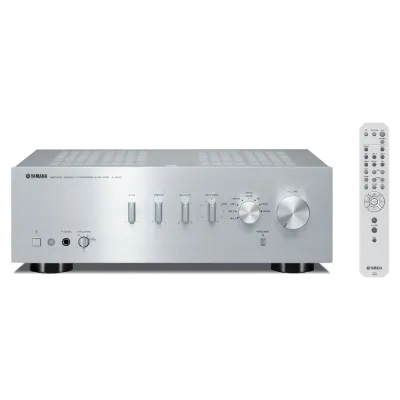
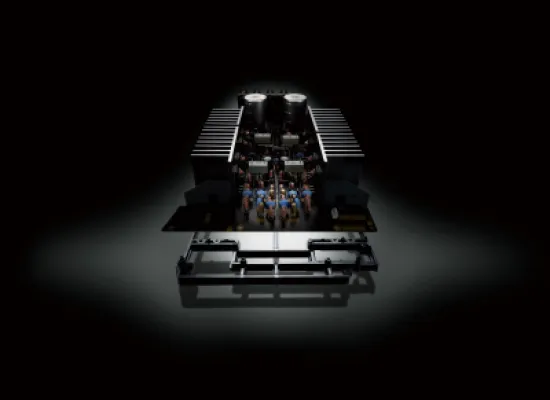
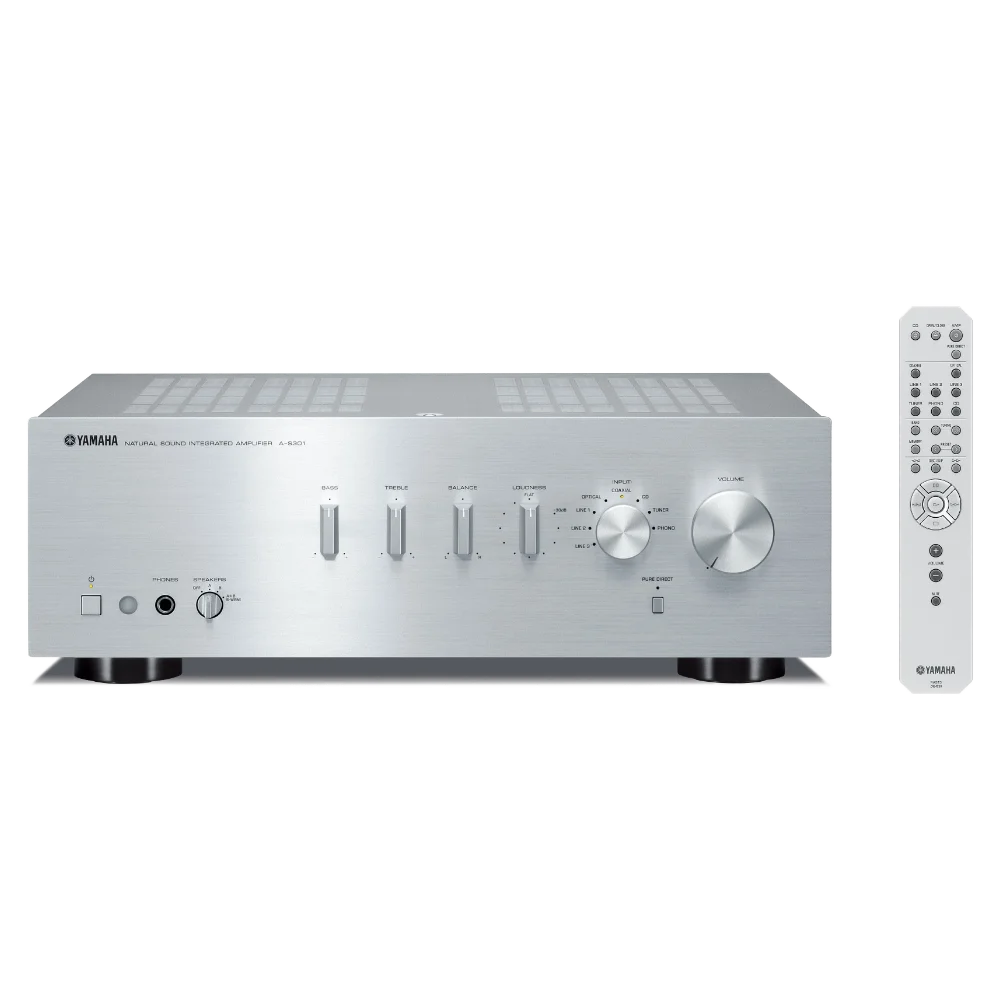
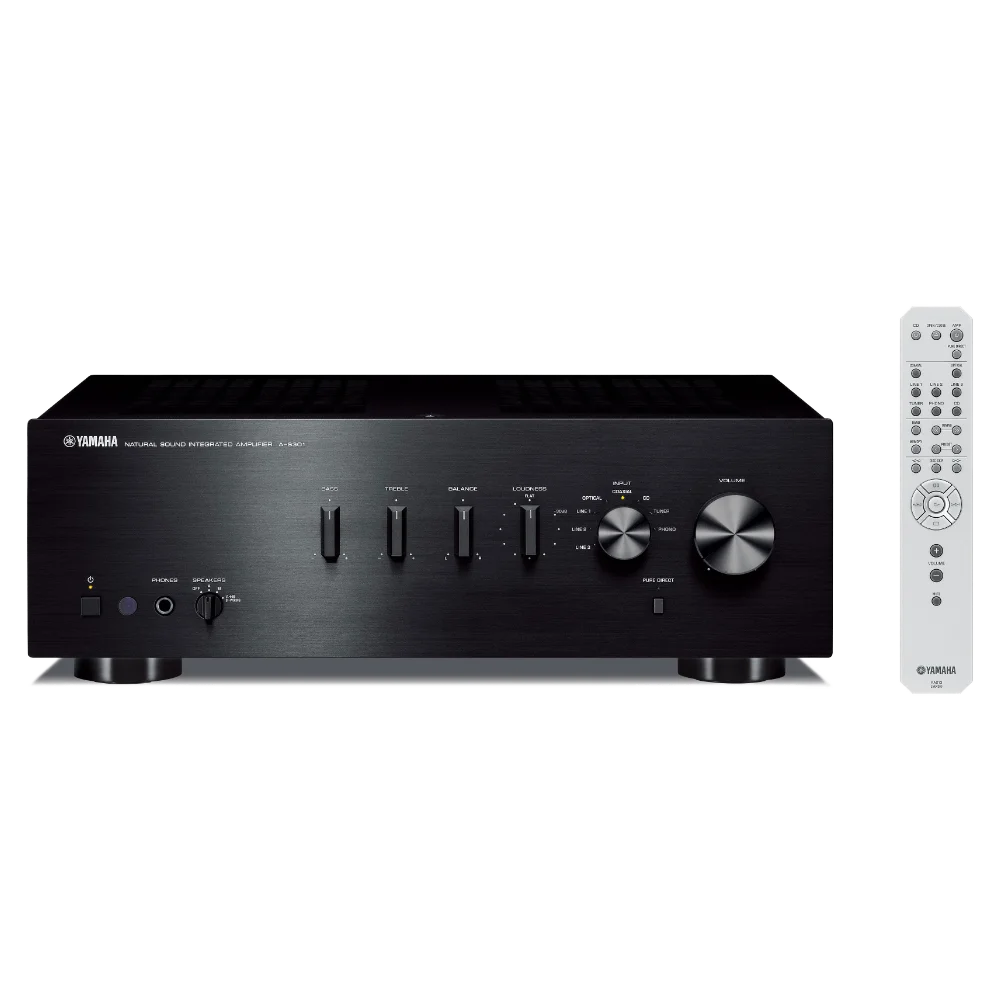
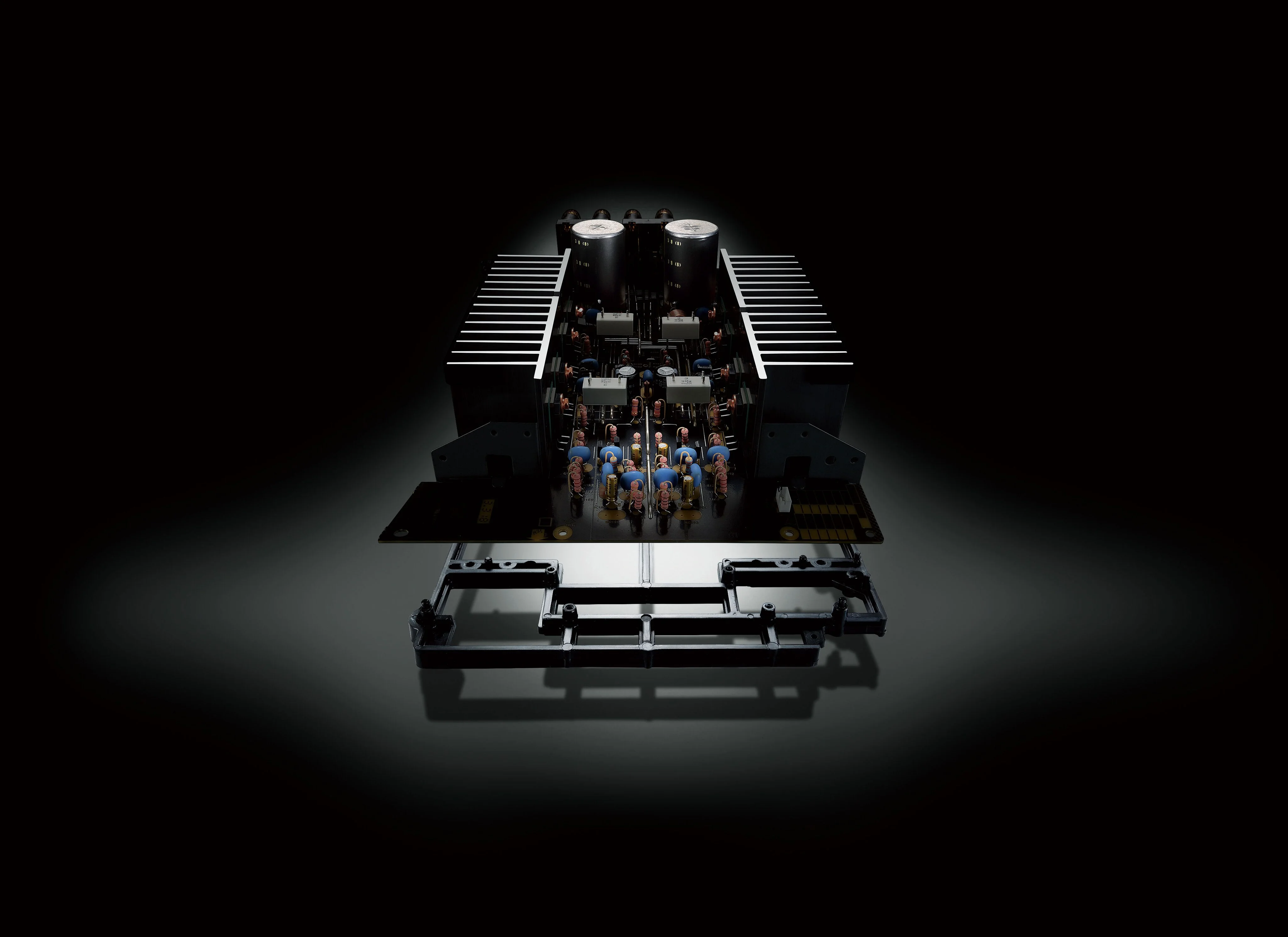
The Yamaha A-S301 integrated amplifier combines an analogue signal path with digital inputs, so it can handle a turntable with an MM cartridge, a CD player, and a TV or Blu-ray player in a single unit. The circuit design is based on the ToP-ART (Total Purity Audio Reproduction Technology) concept, built around I/O Direct Symmetrical Design – the left and right channels run directly and symmetrically from input to output, which shortens the signal paths and reduces the risk of introducing noise and distortion. Power output reaches 60 W + 60 W RMS into 8 ohms at 0.019 % THD, or 95 W + 95 W maximum into 4 ohms.
Mechanical stability is ensured by the ART (Anti-Resonance and Tough) Base bottom chassis with a massive centre brace, which damps vibrations and stiffens the construction. The power supply consists of a custom-made transformer and 6,800 µF block capacitors, while heat dissipation is handled by extruded aluminium heatsinks. Contributing further are two relay contacts in the direct signal path to the speaker terminals and single-point grounding, which limits the formation of ground loops.
The Pure Direct mode routes the signal along the shortest possible path, bypassing the buffer, treble and bass controls, loudness and balance – the result is cleaner transmission with better detail resolution and more precise instrument localisation. For quieter listening there is a continuously adjustable analogue loudness control with electronic volume, which compensates for the natural drop in the human ear's perception of frequency extremes. A damping factor of 210, a frequency range of 10 Hz – 100 kHz ±1.0 dB and a signal-to-noise ratio of 99 dB (CD) reflect stable speaker drive and a low level of self-noise.
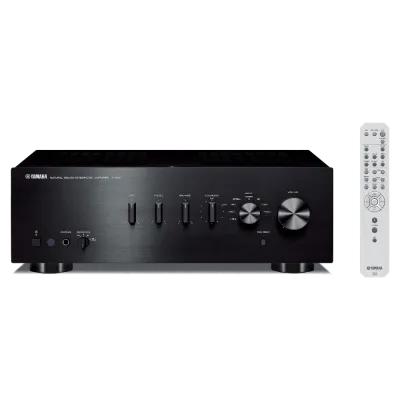
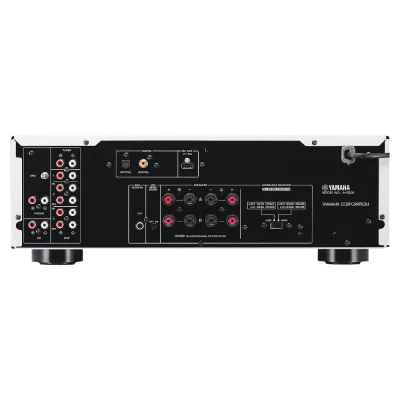
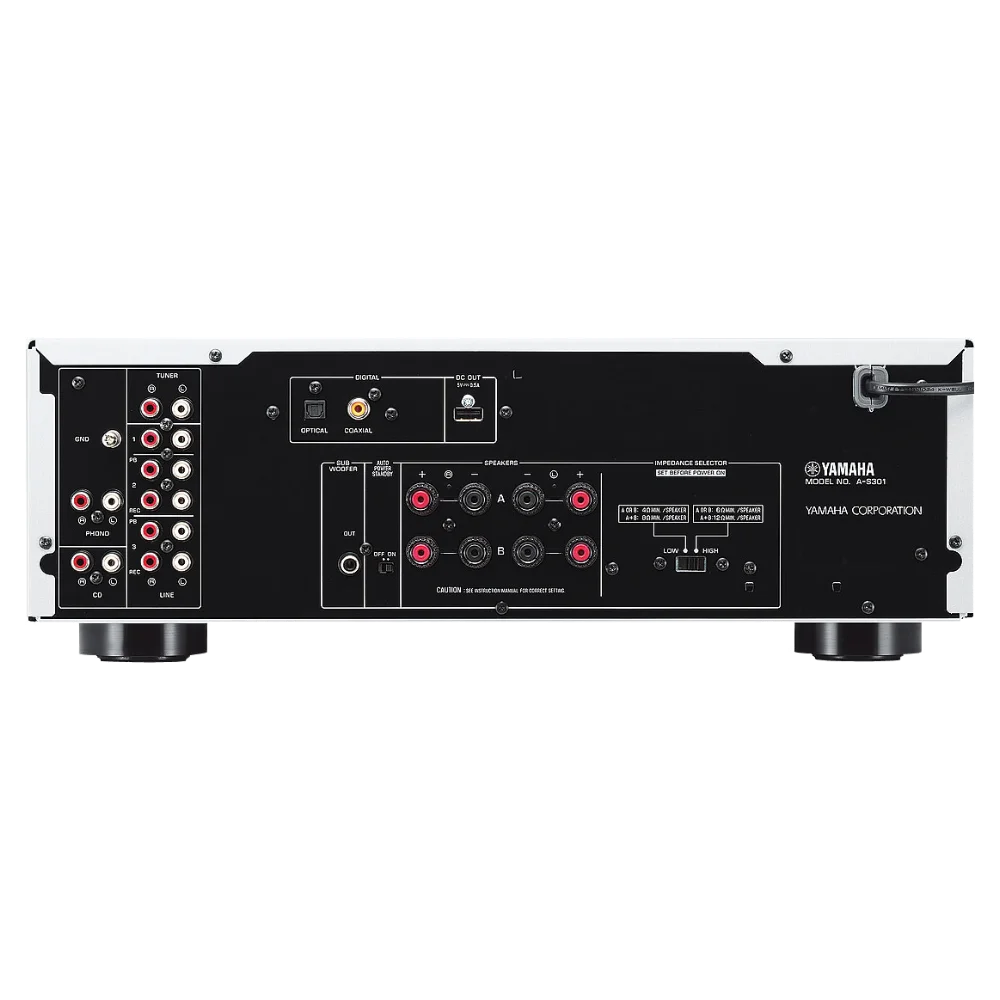
The digital section features an optical and a coaxial input, with the signal remaining in the digital domain right up to conversion within the unit. In total there are 8 audio inputs and 2 outputs, including a subwoofer output and an MM phono input, while the speaker terminals allow two pairs of speakers to be connected with A, B or A+B selection. The DC out connector powers the YBA-11 wireless Bluetooth adapter with aptX coding. The front panel is aluminium with a brushed finish, the rotary input selector is complemented by LED indication, and the Auto Power Standby function switches the unit into standby mode with 0.5 W consumption after roughly eight hours of inactivity.
Key features
- Power output: 60 W + 60 W RMS / 8 ohms, THD 0.019 %
- Construction: ToP-ART, I/O Direct Symmetrical Design, ART Base
- Power supply: Custom-made transformer and 6,800 µF capacitors
- Inputs: Optical and coaxial digital input, MM phono
- Functions: Pure Direct, loudness, subwoofer output
Specification
| Dimensions (W x D x H) | 435 × 387 × 151 |
|---|---|
| Weight | 9 |
| Rated Power Output | 60 W + 60 W (0.019% THD) |
| Max. output power | 95 W + 95 W |
| Harmonic distortions THD | 0.019% (50 W/8 ohms) |
| Digital inputs | Yes |
| SUBWOOFER OUTPUT | Yes |

 Yamaha
 is one of the few hi-fi manufacturers that also builds concert grand pianos and wind instruments. When developing an amplifier or a speaker system, therefore, it does not have to guess what a real instrument should sound like, as it has one to hand and can compare the sound to it. This forms the basis of a principle the brand has adhered to since the 1970s, known as ‘Natural Sound’: sound without embellishment and without any inherent colouration. In 1974, this principle was established by the NS-1000 loudspeakers with beryllium drivers, and ever since it has guided everything Yamaha produces for home listening, from turntables and amplifiers right through to AV receivers and wireless systems. Anyone looking for a sound that neither enhances nor embellishes a recording in any way will find exactly that with Yamaha.
Manufacturer information (GPSR)
Manufacturer
Yamaha Corporation
10-1 Nakazawa-cho, Chuo-ku, Hamamatsu, Shizuoka 430-8650 Japonsko
Responsible person in the EU
Yamaha Music Europe GmbH
Siemensstrasse 22–34, 25462 Rellingen Germany